A Peek into the Edit for A24’s Sundance Thriller 'undertone'
After 13 years in filmmaking and five years of commercial editing in Premiere, editor Sonny Atkins made his feature film debut with A24’s Sundance thriller undertone.
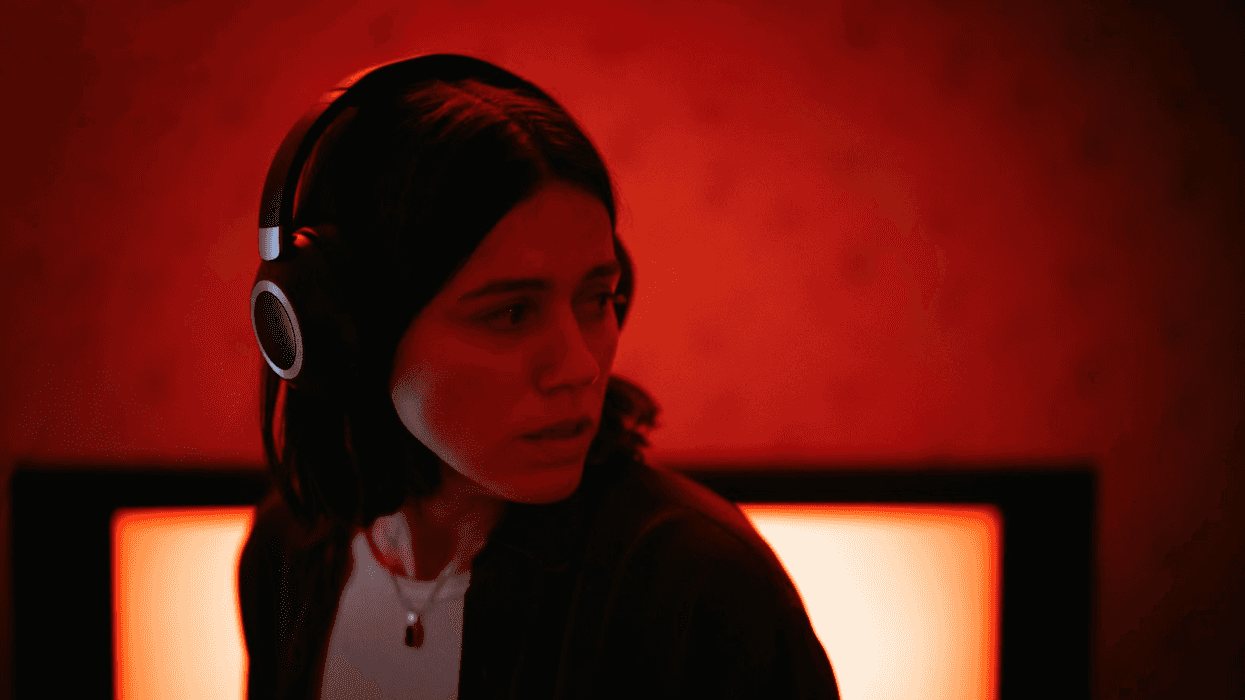
'undertone'
Filmed in director Tuason’s childhood home, undertone tells a modern tale of paranormal activity. When Evy (Nina Kiri), a paranormal podcaster who’s providing end-of-life care for her grandmother, becomes haunted by recordings, she must fight the descent into madness. Alongside Kiri, co-stars Adam DiMarco and Michèle Duquet bring an off-screen but terrifying quality to this psychological horror.
We sat down with Atkins to dive into the details behind the undertone edit. With only one on-camera speaking role, Atkins instead leaned into storytelling through sound and needed a tactile editing software that could help manage his unique workflow. As a longtime Premiere user, Atkins relied on Productions to streamline dailies and display all content in one place. Likewise, Text-Based Editing became essential in helping Atkins sort through hundreds of ADR takes and ensure the off-screen voices were attached to the right characters in the right moments.
Here’s more of what Atkins had to say about editing undertone.
What does it mean to you to show a film at Sundance?
Sonny Atkins: Sundance has been a North Star since I first started making films nearly 15 years ago, so it was incredibly special to be invited to the festival. Doubly special because undertone is a product of collaboration with some of my closest friends, with whom I've been making films for over a decade.
How do you begin a project/set up your workspace?
SA: Building out a project is a quiet little ritual for me that I really enjoy. I normally start by numbering and labelling all of my media folders on my working drive, and then match that labelling system in Premiere to keep myself completely organized. I also really like colour-coding different types of media (Violet for temp VFX, Mango for SFX, Magenta for Score, etc, etc.), which gives me a quick global understanding of my timeline.
Tell us about a favorite scene or moment from this project and why it stands out to you.
SA: A few months into post-production, we received some notes from a test screening that suggested we somehow deepen our hero Evy’s relationship with her mother. We stressed over it for a few days until a memory struck me – my own mother had, for fifteen years, kept a voicemail left by my grandmother shortly before her death. It was the last recording of her voice any of us had, and my mum would listen to it often when she wanted to connect with her… I suggested to the team that Evy should have something similar, a voicemail or voice note of her mum that she saved to listen to in her dark moments. We had my mom record a temp voicemail and plugged it into the movie, and…it worked! I love that I was able to inject a bit of my own family’s story into the film, and that Ian and the rest of the team were so open to the idea.
What Adobe tools did you use on this project, and why did you originally choose them?
SA: The film was cut in Premiere using Productions, which was a game changer – I built individual projects for each day of dailies, sound elements, graphics, and for each milestone in the offline edit process. Every editor’s worst nightmare is a giant, bloated mess of a project file, and using Productions effectively prevents that from happening. Text-Based Editing came in handy when we were deep in post, and I was working with hundreds of ADR takes. I would string out all the takes on a sequence, and Speech-to-Text did the heavy lifting for me.
I also used After Effects for some rough compositing, as well as Frame.io for postings and sharing temp VFX/audio elements.
What were some specific post-production challenges you faced that were unique to your project?
SA: Our film’s protagonist Evy, is the only on-camera speaking role in the whole film, which posed two unique challenges: How do we keep scenes interesting when we’re watching a person sitting at a desk? And second, how do we keep track of all our off-camera voice roles?
We really leaned into telling as much of the story through sound as possible. We used a lot of long takes to build tension, and put a lot of care into making sure the audience was on the edge of their seat waiting for the next sound, not the next visual jumpscare. I had a field day building out the soundscape with the team, including our sound recordist, Dane Kelly, who did some fantastic pre-mixing, and of course, the incredible Foley artists and re-recording mixers who brought an insane level of polish to the sound design.
Premiere’s Text-Based editing was enormously helpful in keeping all of our off-screen character ADR organized. Typing in a line of dialogue and being able to quickly see every take saved me many sleepless nights.
Who is your creative inspiration?
SA: I adore Paul Thomas Anderson, The Coens, and David Cronenberg. I’m inspired by editors like Thelma Schoonmaker, Tom Cross, and Joe Walker, who are all, in my book, absolute masters of the craft. I’m also hugely influenced by the work of George Saunders - “A Swim in a Pond in the Rain” is essential reading for anyone who tells stories.
What advice do you have for aspiring filmmakers or content creators?
SA: Be a great collaborator. Make a lot of stuff. Conan O’ Brien said it best: Work really, really hard. Be kind. Amazing things will happen.