Where Should Your Actor Look? Eyelines, Explained
Eyelines are the invisible thread that holds every watchable scene together.
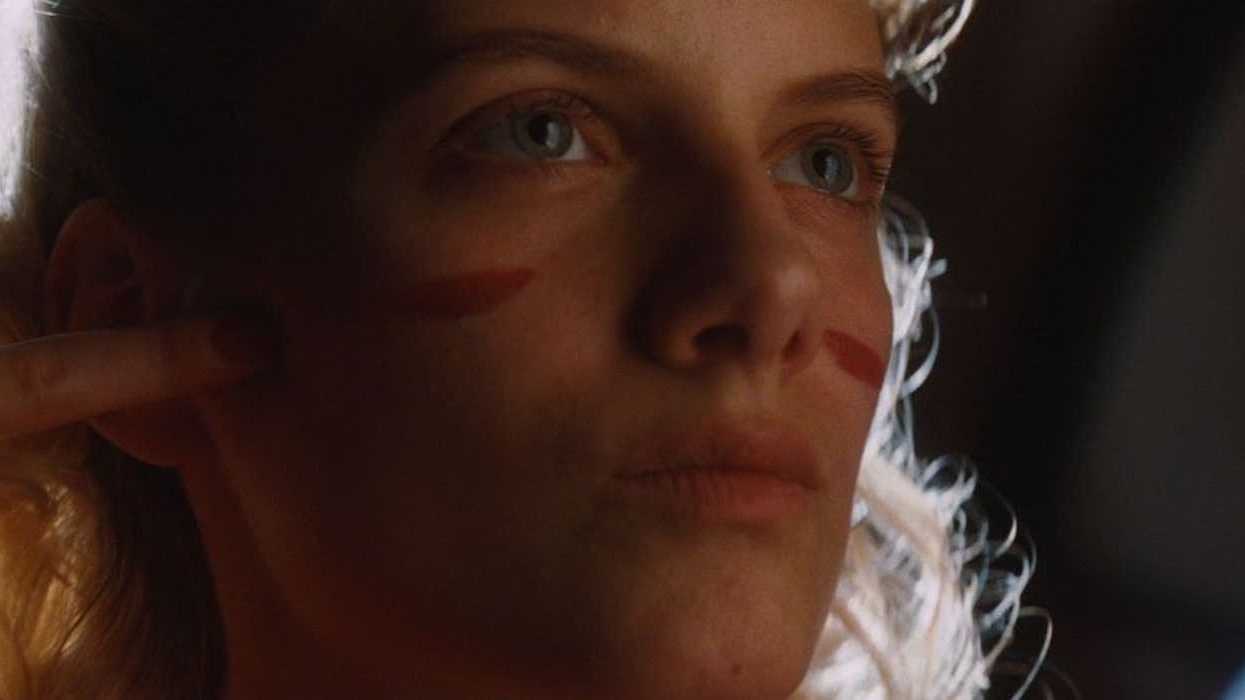
'Inglourious Basterds'
Eyelines are one of those invisible elements of filmmaking. When they work, you don't notice them at all. When they don't… whew, it's bad, and it's obvious.
If you have a scene where two characters are talking to each other, and suddenly one is looking in the wrong direction, or their gaze is off, even by a little, it's jarring. The scene falls apart because you're wondering what the heck they're looking at.
A new StudioBinder Academy video breaks down what eyelines are, how the 180-degree rule protects them, and how filmmakers like Kubrick, Spielberg, and Scorsese bend or break the rule intentionally.
Let's dive in.
- YouTube www.youtube.com
What Are Eyelines?
As StudioBinder says, "Eyelines are the backbone of continuity filmmaking."
Eyelines are simply where your actors are looking, specifically when they're looking off-screen at something that isn't in-frame with them. The audience needs to have some idea of what they're looking at, so they need to make sense.
If you have two characters in conversation, chances are they won't both be in the shot, especially if they're seated at a table or something similar.
This is where the 180-degree rule becomes so important. It protects the eyelines by keeping the camera on one side of an imaginary axis drawn between the two characters, so each character's gaze always points in a consistent direction through intercutting.
If you "break the plane" and this rule, say, by switching to the other side of the characters, you'll create a problem for yourself by having to track new eyelines. Plus it can make for a confusing edit and an uncomfortable watch for the audience.
The video gives The Shining as an example. When Jack meets the ghost in that iconic red bathroom, for the most part the camera sits on one side of the conversation. We get two-shots and singles, but we never cross the plane. The eyelines are continuous even when the coverage of the scene varies.
You'll want to make sure your eyelines make sense and are kept consistent. If one character is taller, for example, the other will need to look up. (This is one reason in special effects sequences, where one character might be a looming robot, for example, they'll wear a fake head to establish that eyeline. I'm thinking of K-2SO in Rogue One.)
- YouTube www.youtube.com
What To Do in Crowded Scenes
Here's a bit of advice, especially if you're an indie filmmaker. Try to limit the number of people in your scenes, for your own sanity. Not only does it make coverage more complicated, you likely have to mic all those people up, and sound can get expensive fast.
Anyway, I digress. What about eyelines here? What if you have a table scene with six or seven people sitting together?
The video offers these tips:
- Give the audience a clear establishing shot of the whole table. That way, they understand the geography of the scene and where everyone is sitting.
- Use two-shots and three-shots to maintain eyeline continuity.
- When you're breaking down your script or storyboarding, map out the table and where your 180-degree lines will go as the conversation progresses.
Spielberg is great at table scenes. Remember the tense discussion in Jurassic Park? What about the dinners in E.T.? Look to those and study them for strong examples of coverage in table scenes.
In Jurassic Park, the 180-degree lines change based on who jumps into the conversation at different points.
This only works because Spielberg's blocking is doing the lifting. If those characters were arranged differently around the table and we were just jumping around between them, the coverage would be super confusing.
Breaking the Plane (But Not the Audience)
If you have to break the 180-degree rule, and sometimes you do, there are ways to achieve it without confusing the audience.
Try using a cutaway shot between the two shots where you break the plane. This cutaway shouldn't be tied to the 180-degree line. It can be a "spatial reset" before you return to the conversation on the other side.
Continuous camera movement is the other way to do it. Famously, Quentin Tarantino likes to move the camera all the way around a group, and the video shows Reservoir Dogs as the example. If we're panning almost like our eyes would over different characters having their conversations, it feels natural enough to work. Our view isn't jumping around. That's what would be confusing, because we wouldn't know where we are.
Remember, only break the 180-degree rule when there's a reason for it. Don't do it just to "spice up" your coverage.
Are you trying to disorient your audience, which is the case in Martin Scorsese's Raging Bull? Are you approaching stories with a more formal, stylized shoot style, as was the case for Yasujiro Ozu? There are ways to break the rule, but you need to be prepared to justify your decision.
Eyelines as Storytelling
Your eyelines can serve as character work, too.
If Character A looks down at Character B, the eyeline can convey authority, threat, and size. If Character B looks up at Character A, then the eyeline suggests vulnerability, submission, or awe.
The same effect can be achieved by dropping or raising the camera on a single character, which makes the camera itself an eyeline participant.
Then you have POV shots. The camera becomes a character's eyeline, and the other characters are looking straight at us. (Don't confuse this with breaking the fourth wall. That's different.) This puts the audience in the character's shoes.
The video points to Ben Leonberg's Good Boy, a horror film told from a dog's perspective. Indy the dog's eyeline is only 19 inches off the ground, and the camera is consistently placed at that height throughout the film to maintain his perspective.
How to Prep for Eyelines
Again, read your script. Think about character dynamics in each scene. That will tell you where to place eyelines and your characters for blocking. Add eyelines to your shot lists. Storyboard. Give your actors marks so they know where to go in every take. Get a script supervisor to keep your eyelines straight.
Learning this will keep your filmmaking clean and consistent, and hopefully prevent you from making embarrassing eyeline mistakes.