It's truly stunning to get a short into Sundance. Now imagine doing that three times, three years in a row.
That's the honor bestowed on filmmakers Amandine Thomas and Gerardo Coello Escalante, whose short film Albatross was featured in this year's festival. It's just as beautiful and moving as their previous short, SUSANA, which we covered last year. The film is the third in a trilogy focused on the intersection of Mexican and American culture. Thomas directed Albatross from a script she wrote with Escalante.
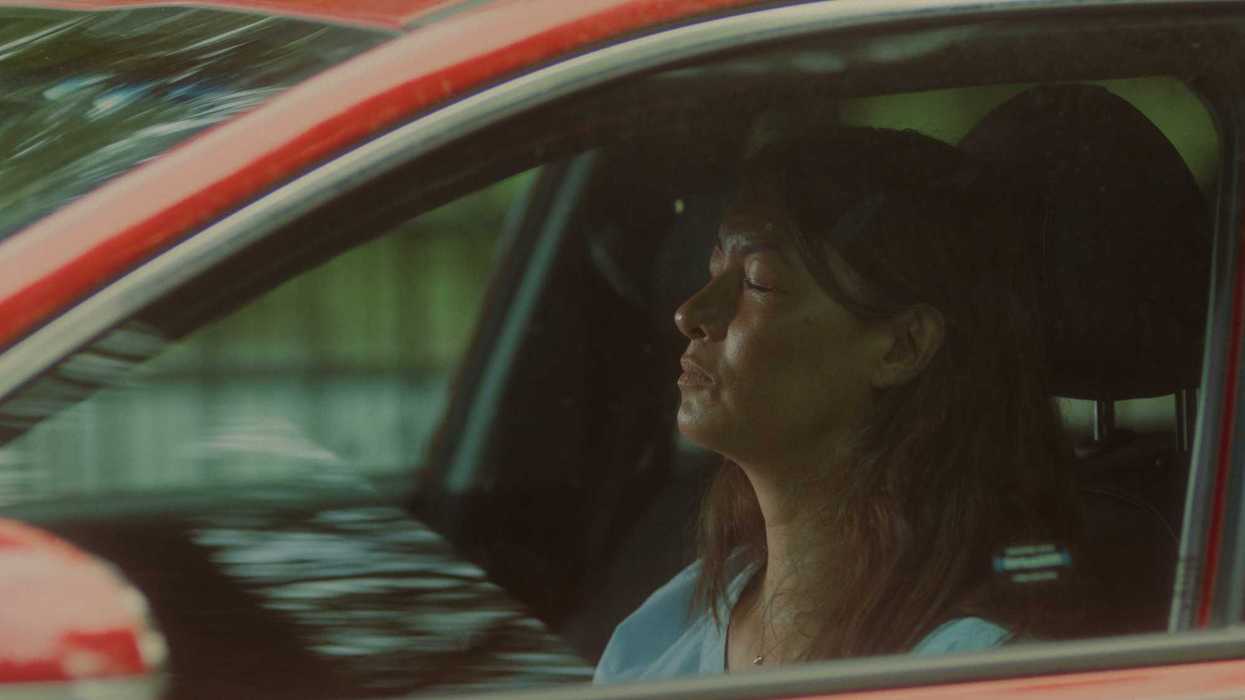
The story follows Maria, a Mexican woman living in the U.S., who's trapped in an exhausting caregiving routine with her sick husband. When she gets invited to a party, the film explores the tension between obligation and the desire for something more—connection, freedom, maybe even a new life.
The film was shot last summer in suburban Virginia with support from Dolby Creator Lab and Antigravity Academy. Like their previous work, it's grounded in specificity while reaching toward bigger questions about identity and connection.
We chatted with the duo after their festival premiere.
Albatross Credit: Courtesy of Sundance Institute
No Film School: This is your third film in a trilogy, and a third short film you’ve shown at Sundance three years in a row. What do you think it is about your work that resonates with the Sundance crowd?
Amandine Thomas and Gerardo Coello Escalante: These films came together very organically, inspired by our distinct experiences and points of view.
We originally intended to make two films, Viaje de Negocios and Albatross, but when the idea for SUSANA came to us, we realized that all the films spoke to each other, and we started thinking of them as a thematic trilogy, but each film was constructed and written to stand on its own.
When we started making these films, we recognized a need for stories that explored the fascinating dynamic between Mexico and the United States without repeating the same cliches we had gotten used to seeing on screen. We wanted to explore narratives that felt quotidian and to center morally ambiguous and complicated characters.
We can’t say that we know what it is about our work that resonates with the Sundance crowd, but it could be that audiences have found our take on Mexico and the United States refreshing, inviting the viewer to deconstruct their perspective of what they think they know about both countries.
NFS: Can you talk a little about why this story felt important to tell?
Thomas and Escalante: We wanted to do two things with this film: to navigate a caregiving relationship, particularly centered on the caregiver, and to center a Mexican character dealing with alienation living outside of her home country.
Both of these themes are relevant to what is happening in the U.S. today. We were struck by the fact that Maria’s daily life would probably have been made harder between when we shot the film and when we premiered it at Sundance, not only because of her husband’s disease, but due to the circumstances that both caregivers and Mexican people are experiencing in the U.S.
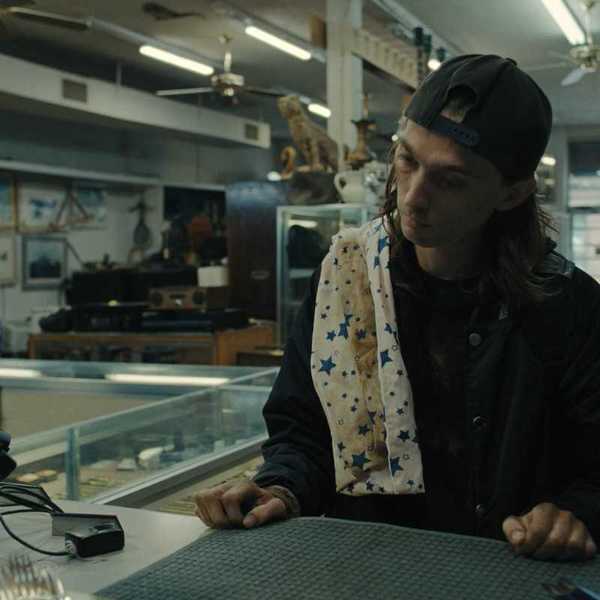
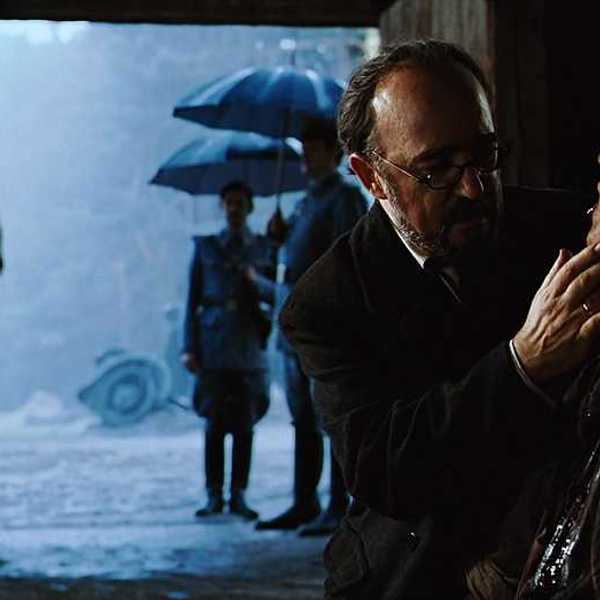
 Nolan Thomas appears in Albatross by Amandine Thomas, an official selection of the 2026 Sundance Film Festival. Credit: Courtesy of Sundance Institute | photo by Andrea Gavazzi
NFS: What led to the decision to show story moments from both characters’ POVs?
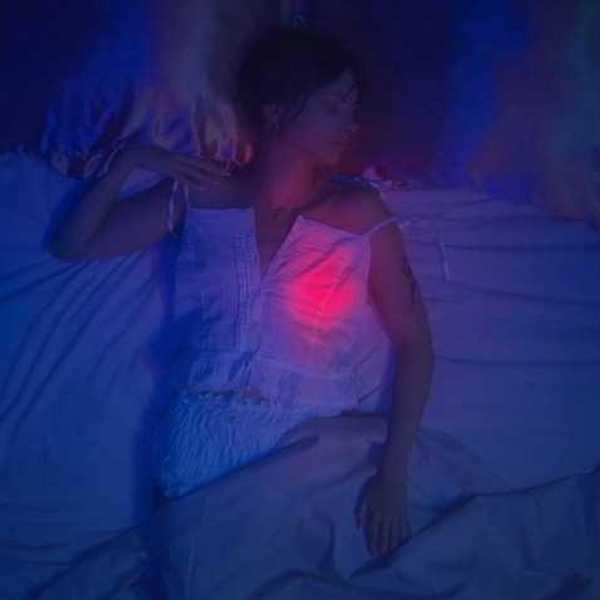
Thomas and Escalante: We were really interested in depicting both points of view so as not to lose either character’s soul in this story of their relationship. We were anchored by the knowledge that a caregiver’s reality can feel like it is shifting constantly if they are sequestered in a home with a person living with a brain disease, and with limited other social interactions. So we wanted Lee’s hallucinations to be vivid and bizarre and to bleed out into Maria’s perspective.
NFS: Can you share how the Dolby Creator Lab helped you complete this short?
Thomas and Escalante: The first draft of Albatross was written by Amandine years before we made Viaje de Negocios, but we were not able to secure financing for it. When Dolby Creator Lab and Antigravity Academy partnered for the Short Film Studio in early 2025, we applied with our latest draft of the script and were selected for the grant.
The program provided creative development and production services from the team at Antigravity Academy, and $35K in financing from Dolby Creator Lab, as well as final color renders in Dolby Vision and final mixing in Dolby Atmos.
NFS: What’s one lesson you learned from making this short?
Thomas and Escalante: Like all of our shorts, we learned so many lessons on this one. We really had to trust in the serendipity in filmmaking and in all of our past experiences in various areas of filmmaking. The experience of making Albatross really felt like a culmination of what we have learned together and individually so far in our lives as filmmakers.
 Georgina Saldaña Wonchee and Pat O'Brien appear in Albatross by Amandine Thomas, anofficial selection of the 2026 Sundance Film Festival. Credit: Courtesy of Sundance Institute | photo by Andrea Gavazzi
NFS: What advice would you give to someone wanting to make their first short film?
Thomas and Escalante: Keep the story, characters, and logistics simple and concise. If you can’t describe the film in a sentence or two, it may not work as a short film. Don’t overcomplicate yourself with unnecessary plotlines and characters- your first short film will likely not be your last- there is plenty of time to explore ideas and characters that don’t fit in this one.
Don’t be pretentious, be truthful. Don’t wait. Rely on horizontal connections, not vertical ones. Remember that you’re allowed to learn. Make something you can confidently execute to the best of your abilities with the resources you have. Our motto has always been and always will be: make what you can with what you have.
NFS: What’s next for you both?
Thomas and Escalante: We are currently developing feature projects in both fiction and nonfiction spaces. Our films have allowed us to delve into many different styles, genres, and characters, and we’re excited to expand those into distinct films. Feature land, here we come.
NFS: Anything you'd like to add?
Thomas and Escalante: We hope you enjoy the film, and we hope you watch it along with the rest of the trilogy, Viaje de Negocios and SUSANA.- How This Filmmaker Turned Stock Animations into a Sundance-Worthy Short ›
- What’s the Point of Short Films? Three Sundance Filmmakers Share Their Opinions ›
- How This Filmmaker Built a Sundance Short with DIY Animation ›
- Bringing Mexico’s Vibrant Culture to Life in Sundance Short Film 'Susana' ›
- The Quiet Throughline in This Year’s Sundance Shorts ›