Film Quote of the Day: The Funniest Warning About John Wayne’s Gunslinger in 'Angel and the Badman'
"Because bustin' through doors with Quirt Evans on the other side ain't my idea of a healthy pastime."
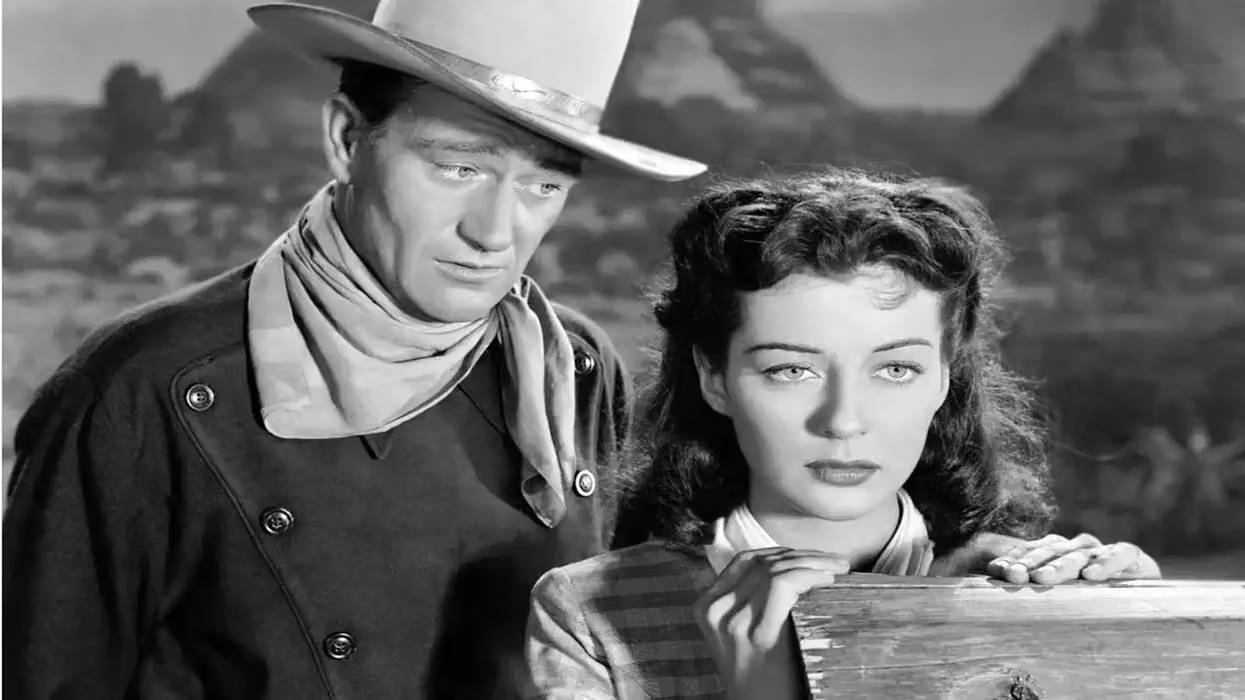
'Angel and the Badman'
John Wayne has been in so many rugged Westerns that he became synonymous with gunfights and tense heroes. But the first Western he actually produced and starred in came with themes of pacifism and a lot of dry humor.
That movie was James Edward Grant’s 1947 film Angel and the Badman.
It's like this snappy dialogue movie that digs into the personalities of people we haven't seen in other westerns. You can see what drew Wayne to it and how much fun he had playing Quirt Evans.
Today, I want to go over a line that's a warning about crossing the man, one that really pops off the screen and sells the signature tone.
Let's dive in.
- YouTubewww.youtube.com
The Scene in Question
In the film, Quirt Evans (John Wayne) is an infamous gunman who has been shot. That's a hazard of the job, and it leads him to a gentle Quaker family that takes him in and helps him mend.
You get this simple opposites-attract story when he meets the daughter, Penelope Worth (Gail Russell).
Penelope's kindness begins to melt Quirt’s hardened exterior, but his violent past refuses to let go so easily, and soon the people who gave him his gunshot wounds come calling.
That's when we learn why Quirt became famous, and the family sees the other side of the man they've been watching over.
During a tense moment where men consider confronting Quirt inside, we finally meet Laredo, the head of the gang of guys sent to kill Quirt.
Laredo is no dummy, so when it comes time to ambush Quirt, one of his men says they should just bust in. That's when Laredo offers his men some advice.
Hondo Jeffries: Hey, why don't we just bust in?
Laredo Stevens: Because bustin' through doors with Quirt Evans on the other side ain't my idea of a healthy pastime.
What The Quote Means
Like I said at the top, this movie has a really experimental tone for Wayne. And this is a tongue-in-cheek look at how you can get yourself killed by a gunman in the Old West.
Look at how violence is viewed by these people, as a matter of fact, part of their lives. These men kill each other, and the locals just try to stay out of their way.
We also get the sense of humor of them ovie, which kind of adds a goofiness to the violence that feels grounded. These are cartoonishly bad guys; they want to survive, and they use common sense, just like the heroes of the story.
Finally, I think this helps bolster the legend of this bad man who might actually be good. We can instill some fear in the hearts of the actual bad guys, which complicates how the audience sees the man as well.
Summing It All Up
The idea of mythos around your character is so ethereal; screenwriters and directors can watch this movie and see how, even in the 40s, we were using people talking about other characters to establish and support those legends.
You could imagine the same line in a John Wick movie.
You don't need special effects or a set piece to build that legend; you can have clever dialogue and show the fear of confrontation, too.