Are IMAX Cameras Really That Loud?
The sound is pretty nuts when you hear it in action.
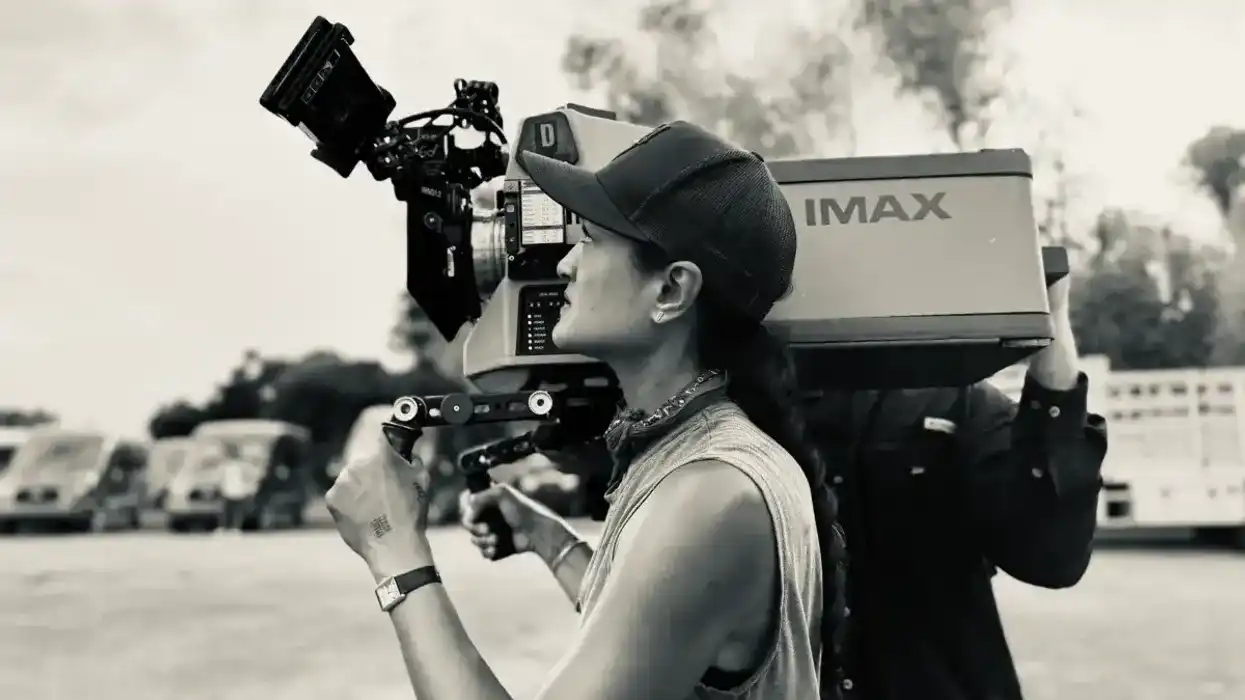
Cinematographer Autumn Durald Arkapaw with IMAX camera on "Sinners"
I love watching a movie that's shot for IMAX. It really does feel like the future of cinema rests in large-format experiences and event movies, at least in that they will help keep the doors open so theaters can also facilitate smaller movies.
But IMAX is pretty expensive to shoot on, and one of the reasons is that we often hear about how loud the cameras are, so all the sound has to be covered later.
People who have heard the cameras often described them as a lawnmower running right next to the actors' faces.
Delightful.
But in a video I dug up, we have the actual sound of these cameras on set, and I wanted to look at them with you and talk about them.
Let's dive in.
How Loud Are IMAX Cameras?
Okay, so the clips in this video are all of the noise produced by IMAX 15/70 film cameras sourced from No Time to Die and The Hunger Games: Catching Fire.
The author believes that the IMAX MSM 9802 model camera was used in all these clips.
So, why are they so loud?
Standard 35mm film cameras are designed to be "sync-sound" quiet, but IMAX cameras (specifically the 15/70mm film versions) were originally designed for nature documentaries and museum spectacles where on-set dialogue wasn't a priority.
The noise comes from two main sources:
- Massive Film Speed: To achieve that 15-perforation-per-frame resolution, the camera has to move an enormous amount of film stock through its internal gears at incredible speeds.
- The Vacuum System: To ensure the film stays perfectly flat against the lens for sharpness, IMAX cameras use a vacuum system to "suck" the film onto the plate. This creates a constant, high-pitched whirring and mechanical humming.
How Do Filmmakers Handle the Noise?
With news that Christopher Nolan shot all of The Odyssey in IMAX, and with other filmmakers following in his lead, do they all just reconcile themselves to adding dialogue and stuff later?
So, supposedly, Christopher Nolan shoots dialogue scenes on "quieter" 5/70mm (standard 70mm) cameras or 35mm, saving the IMAX cameras for action shots where the noise can be masked by sound effects.
But for The Odyssey, they used a blimp, which is a cover for the cameras that dampens the noise. Its soundproof housing goes around the camera and is lead-lined to really dampen noise. But for an IMAX camera, these can weigh nearly 300 lbs, making them extremely difficult to move.
Also, IMAX tech is constantly changing, and with all these filmmakers working with the company, they're working on new ways to shoot and to make the cameras quieter.
Also, computers can help. Modern digital processing can sometimes filter out the specific frequencies of the camera's whir, though this doesn't always work for very intimate, quiet scenes.
We looked at a specific camera above, but a new fleet of Next-Gen IMAX film cameras has been developed. These are roughly 30% quieter than the previous models and feature a new, more efficient "blimping" system.
Reports from Nolan's set suggest these cameras finally allow for "sync-sound" even during close-up whispers.
Summing It All Up
IMAX tech brings stories to the biggest screens, and I think it will save the theatrical experience. We try to keep up to date on what they're using and how, and we will let you know if they make jumps in quieter technology.
Let me know what you think in the comments.