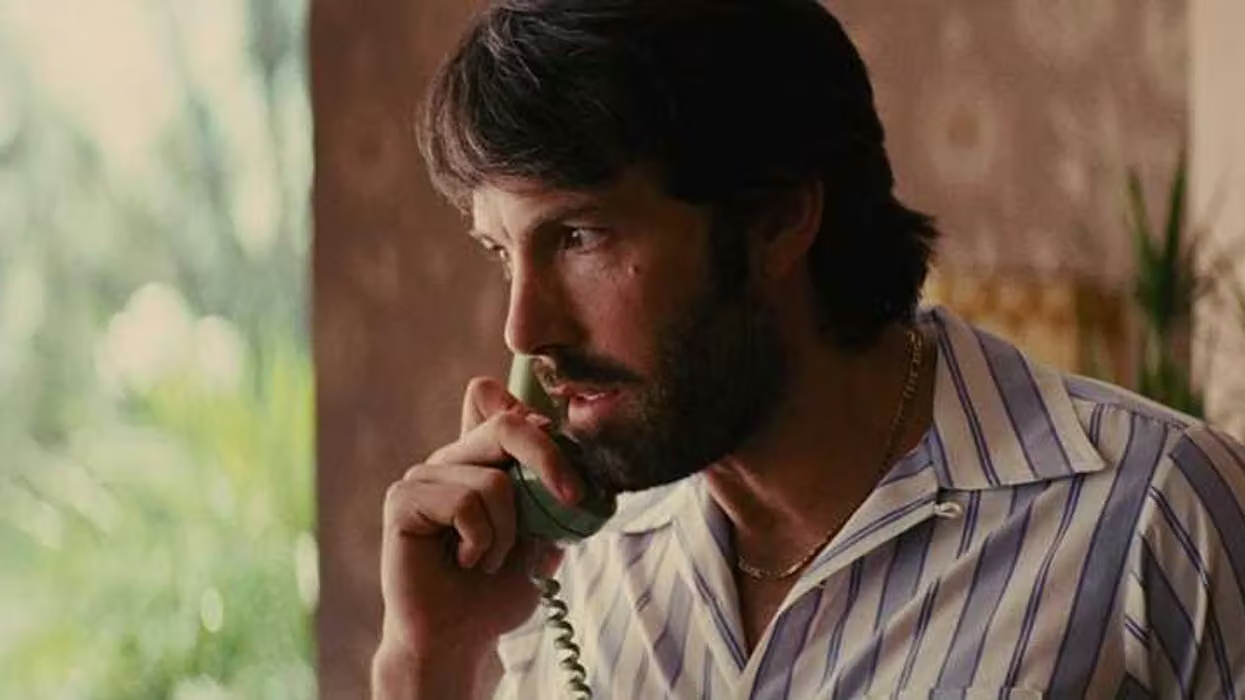
Ben Affleck was one of the most popular actors on the planet when he turned to directing. He was sick and tired of not getting the kinds of movies he wanted to star in, so he decided to make them himself.
When Argo hit theaters in October 2012, I am not sure people were ready for the version of Ben Affleck that had it all, but that's what they got.
He played CIA exfiltration expert Tony Mendez, who devises a plan to rescue six American diplomats hiding in Tehran during the 1979 hostage crisis by posing as a Hollywood producer location-scouting a fake Star Wars rip-off.
Oh, yeah, and it was a true story!
The movie earned Best Picture at the 85th Academy Awards.
Today, we're going to go into how Affleck balanced tonal clash, vintage aesthetics, and narrative pacing to transform a bizarre true event into a masterclass in filmmaking.
Let's dive in.
- YouTubewww.youtube.com
Satire Meets Geopolitical Thriller
I love Gone Baby Gone; I think it might still be Affleck's best movie, but its tone is dark through and through.
What Argo does so well is balance our joy with our terror, and explain one of the most complicated hostage crises without being overly depressing as well.
Screenwriter Chris Terrio and director Ben Affleck find that balance; that is what makes this movie so special. One half of the film lives in Hollywood with characters who are punchlines: John Goodman (as makeup artist John Chambers) and Alan Arkin (as producer Lester Siegel) crack cynical industry jokes and add levity to the movie.
But the other half is set in Tehran, where our hostages cannot leave their homes, and you get claustrophobic terror, mob violence, and see people being openly killed on the streets.
If Affleck leaned too heavily into the Hollywood satire, the stakes in Tehran would collapse. Lean too far into the geopolitical horror, and the Hollywood scenes would feel tone deaf.
In order to solve this hurdle, Affleck just does both, and cross-cuts them. And somehow, thanks to the Hollywood people leaning into the terror of real life, and the hostages leaning into the absurdity, you just fall in love with both and understand how they meld together.
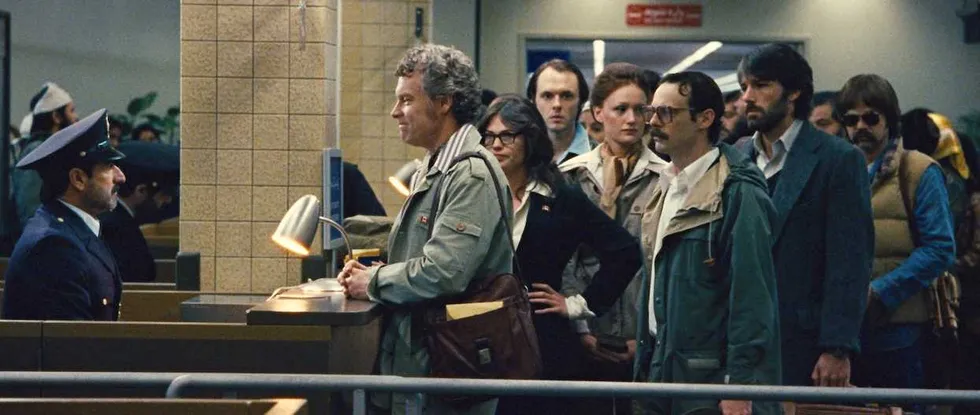
In fact, at the end, we have this dual-tension standoff between guys walking to an office and hostages moving through an airport, and both are incredibly important.
That's because they each have accepted that life is so complicated, and so precious.
And in each instance, it's okay to laugh and to raise a glass.
 'Argo'Credit: Warner Bros.
Visual Authenticity
One of the other things that sells this movie is everyone's commitment to making it feel real. Affleck and cinematographer Rodrigo Prieto shot Argo in a way that made it feel like an actual lost thriller shot in the late 1970s.
There's an Alan J. Pakula version of this movie in a Sliding Doors universe.
Prieto shot portions of the film on 35mm, then cut the frames in half (2-perf Techniscope format) to increase the film grain. That mimics classic 1970s film stock.
The Los Angeles sequences were shot with warm, saturated tones and anamorphic lenses to evoke classic Hollywood glamour, while the Tehran sequences used harsher textures, handheld cameras, and desaturated, cool color palettes.
That kind of attention to detail helped us disappear into the story and, again, made it feel a little timeless, like it was both retro and current and archival and entertaining.
Summing It All Up
Fourteen years later, Argo remains a case study for directors working with complex, multi-genre narratives.
I just rewatched it a few days ago, and what stood out to me was how timeless it was. You felt like this movie just existed to capture something deep and interesting.
I'd love to see Affleck get back to those kinds of stories, and I am always excited to see whatever he's in front of and/or behind the camera.
So, go out and watch this great movie again.