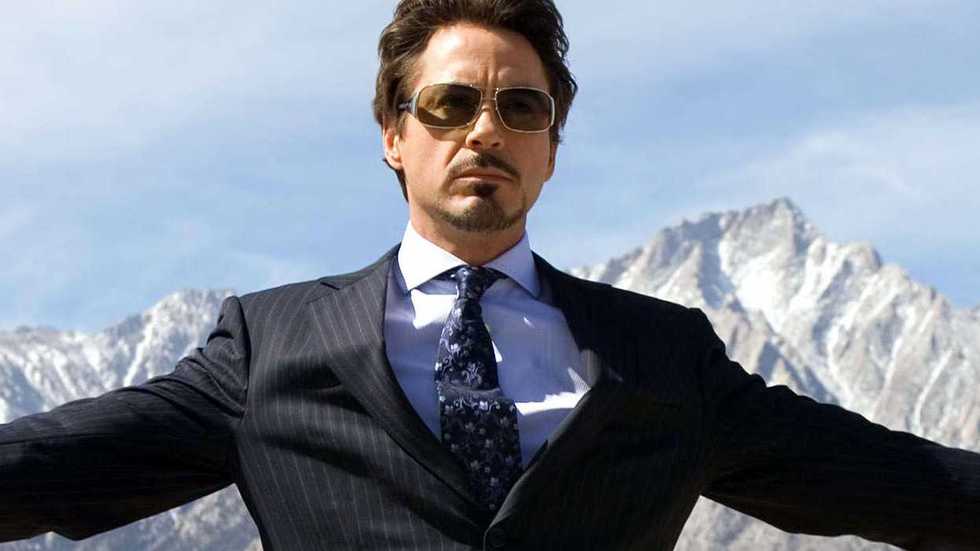
Oscar winner Robert Downey Jr., who was the highest-paid actor of the year for three years running starting in 2013, has earned more than $14 billion worldwide with his collected filmography. But we all have to start somewhere.
40 years ago this month, Back to School debuted on June 13, 1986, becoming the star’s first-ever movie to open at No. 1.
Robert Downey Jr. Before 1986
By the mid-1980s, Robert Downey Jr. was already a rising star. He had kicked off his career as a child actor in the 1970 movie Pound, which was directed by his father, Robert Downey Sr. Don’t go throwing around nepo baby allegations just yet, because it sure wasn’t his dad’s underground cult movies that launched him to stardom. Those uncredited follow-up roles in the Downey Sr. movies Greaser’s Palace and Up the Academy didn’t open doors in Hollywood, for some reason.
Hollywood didn’t genuinely start trying to figure Downey Jr. out until 1983, when he was given a small role in John Sayles’ Baby It’s You, which led to increasingly important roles opposite Christopher Collett (in 1984’s Firstborn) and James Spader (in 1985’s Tuff Turf). His first real breakthrough came when he played Ian, one of the two jock bullies, in the 1985 John Hughes teen movie Weird Science, which followed Sixteen Candles and The Breakfast Club and starred Brat Pack member Anthony Michael Hall.
While the movie was a modest success, it debuted at No. 4 and sank down from there over the ensuing weeks. It wasn’t until the following year that he would star in his first major hit, even though it didn’t necessarily seem like an auspicious role at the time.
Enter Back to School
Robert Downey Jr. had just starred in a John Hughes movie, for crying out loud. Him taking on a role in 1986’s Back to School probably felt like a return to the middling teen pictures he’d already done before his brush with the Brat Pack. And the director was no John Hughes. Alan Metter, who previously helmed the underperforming teen comedy Girls Just Want to Have Fun (in which Downey Jr. had a minor, uncredited role), had zero hits under his belt at that point.
Sure, it starred Rodney Dangerfield, whose movie Caddyshack was a solid hit back in 1980. But the comedian’s Caddyshack follow-up, 1983’s Easy Money, entirely failed to set the world on fire. Who was to say that Back to School, in which he played a man who signs up for college while in his sixties in order to encourage his indolent son (Keith Gordon of Christine) to take his studies more seriously, would fare any better?
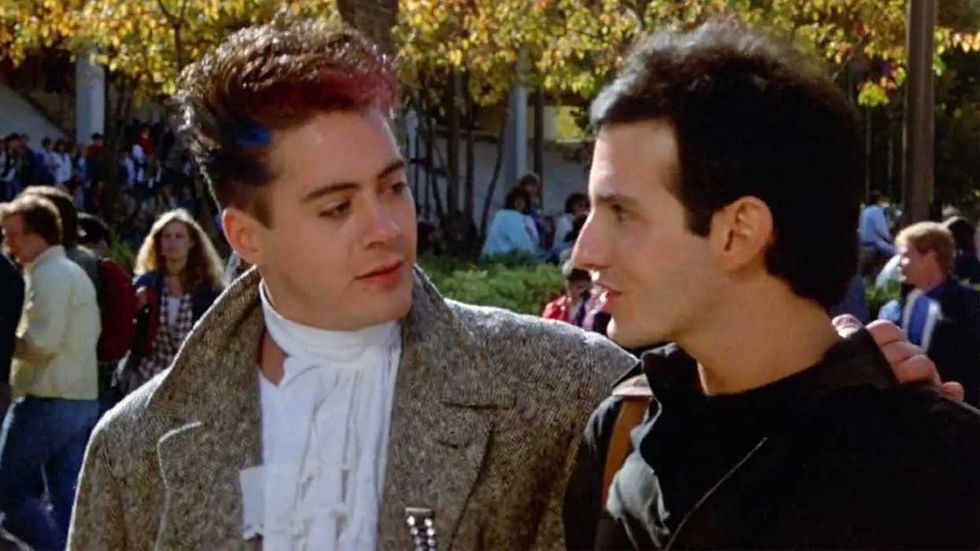 ‘Back to School’ (1986)Credit: Orion Pictures
No, this felt like another anonymous supporting gig for Downey Jr. Even though he played a relatively important character - Derek Lutz, the roommate of Keith Gordon’s Jason - the burgeoning star was fifth billed behind Dangerfield, Gordon, Sally Kellerman (Robert Altman’s M*A*S*H), and Burt Young (Rocky).
And yet, Back to School blew up. Critics responded positively to the comedy (including Roger Ebert, who gave it three stars), and it ultimately debuted at No. 1 at the domestic box office, staying in the Top 5 for six consecutive weekends. By the end of the month, it had already grossed $33.6 million, making it the second-highest-grossing movie of June 1986 (behind the original Top Gun). All told, it grossed $91.2 million, which made it the fourth highest-grossing domestic release of the year overall (behind Top Gun, Crocodile Dundee, and The Karate Kid Part II, per Box Office Mojo). Rodney Dangerfield even got a People magazine cover out of the bargain, appearing alongside Ruthless People’s Danny DeVito.
We cannot emphasize enough what a big deal this movie’s box office take was. We’re talking about a box office haul that outgrossed the domestic total of James Cameron’s Aliens ($85.2 million). Ditto Steven Spielberg’s The Color Purple ($84 million). And Star Trek IV: The Voyage Home ($72.7 million). Ferris Bueller's Day Off ($70.1 million). Stand by Me ($52.3 million). Pretty in Pink ($40.5 million). Back to School was a hit.
Robert Downey Jr.’s Slow But Steady Rise
Why was Back to School such a hit? There isn’t a single concrete answer to that question, though Dangerfield’s frequent collaborator Harry Basil suggested that it was the fact that it galvanized both younger and older audiences. During a Q&A after a staged reading of the screenplay at L.A. City College in 2017 (per C. Brian Smith), Basil told the audience that “young people loved Back to School because it had this rich old man spouting off funny one-liners, but it had a young cast as well.”
That appealing young cast included Robert Downey Jr., who suddenly found himself front and (slightly left of) center in a major blockbuster. While it would still be years before he played the lead in a major hit, Back to School lit a fire under him that eventually led to him starring in the 1992 biopic Chaplin, which earned him his first of three Oscar nominations (his second nomination was for Tropic Thunder and his third nomination - and first win - was for Oppenheimer).
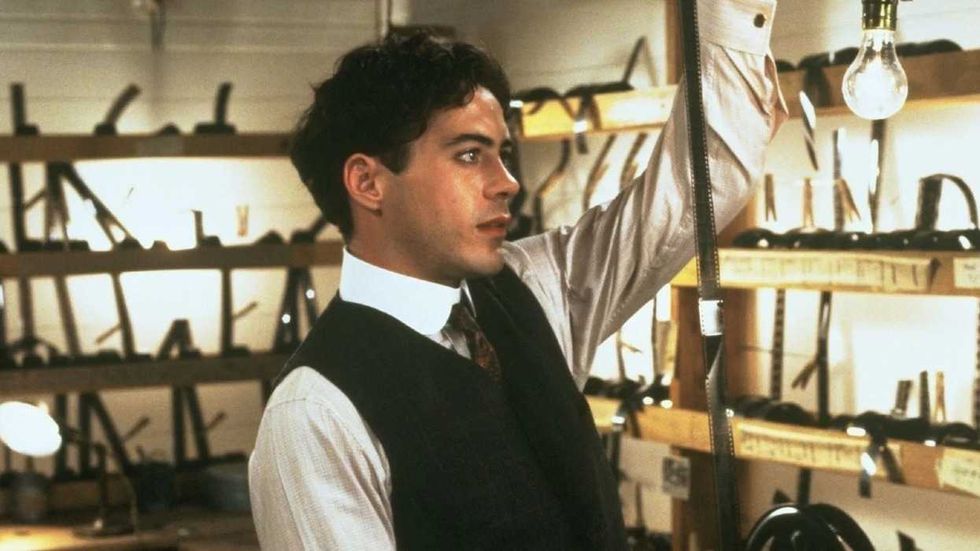 ‘Chaplin’ (1992)Credit: TriStar Pictures
While his career was derailed for some years as he recovered from his drug addiction, the groundwork for the titanic success of 2008’s Iron Man (and thus the entire Marvel Cinematic Universe, which was spawned by the success of that particular comic book adaptation) was laid more than 20 years earlier, thanks to the runaway success of Back to School. The fact that the 1986 hit led to him becoming a big enough commodity in Hollywood to earn that Oscar nomination ultimately gave him a major selling point that helped him overcome his reputation to earn major roles in his mid-2000s comeback movies like Gothika and Kiss Kiss Bang Bang.
Interested in learning more about Robert Downey Jr.’s extended filmography? Check out No Film School’s articles on other titles featuring the Oscar-winning star, including David Fincher’s serial killer thriller Zodiac, the envelope-pushing action movie satire Tropic Thunder, the epic MCU crossover Avengers: Endgame, and Christopher Nolan’s Best Picture winner Oppenheimer.