Rocky Isn’t a Movie About Boxing: Why It’s Actually Hollywood’s Greatest Character Study
Rocky Balboa’s journey isn’t about victories and titles but about proving who he is when the odds say he shouldn’t matter.
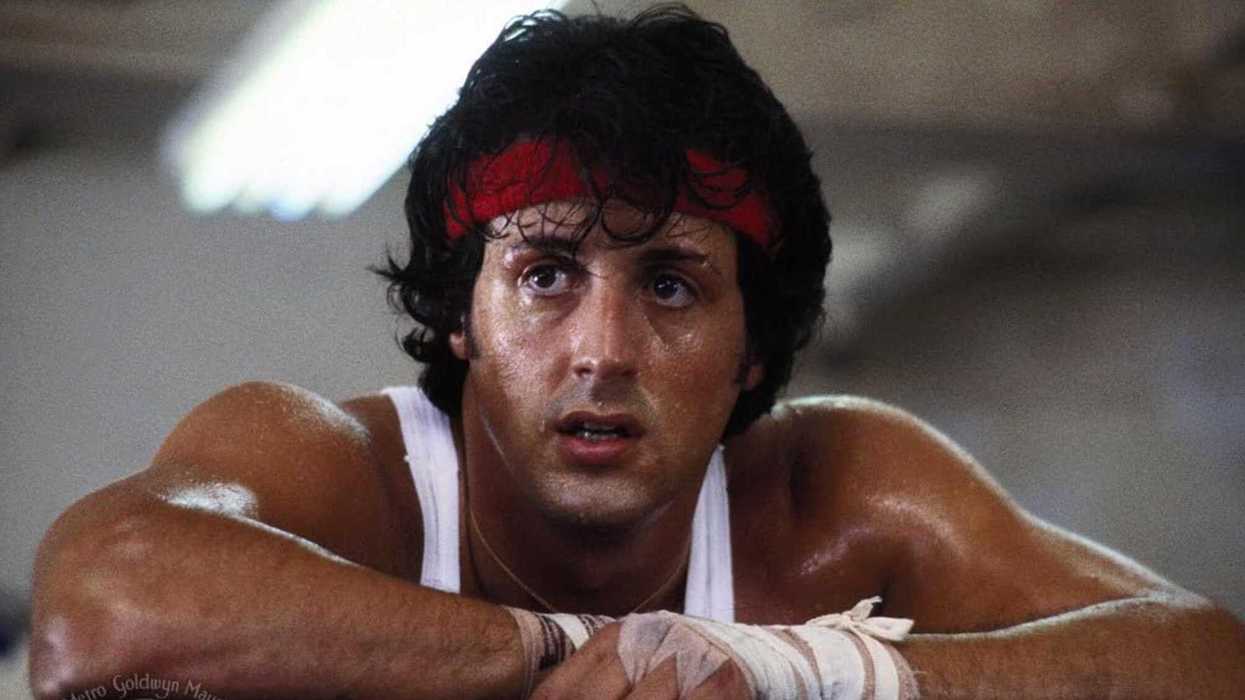
Rocky II (1979)
Most sports-movie protagonists are about beating the odds and winning big. Rocky Balboa (Sylvester Stallone), like those others, is an underdog, a working-class fighter from Philadelphia. He rises from obscurity to find self-worth through boxing. Across his 81-match career (57 wins, 23 losses, and 1 draw), he embodies perseverance, resilience, and the never-give-up attitude.
But he stands apart in one significant aspect. While most others chase trophies, headlines, and glory, Rocky’s central conflict is not external. Rather, it’s an internal struggle for self-respect and to overcome the feeling of worthlessness and insignificance. He constantly battles doubt, both from society and self. Across the franchise, Rocky strives to prove he is not a mistake and that he has a lot to offer even outside of the ring.
Here, we are going to explore Rocky’s philosophy, which is built around dignity, not glory. We will see why the Rocky films don’t frame losing as failure and why this hero is still relevant while many of his cinematic counterparts have fizzled out.
Defining Rocky’s Version of Success
The Goal: “Going the Distance”
In Rocky (1976), our hero has no delusions of grandeur. He is very much rooted in reality. He knows where he stands against Apollo Creed (Carl Weathers), the reigning World Heavyweight Boxing Champion. Rocky’s goal is not to defeat Apollo but just to be standing when the match ends.
This is a revolutionary shift in a hero’s perspective: from defeating an opponent to mastering his own limitations. For Rocky, “finishing the match” is the actual victory.
The “Bum” Narrative, Losing the Final Match, and Self-Worth
Rocky is a debt collector for a mafia loan shark. Society has labeled him a loser, and that feeling is deep-seated in his own psyche. His struggle is about getting rid of this “bum” label. Training for the match and fighting is his way of proving he has value. For him, this internal validation would mean a lot more than external applause.
Despite all the training build-up and conflict, Rocky, the protagonist, loses the final match. There is no turnaround or twist after that. The loss is a conscious narrative choice, and it’s final.
And yet, even though there is no satisfaction of the “victorious hero,” the film treats this finale as completion. The audience also doesn’t mourn his loss because they know that his goal was not “winning the match”; it was reclaiming his dignity. And he achieved that goal when he showed up at the fight.
Why the Match Victory Doesn’t Matter
The Adrian Factor
The fight ends, and the split decision confirms that Rocky has lost the match. But Rocky seems like he couldn’t care less. Amidst the joyous chaos that erupts, he keeps frantically yelling for Adrian (Talia Shire). And as she approaches, they profess their love for each other.
This is a defining moment for his priorities: he has found something much more valuable than the victory belt—a human connection and a sense of belonging. At this moment, all the celebratory mayhem around him turns into nothing but background noise.
Redefining the Hero’s Journey
When you think of a hero’s journey, it usually ends with him winning the battle and winning the girl. In this story, the hero loses the battle (match) but wins the girl. But that still doesn’t feel incomplete. We don’t doubt for a second that Rocky has emerged victorious.
It’s a clear indication that a successful journey doesn’t need a perfect ending. The effort (of undertaking the journey) itself provides the closure.
Conclusion
Rocky Balboa’s story teaches us that our stats and achievements don’t (shouldn’t) define our spirit. Half of our lives is just about showing up. And it doesn’t matter whether or not we have an applauding audience. Because true victory lies in quiet moments of perseverance, and if we are lucky, in a genuine connection with another soul.
- How Sylvester Stallone Almost Died While Fighting Dolph Lundgren ... ›
- Rocky Balboa vs. Adonis Creed — Immigrant Dream vs. Inherited ... ›
- Rocky's Iconic Training Montage That Changed Movies Forever ›
- Ranking the 'Rocky' Movies In Order of Greatness | No Film School ›
- Analyzing The Story Map: The Original Rocky Script - No Film School ›