10 Brilliant Midpoints Every Screenwriter Should Study
What happens when you get to the direct middle of a story and have no idea where to go?
'Alien'
As a writer, I am constantly trying to figure out what happens in the middle of my screenplay. Act two is definitely the hardest to put on paper, so I find myself going back to some of my favorite movies to see how they spin those beats.
I figured if that happens to me a lot, it might also be happening to you.
So today, I put together ten of my favorite midpoints in movie history. They're beats I think changed the story for the better, and let the writer produce some of their best work.
Let's dive in.
1. Psycho (1960): The Shower Scene
I think this is the gold standard when it comes to surprising the audience and changing the narrative. Alfred Hitchcock's masterful subversion is probably the most famous midpoint in cinematic history. By brutally killing off Marion Crane (Janet Leigh) halfway through the movie, Hitchcock completely upends the expected narrative. Now we have no idea what could happen next, and he has us in the palm of his hand. The story shifts from a suspenseful thriller about a woman on the run to a chilling horror centered on Norman Bates and his murderous mother.
2. The Godfather (1972): Michael's Restaurant Execution
The midpoint of Francis Ford Coppola's masterpiece marks the tragic and irreversible transformation of Michael Corleone (Al Pacino) into a mafia don who is willing to kill for revenge. When we meet him in Act One, Michal is a war hero determined to remain outside the family business. But his decision to execute rival mobster Sollozzo and the corrupt police captain McCluskey in a quiet Italian restaurant is him taking the fast lane into a world he never wanted. This solidifies his new path and sets the stage for his descent into darkness that takes over the back half of the movie.
3. Jurassic Park (1993): The T-Rex Attack
Look, when you went into this movie, you knew it was going to essentially be a monster movie, but you needed a defined time to shift from science fiction into that. Steven Spielberg's blockbuster features a midpoint that is both a spectacular set piece and a real shift in the story. The initial awe and wonder of the dinosaur park turn to terror as the power fails and the T-Rex breaks free. It does not care who is good or bad or an adult or a kid; it just wants to eat. This moment shifts the film into a desperate fight for survival against beasts that are back on earth.
4. Parasite (2019): The Basement Revelation
Bong Joon-ho's Academy Award-winning thriller delivers a stunning midpoint that dramatically alters the film's tone and direction. It's for sure one of the best surprises in movie history as well. As the Kim family secretly celebrates their successful infiltration of the wealthy Park household, they discover a hidden basement where the former housekeeper's husband has been living in secret. It completely changes the story and sends chills down our spines. This shocking beat transforms the film from a dark comedy about class into a violent thriller. Now, people have to make choices they never thought possible.
5. Jaws (1975): "You're gonna need a bigger boat."
Jaws begins as a movie about people hunting for a shark that has been eating people. But the midpoint of this creature feature shifts the story into one where the shark is hunting the humans. It sets the stakes for the back half of the movie in such a smart and visceral way as they realize they're on the meal plan. When Police Chief Brody (Roy Scheider) finally comes face-to-face with the enormous great white shark, his understated reaction encapsulates the true scale of the threat and the idea that they may not make it back.
6. The Matrix (1999): The Oracle's Revelation
The midpoint of The Matrix is a brilliant subversion of the "chosen one" trope. Neo (Keanu Reeves) finally meets the Oracle, fully expecting to be told he is "The One" destined to save humanity. But she tells him he is not. That totally plays with the audience, as they then worry that all this wartime stuff with the machines may result in the devastation of humans. This "false defeat" forces Neo to stop relying on destiny and start making his own choices. He becomes a much more active protagonist, and we also believe this mission might kill him.
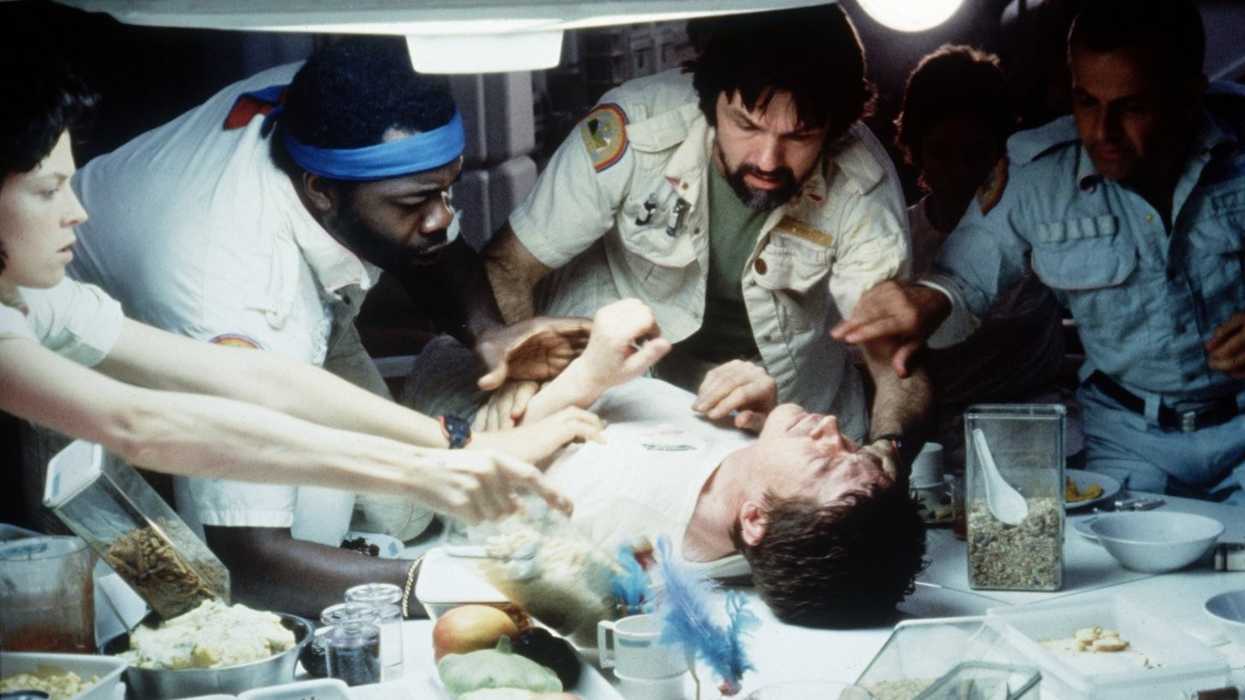
7. Alien (1979): The Chestburster
Ridley Scott's sci-fi horror lulls the audience into a false sense of security before its terrifying midpoint. We think this is just a bunch of people on a mission, but as soon as that alien pops out of the chest of a worker, it totally shifts into survival. This visceral and shocking scene establishes the true nature of the alien threat and turns the film into a relentless and claustrophobic nightmare.
8. Gone Girl (2014): Amy's Monologue
We think for the whole first hour of Gone Girl that Amy is dead, and we want to know who killed her. We have to know. But David Fincher's slick thriller pulls the rug out from under the audience with its chilling midpoint that reveals Amy is alive, and this was all a setup. Amy's monologue reveals she has faked her own death to frame her husband and then completely reframes the story we've seen so far. Now we're in a character study, and all our alliances and rooting interests shift.
9. Titanic (1997): The Iceberg Collision
Not sure if this one is fair, but I think that Titanic is really two movies in one. James Cameron's epic romance then becomes a disaster film once the iceberg hits. The narrative instantly and irrevocably pivots, and the stakes are raised from personal heartbreak to mass life-and-death. Our characters now are at the center, and all the stuff we've seen and heard only raised the themes already present. The rich are going to try to survive, while the poor are going to drown, and our couple is in the middle of that.
10. The Fugitive (1993): "I Don't Care."
This movie rocks. I watch it all the time and never get tired of it. Part of it is that it completely changes in the middle. Dr. Richard Kimble (Harrison Ford) has finally just escaped and is cornered by U.S. Marshal Sam Gerard (Tommy Lee Jones). Kimble pleads, "I didn't kill my wife!" Gerard's cold, definitive reply, "I don't care," is the midpoint. It's a moment of false defeat that makes Kimble realize the system will not save him. So we see his goal instantly shift from simply escaping to actively hunting the one-armed man to prove his innocence.
Summing It All Up
The midpoint of a movie is a chance to change gears, defy expectations, and just give the audience another wrinkle they were not expecting.
No matter what genre you're writing in, these dramatic shifts are so much fun and show you how great writers tackled these shifts and delivered movies that are better for them.
Let me know what you think in the comments.