7 Best Utopian Movies That Imagine a Better World
A cinematic look at hopeful futures and the societies that dared to dream.
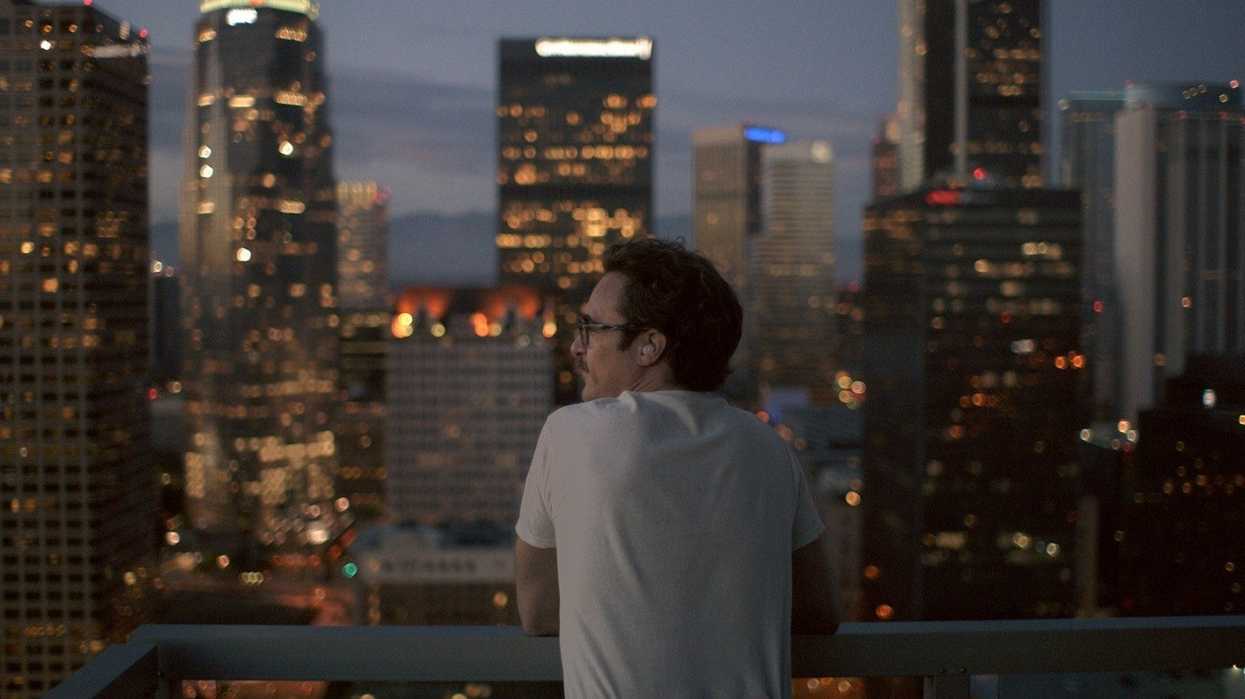
'Her' (2013)
Utopian films challenge directors to visualize perfect societies, while also maintaining dramatic tension.
These stories require filmmakers to build believable ideal worlds that enhance the narrative without overwhelming the characters or themes at their center.
The following seven films show us essential techniques for utopian filmmaking. From elaborate production design to innovative narrative structures, each shows how directors successfully balance spectacular world-building with compelling storytelling.
These examples demonstrate how filmmakers can craft compelling visions of human possibility that resonate with audiences across diverse eras and technological capabilities.
7 Best Utopian Films of All Time
1. Lost Horizon (1937)
Frank Capra adapted James Hilton's novel, Lost Horizon, in 1937. The film follows British Diplomat Robert Conway (Ronald Colman) and his fellow Europeans who survive a plane crash near Tibet. The survivors discover an isolated monastery called Shangri-La, where their lives are forever changed.
The narrative centers on the core philosophy that “the exhaustion of passions is the beginning of wisdom.”
Capra brings the utopian world to life with some of the time’s most elaborate sets ever constructed, blending elements of antiquity and modernity to create an otherworldly paradise. He avoided excessive special effects that might overshadow the story.
Filmmakers might learn from this that practical sets can create more convincing utopian worlds than excessive special effects.
2. Just Imagine (1930)
David Butler's musical comedy presents one of cinema's most unusual sci-fi stories. Set in 1980 New York, the film follows the friendship between J-21 (John Garrick) and Single O (El Brendel), a man from the 1930s whom scientists revive in a radically transformed society.
One of the central questions that Just Imagine poses is whether technological advancements truly equate to societal improvement.
Just Imagine features elaborate sets depicting a futuristic New York created using miniatures, matte paintings, and early special effects.
The film shows us how filmmakers can create compelling art regardless of technological limitations. The creative use of miniatures and matte paintings can help overcome budget limitations to achieve a grand scale. Production designers Stephen Goosson and Ralph Hammeras earned Academy Award nominations for Best Art Direction in 1930 for their work.
3. Logan’s Run (1976)
Loosely based on its namesake novel co-written by William F. Nolan and George Clayton Johnson, Logan’s Run is the story of a utopian society with a dark secret. Everything appears perfect, but the perfection ends at age 30, when citizens face execution through an official ritual called "Carousel," for population control.
Logan’s Run explores the illusion of utopia and the cost of perfection while critiquing societies that sacrifice the value of life for the sake of superficial happiness.
Director Michael Anderson used production design as the central visual motif. The contrast between the city’s artificiality and the natural world, as embodied in the city’s geodesic architecture, moving walkways, and vibrant costumes, creates a visually immersive future that is both alluring and unsettling. The film uses color symbolically, particularly in color-coded signals that reinforce surveillance and control.
4. Metropolis (1927)
Metropolis explores classism against the backdrop of a futuristic city that’s starkly divided between opulence above the ground (in the form of the wealthy elites) and the city’s oppressed workers, who toil below.
The narrative follows Freder (Gustav Fröhlich), the son of the city’s autocratic ruler Joh Fredersen (Alfred Abel), who sets out to change his father’s classist governance that's been leveraging on the disparity between the rich and the poor, after he falls in love with an activist, Maria (Brigitte Helm) and witnesses the dreadful conditions of the working class.
Fritz Lang’s Metropolis is a masterclass in world-building and uses archetypal characters, combined with allegorical storytelling, to build a connection with viewers.
5. Her (2013)
Set in near-future Los Angeles, Spike Jonze's Her follows Theodore Twombly (Joaquin Phoenix), a lonely writer going through a divorce. Seeking companionship, Theodore purchases an AI operating system named Samantha (Scarlett Johansson). As Samantha evolves, the two form a deep emotional and romantic relationship.
Not only does Her feature a seamless blend of sci-fi, romance, and drama, but the world-building extensively supports the film’s themes of technology and human connection in a lonely society. As AI technology rapidly advances, Her remains increasingly relevant to contemporary audiences.
6. Elysium (2013)
- YouTube
It is 2154 on Earth, and the planet is beyond repair. Max Da Costa (Matt Damon) works as a factory worker on this ruined version of our planet, where impoverished masses live like bugs. At the same time, the wealthy reside on Elysium, a luxurious space station with state-of-the-art lifestyle facilities, including a machine that can cure any ailment.
The narrative revolves around Max’s desperate attempts to reach Elysium after he is diagnosed with terminal illness due to being subjected to constant radiation at work.
Neill Blomkamp’s Elysium combines blockbuster action with bold social commentary, using contrast, further enhanced by visual effects, to create a believable, stratified world.
7. Things to Come (1936)
Adapted from H.G. Wells’ novel The Shape of Things to Come, William Cameron Menzies’ Things to Come is set in the 1950s, depicting a world war, after which civilization collapses into chaos. Decades later, a technocratic elite known as “Wings Over the World” emerges, restoring order and ushering in a new age of scientific utopianism.
Things to Come is notable for its ambitious scope and visionary production design, depicting sweeping changes in society and architecture, using large-scale miniatures that were innovative for the time.
Which of these movies have you seen? Tell us your favorites in the comments.