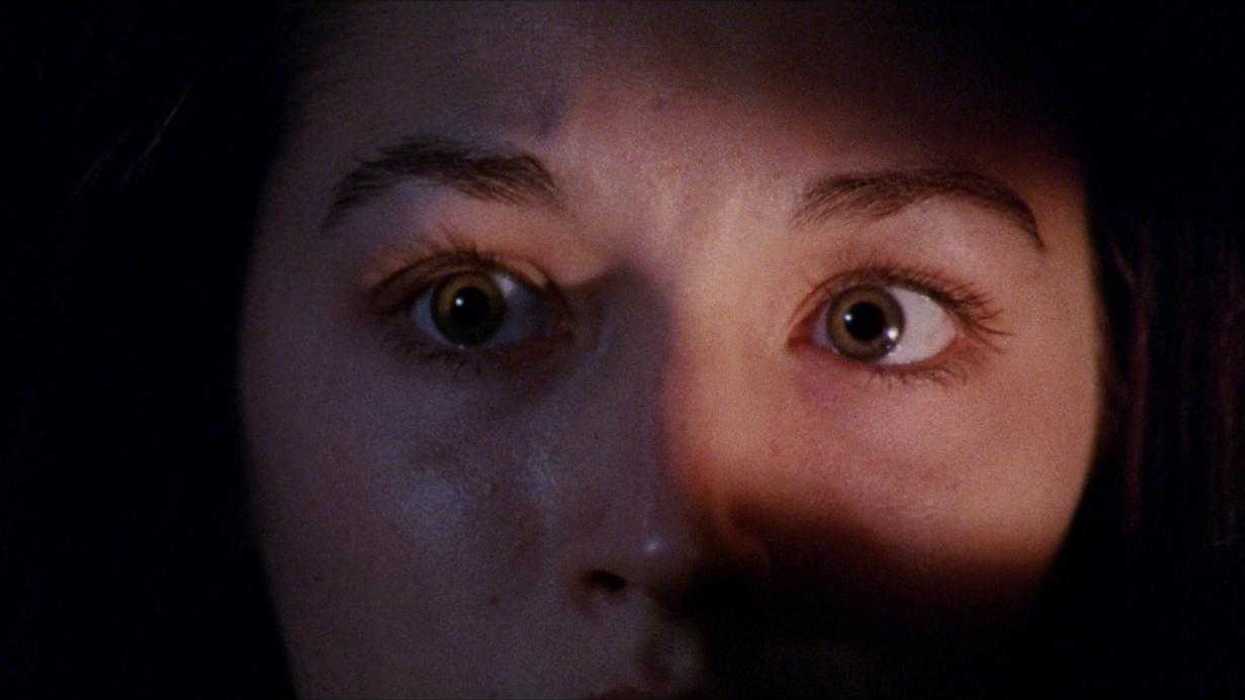
Bob Clark’s Black Christmas was a stepping stone in the slasher genre, focusing on urban horror and a stalker-killer. Naturally, it marks many cinematic firsts in the genre while crafting a template that inspired slasher classics such as Halloween, Friday the 13th, and Scream.
Among its many firsts, Black Christmas is the first Hollywood slasher movie to introduce the “opening kill” trope. But that’s not all that the hype is about. What’s interesting is how it treats the opening kill sequence.
In this article, let’s analyze Black Christmas’ opening kill sequence to understand how the sequence exudes horror in every second, even without explicitly showing gore.
To Give You a Little Context…
=
Black Christmas revolves around a group of sorority girls who receive mysterious, lascivious phone calls on their house landlines during Christmas break.
While they ignore them at first, sometimes even egging the caller on a little for fun, they soon realize those calls are anything but pranks, almost like a countdown on their lives.
The Opening Scene
Black Christmas opens during Christmas in an unknown POV. We’re outside a sorority house, which sports beautiful Christmas decorations. Through the window, we can see the girls having a good time at their house party.
The unknown man carefully inches closer to the house without wasting any more time, meticulously managing his every move as he tries to find an entry to the house. The main door had been open all this time, but one of the sorority girls, Barbara, thankfully closed it, so now the man has to make his way inside through another entrance.
Soon, he finds a trapdoor on the roof, which provides a clear entry into the house.
Meanwhile, the girls are wrapping up their Christmas party. Their boyfriends have left by now, and finally, the girls are left all alone in the house. Everyone is excited about their Christmas plans for the next day.
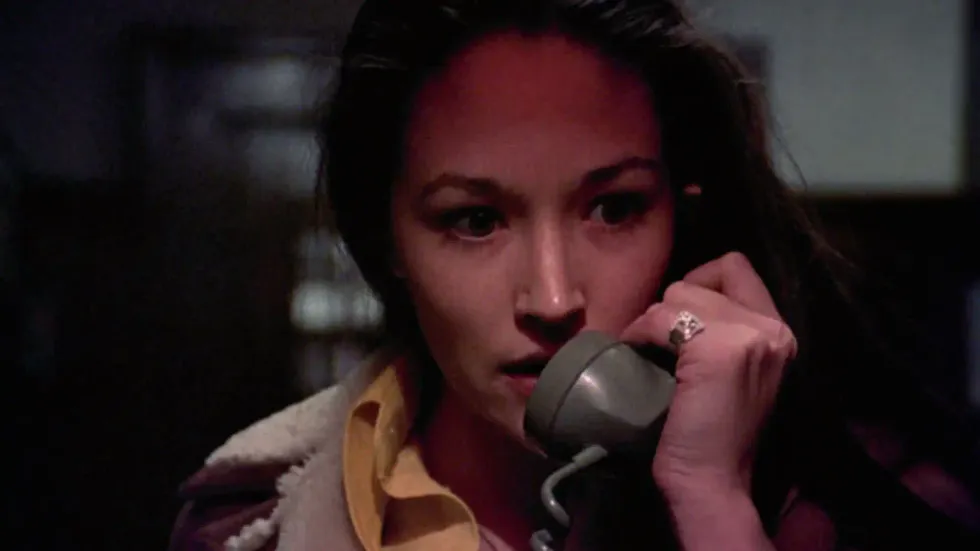
That’s when the phone rings. Jess, another sorority sister, takes the call and hears a stranger moaning on the other side of the phone.
We learn that this is not the first time that they’ve gotten this same call. The man on the other side of the call starts making nasty sexual comments, and Barb lashes out at him. Right before disconnecting the call, the man threatens to kill her.
While Barb isn’t really bothered by the threat, the other girls are, especially Clare Harrison, who isn’t particularly happy with how Barb is egging on this potentially dangerous mystery man. Upset, she retires to her room to pack her bag, as she is supposed to meet with her father the next afternoon.
Nobody is aware that it is the last time that they will ever see her, because there’s a psychotic killer inside their house, who is all set to kill her within minutes of her stepping inside her room.
Analyzing Black Christmas’ Opening Scene
1. The POV Approach
 Black Christmas (1974)Source: Warner Bros.
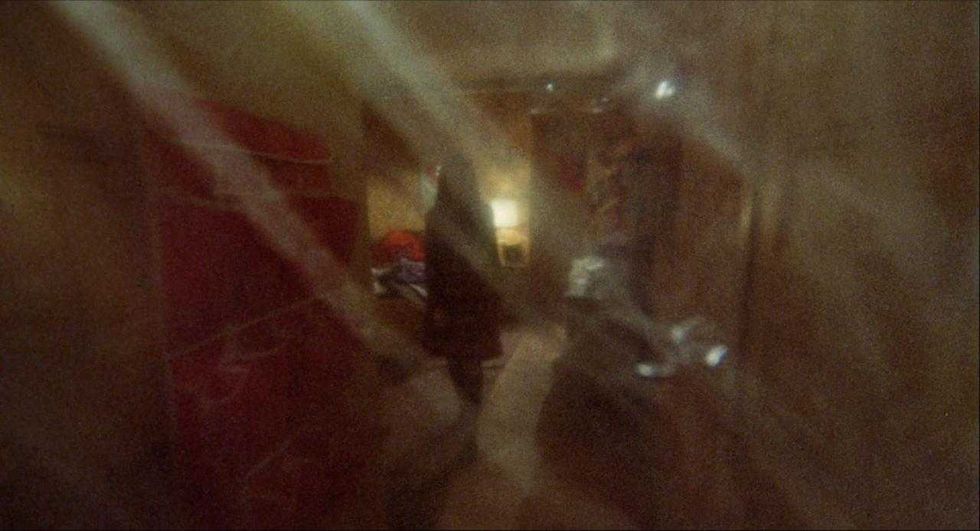
Black Christmas ditches the omniscient POV and heavily relies on the killer’s POV to establish both the location and the victims, forcing the audience into a psychotic voyeurism while feeling the heat of the threat.
The victims are completely oblivious to the danger, and we can’t stop biting our nails, anticipating the first victim, and worrying about how many more will be caught at the end of this stalker-killer’s knife.
The POV shot of the killer is an important part of Black Christmas’ opening. To get it absolutely right, Bert Dunk, the camera operator, developed a special body-brace rig that could be mounted on his head or shoulder, while leaving his hands completely free.
That small innovation changed the game for Black Christmas. The killer in the movie is Dunk himself, wearing his specialized camera rig, recording the killer’s POV as he performs the killer’s actions with his free hands, including the infamous bag strangling scene.
2. Deliberate Pacing
The pacing mimics the speed and momentum of someone who’s trying to sneak into the house. This immediately puts the viewer into the killer’s shoes, making them one with him.
If you’ve seen David Lynch’s Blue Velvet, you’ve felt similarly, especially in the scene where Frank sexually abuses Dorothy as Jeffrey watches them from the closet where he is hiding.
3. The Ominous Phone Call
 Black Christmas (1974)Source: Warner Bros.
The killer’s phone call became a quintessential slasher trope after Black Christmas sowed its seeds in the genre. In fact, many of the genres’ classics, such as When a Stranger Calls and Scream, have elevated this trope to a whole new level.
I personally love how Scream reimagines the killer’s phone call, poking fun at the most popular horror tropes while creatively rehashing them to heighten the narrative’s terror quotient.
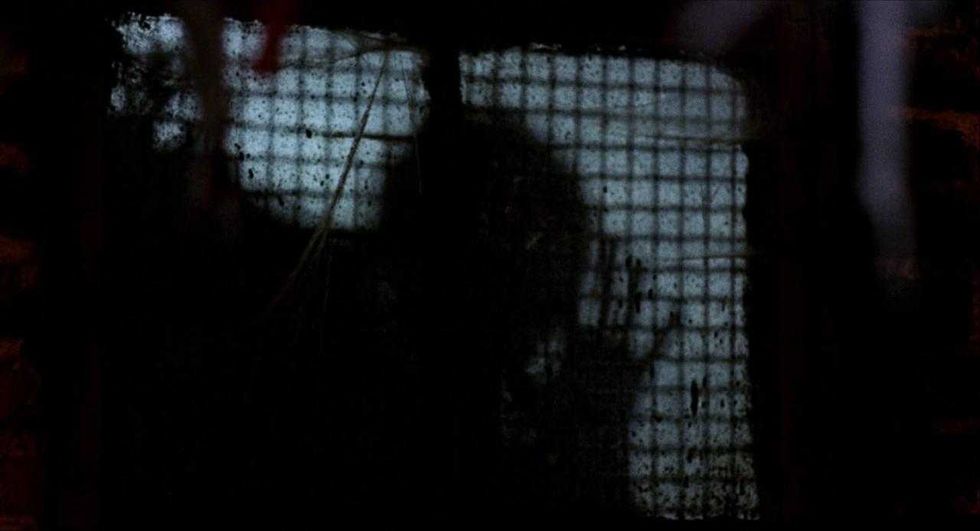
4. The Killer-Inside-the-House Trope
 Black Christmas (1974)Source: Warner Bros.
The premise in itself is quite horrific: a mysterious caller relentlessly calling you when you’re home alone, only to confess at the end that he’s inside your house.
Before you can process, you are attacked. While Black Christmas pioneered the killer-inside-the-house trope, it was When a Stranger Calls, a movie based on an urban legend, that popularized this trope.
5. Restrained Reveals
The POV served fear in more than one way. Firstly, the shakiness of the POV, which mimics the movements of a human being (in this case, a killer), makes us uncomfortable.
At the same time, the POV prevents the killer’s reveal. For more than half of the movie, we know nothing about the killer other than his gender. This turns him into an enigma, and humans have always been scared to death of unknown threats. Naturally, the restrained reveal adds to our fear.
The Cultural Impact of Black Christmas’ Opening
Black Christmas handed a clean template to upcoming Hollywood slasher filmmakers. While Michael Powell’s Peeping Tom is widely considered the first slasher film, or at least a proto-slasher, Black Christmas is considered Hollywood’s first slasher.
Black Christmas was released alongside Tobe Hooper’s The Texas Chain Saw Massacre, and also uses the final girl trope.
While Hooper’s film presents horror rooted in isolation and psychopathy, Clark’s movie unfolds more like an investigative thriller, in the heart of the town, underscoring the horrors of the presence of a killer at the center of civilization.
Black Christmas inspired multiple movies: Halloween’s opening starts with young Myers' POV. The structure of Friday the 13th, where a group of youngsters is targeted at a campsite by a mysterious killer, is similar. The opening of Scream, in which a phone call from the killer sets the stage for the first kill, gets inspiration here. Undoubtedly, it’s a milestone in the genre.
Which is your favorite slasher opening? Let us know in the comments below.
- How to Create a Slasher Villain ›
- 7 Slasher Movies That Defined the Genre (and Still Rule It) ›
- How to Write a Slasher Movie ›
- The Evolution Of Slasher Movies ›
- Making the Cut: Our Definitive Ranking of the 15 Best Slasher Villains ›
- The Screenwriter Behind the Movie That Changed Slasher Horror Forever | No Film School ›