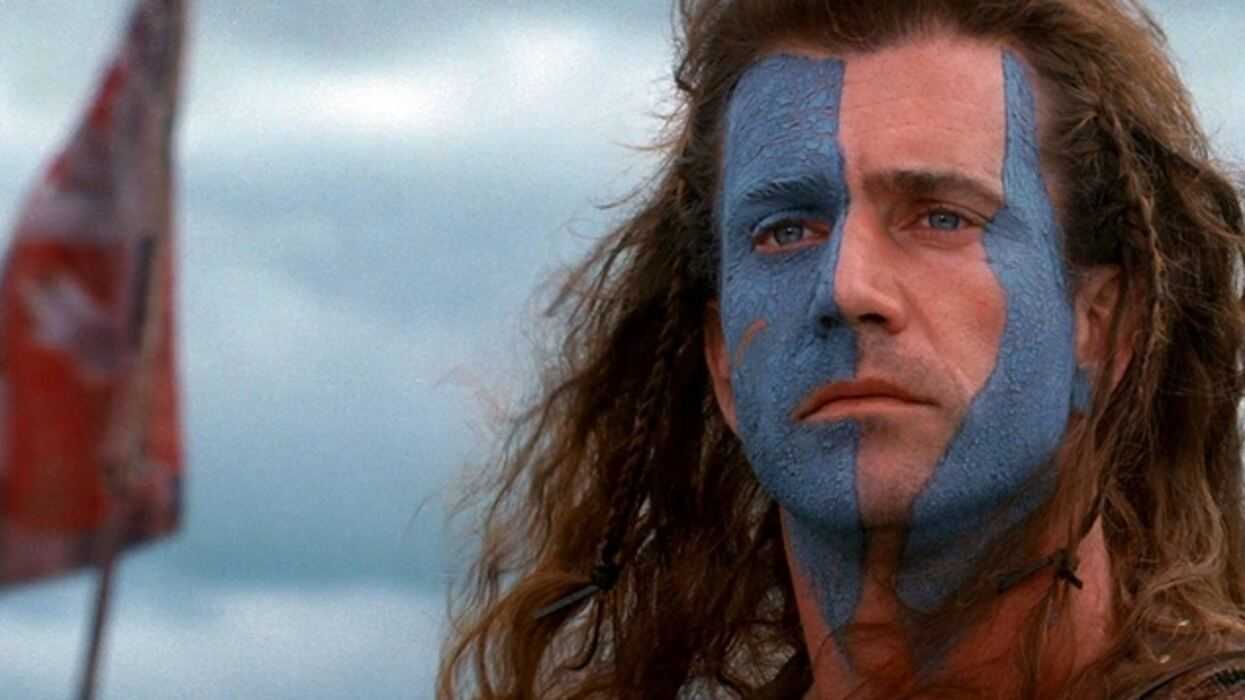
The year was 1995. In Braveheart, a sprawling, gory epic about rebellion, sacrifice, and the fervent desire for freedom, the scene takes place in Stirling, Scotland, where Mel Gibson’s character, William Wallace, who has lost everything to English oppression, rides out onto the battlefield and stands in front of a ragtag army of Scots who are outnumbered, scared, and partially prepared to flee. Wallace, clad in war blue and full of conviction, then makes a rallying cry.
“They’ll Never Take Our Freedom!”
And, from that moment on, this line—that erupted from the screen into history—has endured for decades, not only as something a character yelled at his soldiers or a line from a movie, but as an act of defiance.
And that’s what motivates this narrative: why did this particular line transcend its script, its time period, and even its film to become a universal phenomenon? Why does a line from a medieval battle still reverberate in late-night comedy skits, sporting events, and political demonstrations today?
Let’s examine the structure of an immortal moment.
The Architect of Defiance: Randall Wallace’s Script
From History to Hollywood
There is not much historical evidence of the real William Wallace. There is no transcript of his speeches on the battlefield, but chroniclers described his uprising, his military triumphs, and his cruel execution. Screenwriter Randall Wallace had a lot of creative freedom as a result. When he sat down to write Braveheart, instead of being constrained by direct quotes, he could create words that felt both historically relevant and cinematically memorable.
It was a daring move to give William Wallace’s enigmatic persona a voice that would motivate both contemporary moviegoers and medieval Scots. But this risk was profitable. In essence, Randall Wallace wrote a script for the ghost of history, and it sounded like the real thing.
Crafting the Rhetoric
It takes effort to give a great speech. William Wallace skillfully builds this one by acknowledging his men’s fear, countering it with the shame of cowardice, and then crescendoing with a single, straightforward, unwavering idea. It follows the format of classical rhetoric: thesis, challenge, and climax. Additionally, the line is only six words long, demonstrating the final punch’s genius. It’s simple to recite and impossible to forget.
It teaches a writer when to stop embellishing a sentence and just get right to the point. It was reduced to its most basic elements by Randall Wallace, and those elements shook the course of history.
A Line Rooted in Theme
This one was more than a motivational speech about fighting the English. It was a shout that captured the spirit of the movie. Braveheart is about dignity restored, tyranny endured, and love lost. Freedom is personal as well as political. The audience is aware of what Wallace has already given up for that ideal by the time he yells these words. The line turns into a manifesto for everyone who has ever felt trapped and wished to escape, not just for Scotland.
Gibson’s Delivery and Direction
More Than Shouting
The line might have been sunk into melodrama by a weaker actor. Gibson, however, straddles the line between performance and unbridled outburst. His eyes flicker with desperation, his face twisted in pain and rage, and his voice cracks with urgency. He is at the same time begging, commanding, and exposing his soul, rather than just performing. Despite the fact that the words are essentially a Hollywood fabrication, the line is credible because of its authenticity.
Directing the Moment
Gibson stacked the deck for impact in his role as director. William Wallace’s painted face is shown for a while before the camera shifts to the men’s doubtful gaze and then widens when their determination solidifies. The diting paces the rhythm like a heartbeat before a sprint, and slow motion intrudes, enlarging James Horner’s score. The soldiers are changing in real time, instead of just listening. And we are, too.
On-Set Anecdotes
According to shoot accounts, Gibson threw himself into these takes, screaming until his voice broke, determined to achieve a level of ferocity that couldn’t be faked. That energy apparently fueled the extras, many of whom were real Irish army soldiers recruited as stand-ins. Even the crew was electrified by what could have been just another staged pep-talk on the battlefield. This genuineness didn’t have to be manufactured because it was infectious.
 'Braveheart'Credit: Paramount Pictures
The Sound of Battle
James Horner’s Emotional Engine
James Horner had a talent for creating music that blended with images rather than merely accompanying them. His music rises beneath Gibson’s words during the freedom speech, but it never rivals them. The theme unites grief and victory, bringing to mind the price Wallace paid for his struggle while urging us to pursue his ideals of liberty. The line, instead of “‘just landing,” reverberates—thanks to the combination of music and conversation.
The Visual Grammar
The scene is a textbook example of cinematic symbolism from a visual standpoint. While sweeping wide shots depict the sea of soldiers absorbing William Wallace’s conviction, close-ups on Wallace convey intimacy and vulnerability. Gibson insisted on keeping the blue war paint, which turned into its own symbol of defiance. In order to create a striking contrast between Wallace’s face, blood, and paint, cinematographer John Toll used muted greys and earth tones to paint the battlefield. The line was as iconic in appearance as it was in sound.
Reception and Accolades
1995 Audience Reaction
Reports of audience reactions to Braveheart’s theatrical release were immediate and intense. As though they were actually members of the Scottish army, the audience cheered during the freedom speech. In their reviews, critics praised the scene, referring to it as the film’s emotional core. For a lot of people, this scene was what turned the three-hour epic into something more than just another historical drama.
Award Season Recognition
It was evident that the academy felt the same way. Five Oscars were won by Braveheart, including Best Picture and Best Director for Gibson. It’s difficult to envision the movie sweeping awards without the cultural impact of that speech, even though award juries don’t vote for individual lines. It was the scene that people remembered when they cast their ballots, and it gave the film its identity.
Cultural Artifact
Permeation into Pop Culture
The line quickly left the film. It has been parodied on South Park, Family Guy, and innumerable other late-night comedy shows in the years that followed. It was stolen by marketers for everything from potato chips to athletic apparel. It was taken by political cartoonists to make fun of everything from corporate takeovers to tax laws. You can tell a movie line has become ingrained in the culture when it becomes shorthand like that.
A Symbol Beyond the Screen
However, the true test of immortality was not found in entertainment. Around the world, the line was written on protest signs, chanted at rallies, and brought up in discussions about Scottish independence.
“They’ll Never Take Our Freedom!” found new life in fresh struggles, whether in Catalonia, Hong Kong, or student movements across campuses. It was now a transportable symbol of resistance rather than merely a catchphrase from a movie.
Lessons in Storytelling
It’s likely that Braveheart’s freedom speech will be mentioned on the syllabus if you walk into a screenwriting or film-studies class today. Scholars analyze it because it shows how film can create myth, not because it is historically accurate, which it probably isn’t. The line serves as an example of linguistic economy. A nation’s emotions can be conveyed in six words, and every aspiring writer yearns to accomplish this: impact without clutter.
Students of film studies analyze the scene for how the elements are orchestrated. Gibson creates a single crescendo by combining direction, performance, score, pacing, and camera angles, in addition to dialogue. As a result, the moment feels earned rather than planned. This frequently starts discussions in the classroom about how to steer clear of manipulative melodrama while still striving for the greatest emotional impact.
Actors, too, learn from the delivery. Gibson demonstrates that belief must seep through the performance’s cracks; shouting is insufficient. It serves as a reminder that anger and vulnerability frequently go hand in hand.
Because of this, the line is not only remembered but also studied even thirty years later. It serves as a model for how films can evoke strong feelings in the public and stick in people’s minds rather than being a museum exhibit.
The Anatomy of an Immortal Moment
Why then does this single statement still reverberate throughout popular culture almost thirty years later?
Because it was the ideal combination of an actor-director who gave everything to a performance, a writer who understood simplicity, a score that oozed emotion, and cinematography that etched it into visual memory. It felt even more real because it was art masquerading as history, rather than being history for the sake of it.
“They’ll Never Take Our Freedom!” is effective because it captures in six words what entire books, governments, nd revolutions attempt to express: the inextricable human need for autonomy and dignity. It endures spoofs, parodies, and decades of shifting preferences because of this. It serves as a reminder of the fire that people carry in their chests and goes beyond a simple movie moment.