Iconic Film Character Intros: How 'Casablanca' Teaches Us to Reveal a Protagonist
When Rick walks onto the screen, everything changes.
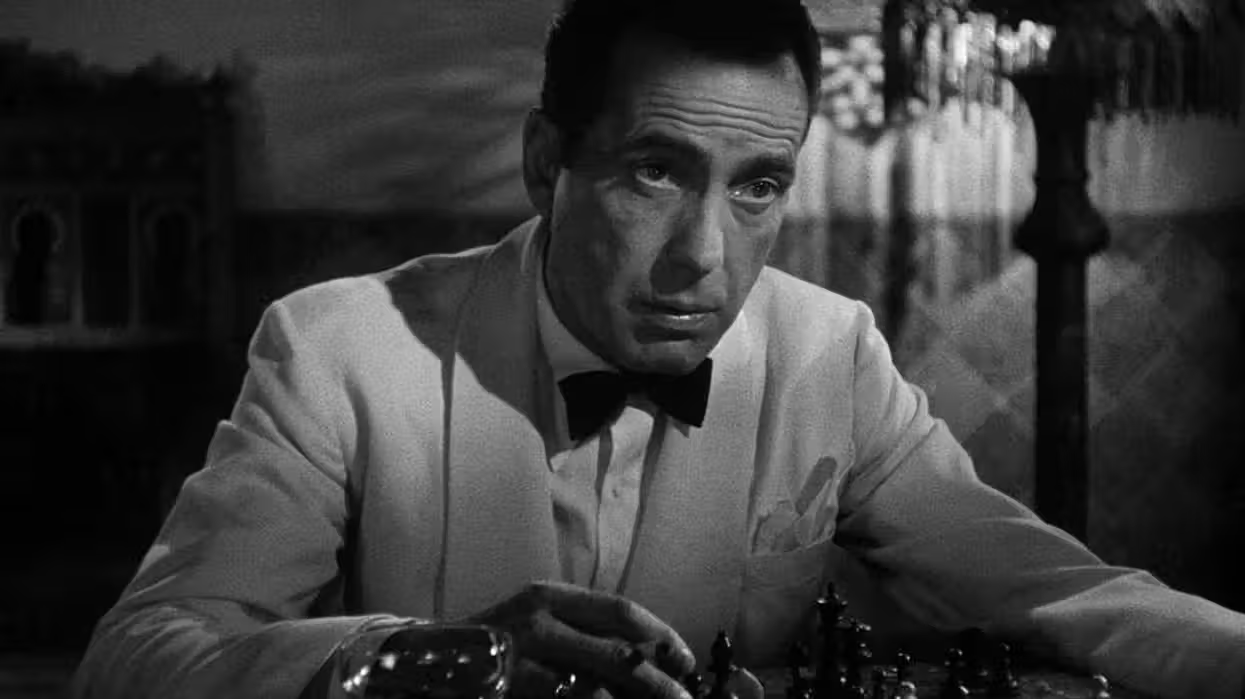
'Casablanca'
If I were voting for the best movies of all time, you'd better believe that Casablanca would be on my ballot. It's one of those rare films that gets more perfect every time you watch it. You're on the edge of your seat rooting for both love and revenge and righteous justice the whole time. And the ending still gives me chills.
The movie is perhaps the best example of screenwriting I have ever seen, with different writers contributing lines at different times to build something that truly turned out great.
You can study the Casablanca screenplay and learn many lessons, but today I want to talk about how it introduced Rick Blaine (Humphrey Bogart) and why every filmmaker should study this scene.
Let's dive in.
- YouTube www.youtube.com
Build the Myth Before the Man
What this movie does so well is that it builds our expectations of who Rick is before introducing him, so we're on the edge of our seats with anticipation.
We're inside his bar, Rick’s Café Américain, for a very long time before we even glimpse him. We hear his name spoken in hushed tones by refugees, gamblers, and corrupt officials. We even know a few things about him..
- "He won't drink with guests."
- "He never accepts checks."
But we take time getting to the man because director Michael Curtiz built high expectations in the audience's mind. When a camera finally cuts to the man himself, the audience is already primed to pay attention and to embrace the star power of Humphrey Bogart as this legend as well.
- YouTube www.youtube.com
The Anatomy of the Reveal
When Curtiz finally brings us into Rick’s presence, we get glimpses of his body before we reveal the person. He's signing a piece of paper when we meet him.
The camera doesn't start on Bogart’s face. It opens on a close-up of a check authorization. We immediately see his authority and economic power within this ecosystem. He's totally in charge here.
The next thing we notice about Rick is that he is totally alone.
We have the tilt now, revealing Rick in a medium shot. He is smoking and playing chess against himself. With no dialogue, Curtiz plants three traits that matter as the story unfolds.
- He is a strategist.
- He is entirely alone
- He controls both sides of the board in his world.
"I Stick My Neck Out for Nobody"
We've said it before, but I'll say it again: your character needs a code. We hear Rick's as soon as we meet him. We have our visual reveal, and then a high-rolling customer tries to enter Rick's private gambling room.
That's when Rick calmly stops him, rips up his check, and denies him entry. He doesn't need to yell; we understand, as this guy does, that Rick has all the power here.
And when Ugarte (Peter Lorre) later asks why he didn't help a refugee, Rick delivers his ultimate thesis statement:
"I stick my neck out for nobody."
This establishes Rick's starting point on his character arc. The whole rest of the movie is about Rick breaking that pledge and all the good reasons he does it.