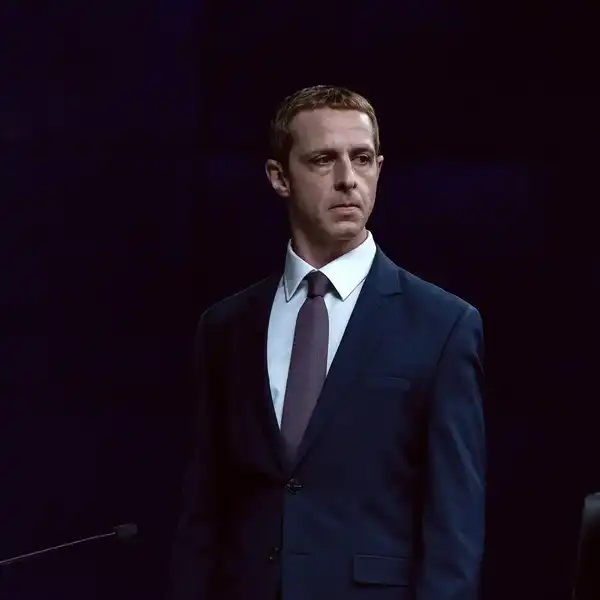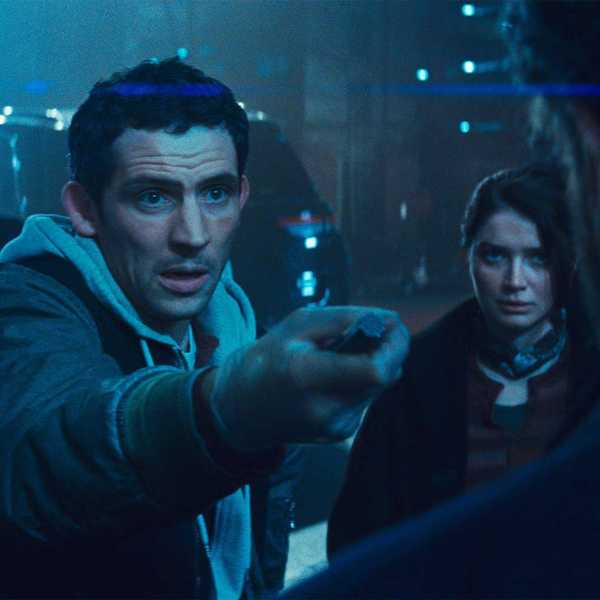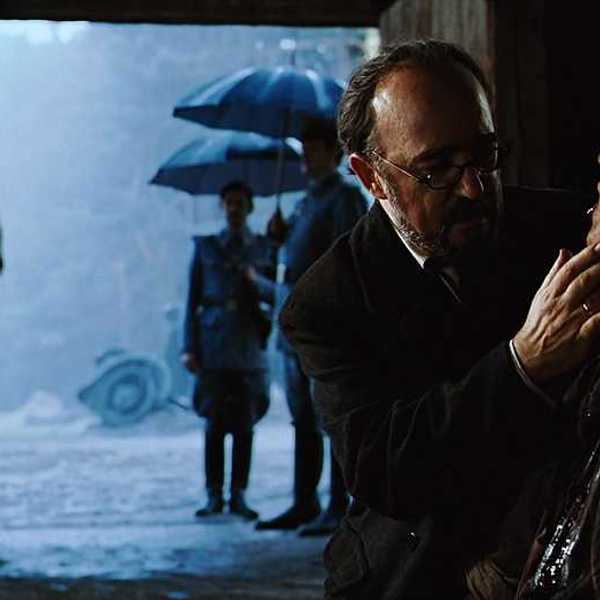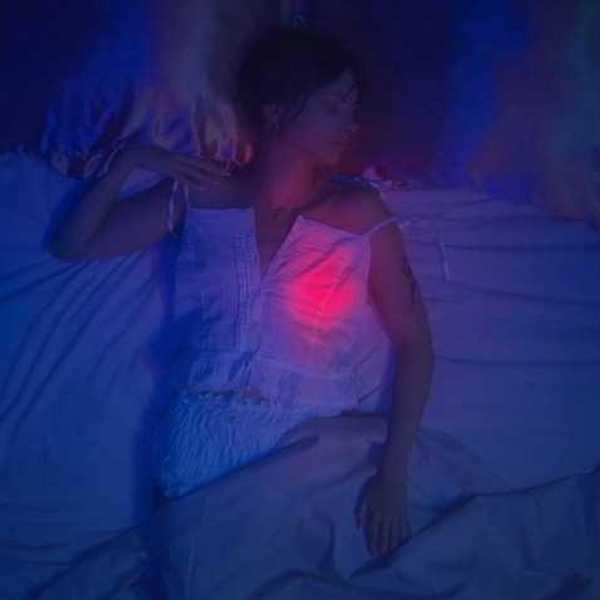
When I heard that the filmmaker behind Too Many Cooks had a movie at this year's Sundance, his title rocketed to the top of my most-anticipated list.
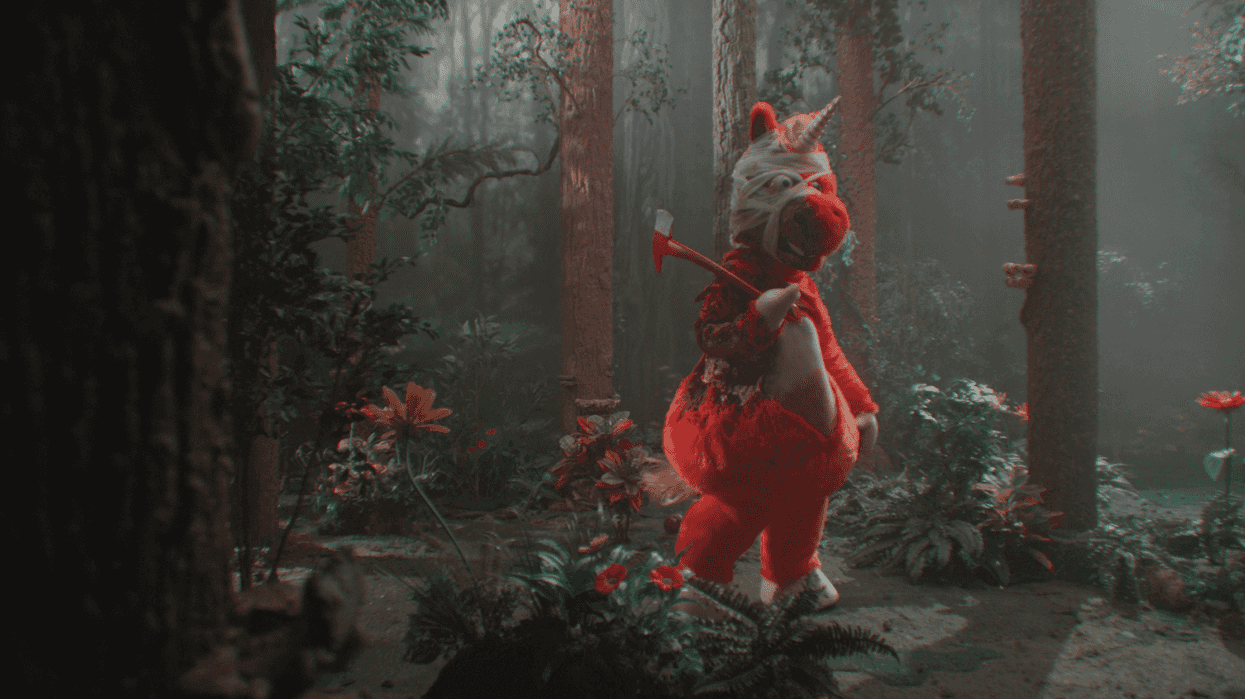
Casper Kelly, a writer/director who's made a living off of weird, creative ideas in partnership with Adult Swim, is at it again with Buddy. The film is simply loglined as, "A brave girl and her friends must escape a kids' television show," and I'm loath to say more than that.
It really is one you should go into blind, especially if you know Kelly's work already—there are the 3 a.m. viral hits like Cooks, Yule Log, Final Deployment 4: Queen Battle Walkthrough, as well as TV credits including Your Pretty Face is Going to Hell and Archer. He likes to take familiar formats and twist them until they reveal something unsettling about the media we consume.
No Film School spoke with Kelly about how the film came together, his approach to tone, and what he learned from making it.
Editor's note: The following interview has been edited for length and clarity.
 BuddyCourtesy of Sundance Institute, photo by Worry Well Productions
No Film School: You often operate in this space of pop culture subversion and nostalgia. What draws you to that, and why do you feel like that's such a rich area for you to play in?
Casper Kelly: That's a great question, Jo. And it almost is surprising. I don't think it was conscious, but then you just realize after you've made a bunch of stuff like, "Oh, there are some patterns here."
And honestly, I still don't know if I know. I think I definitely grew up steeped in pop culture, watching too much of it. … When I was in middle school, I lived overseas in Saudi Arabia for five years. We didn't have any TV, not really, so I could only watch it in the summer when I was home. So I would just binge it like crazy.
And then I would have these long school years where there was no TV. So I just would daydream about it and think about it. ... There was a library with books, I read books voraciously, but no comic books coming in. There was none of that.
So I wonder if that was part of it. ... I just really enjoy, if there's a structure of something or a formula, then there's an expectation for the audience of where that's going to go. And it's fun to zag and throw them off. I do enjoy that. … I just seem to find metaphors that apply to our lives in these stories. I don't consider them parodies or spoofs. I consider them stories about the human condition. And hopefully that doesn't sound too highfalutin.
No Film School: It's something that resonates with viewers, too, because so many people love, for instance, Too Many Cooks, which subverts so many things so well. With Buddy, how did that idea come about?
CK: So in an earlier interview, [we] talked about mascot horror movies. I'm like, “Yeah, I guess there are enough where it is a genre.” And so I knew that territory had been explored, but I think one thing that really hooked me in was when I was a kid, and I would watch shows. When I was a little kid, I thought they lived in the show.
So I always wondered, what happens if you don't want to do that storyline? Are you forced to? Do they make you do that? And also, you just wonder, do they have beds? Do they go to sleep? Are they just awake all the time?
I did this podcast once, and they said a theme that I use a lot is being trapped. And then I did this movie, and I thought, “I'll be damned. I did another movie about ... that's one of the themes.” There are a bunch of things hopefully going on there about authority, trust, and authenticity. But yeah, being trapped is certainly in there somehow.
No Film School: In Buddy, you have these often very straight characters doing horror in the middle of an absurd situation. So there's horror, comedy, but there's also sincerity in all that they're doing. I'm interested in how you approach tone.
CK: It's really a feeling—in the show, early, it was very important for me to play it as straight as possible because the temptation is overwhelming to make it satirical. And I would talk to everyone, don't make it satirical. Don't satirize it. Just make it like a show from that time period because that will make it more shocking when it breaks out of it. If it's satirical, you already know something's afoot.
No Film School: There's one scene I love, where there are two married characters, and they're talking about something that's really wild, but the emotional core of that conversation felt so true to me. So I think I'm interested too in exploring how you approach dialogue like that.
CK: It's a great question, and I think it's not super conscious until after the fact. It's working intuitively ... Maybe this is debatable, but I think the best strategy is your own life and your own feelings, putting that in there as much as possible because that's authentic.
So in Yule Log one, I found myself putting in a thing that really happened to my wife, and it was on my mind, I guess. A coworker of hers was killed, and she was supposed to take the money to a bank, and he's like, "I'll take it for you. I'm going that way anyway." And he got robbed and killed. And that happened right before we met. And it's been an emotional thing for both of us, of just how that could have gone differently if she had gone.
What I am trying to say is I don't know if I'm smart, but I put in my true emotions and my intuition, that's how I try to do it. And then after the fact, I'll go, "Damn, that worked well,” or, “That was not good at all. I need to rewrite it."
No Film School: I think that's what I'm resonating with [in the dialogue], it feels real in the middle of this crazy story.
Late in the film, you get peeks behind the curtain as to what's happening and the why. How do you determine what you're going to put in, what's just for you, and what not to develop?
CK: I think it's feeling it out, but it's also, I'm just a huge fan of that. I mean, the perfect example of that is Twin Peaks, of just obsessing and going mad, trying to put it together. And I've watched so many analysis videos of the movies I love, so many. I love it.
I love it, but something's got to haunt you, and then you obsess about it, and then you want to know what it means and everything about it and everything, Easter eggs. And I love that. So it's natural that I would want to try to do that. But I love that feeling of not having enough information, not quite being able to scratch the itch entirely. I love that feeling.
No Film School: You've got a couple of different looks going on here. You have the '90s TV show look, you have a bit more of a cinematic look. What did you do to achieve those?
CK: I’ve got to give a shout-out to our DP, Zach Kuperstein, who also shot Barbarian. And we did explore using period cameras, but we ended up not because we had so little leeway in terms of time that if the camera broke down, we were just going to have to cut scenes. We weren't going to get an extra day.
So we did use a modern camera, but he figured out a way to use a lens in a way that it used a lot less of the sensor. So it would have sort of a slightly lower-res, distressed quality. And then of course we did play around with the aspect ratio, and then it was fun to go into the Grace sequences, world. And then also a world that I'm trying to evoke sort of a slightly classic Hollywood, Oklahoma, Wizard of Oz feeling a little bit, that world too.
That was just fun. It's just fun to have different-looking visuals that fit the story and the theme and reinforce the theme.
No Film School: What was your shoot schedule?
CK: I think 25 days.
No Film School: Do you have any advice for working with kids?
CK: These kids were great. These kids were very sophisticated in some ways. ... They're like 10 and 11, because I didn't want to cheat it. I researched, Selena Gomez was on Barney, did the math of like, “Well, how old was she on there? Okay, that's the age we're going to do,” which was tricky because if we had done 13, we would've gotten more hours and everything, but I just wanted to look real, authenticity, but they were great.
I think maybe—and I think this applies to everyone, so this is a good rule—is that people will pick up my unconscious body language. So if I'm stressed or upset, that'll bleed over. So I need to have my head straight, where I'm calm, cool, and collected and focused, but not a basket case, because it's sort of like in the theme of the movie, kids pick up on weird vibes when things aren't quite right.
But these kids were pros, just like working with adult actors.
- YouTube www.youtube.com
No Film School: You've mentioned elsewhere that when you made Yule Log, you talked about how you learned screenplay structure from that. Is there anything that you learned from working on this film that you're going to take forward?
CK: Oh, yeah. I need to think of a better analogy, Jo, because I'm not a golfer, but it's like golf where it feels like, “Okay, I got it figured out.” You don't have it figured out. There's always more stuff to learn.
So what did I learn here? … I do learn a lot. Okay, I will say this. I'm working on my next screenplay, and as part of that, I was reading all my old screenplays, and I'm a pretty low self-esteem guy, but occasionally I'm like, “I'm a genius.” It's like 10%. I feel like my mood goes like that.
So I'm like, “Well, this screenplay is going to be a work of genius.” And then I read it, and I'm like, “Oh my God, I've learned so much since. This thing that is happening on page 40, that should have happened on page 10. This movie needs to move a lot faster.” or whatever.
So I do feel like I'm learning a lot. And I do have to give credit, I had a co-writer on this one, Jamie King, who knows, it’s great to have someone to bounce ideas off of and have another opinion because sometimes it's easy to have five ideas, but you need someone help to go, “Which of these five is the right approach for this scene?”
No Film School: I feel like so many people feel that. You just look at your work, and you're like, "Ugh, I don't know even what this is."
CK: Oh, and I'm reading this book on The Shining. It's like a thousand pages. It's very detailed. The guy that did Toy Story 2 wrote it [Lee Unkrich], or helped.
And the amount [Kubrick] did rewriting and outlining and re-outlining, it lists all these other scene ideas they had. They had a scene where the ... This is so off topic, I'm sorry, but they had a scene where in the maze, the twins open a portal so Danny can escape out of the maze, and all kinds of stuff.
So it's just a lot of work and trying stuff and eliminating and refining. And there's no magic. It's just a lot of work. I mean, it does feel like magic.
- YouTube www.youtube.com
No Film School: A lot of your work, especially early on, was low-budget. Do you have any advice for indie filmmakers working in low-budgets?
CK: Oh, yeah. I love low-budget ... I want to do a self-financed movie in between doing these other movies. I think it's awesome.
I've been watching a lot of low-budget movies for inspiration. I watched Following, which is the first movie by Chris Nolan. I watched We're All Going to the World's Fair just a couple of days ago, or Pi, or Primer, et cetera, et cetera.
There's a movie by Sean Baker. I think it's the one he did before Anora called Red Rocket. And that one, it wasn't a micro-budget, but it was a million dollars, which for his type of world is still very low-budget. And he's like, "I had a crew of eight people, and everyone did multiple things. You don't do just one” ...
That's the thing. That's how it gets expensive, is everybody does one thing, and then they're standing around otherwise. But he's like, "I had eight people, and my wife's a producer. She's also doing X, Y, and et cetera, et cetera." So I think that's part of it, is a small crew ... Also, Benson and Moorhead, their movies. Those guys do low-budget movies, too. And they sell these T-shirts like, "I make movies with my friends.”
You know what it is? Okay, here it is. Here it is. It's just like making a short film, but longer. So whatever you did to make a short film, you do that for more days. It's that simple.
No Film School: Easy. Anyone can do it.
CK: It's very hard.
No Film School: What are you most excited about for Sundance?
CK: I am excited to feel this response with a live audience. I'm taking my family. I'm excited for them to see a little of the world and what I do. I don't know if my kids have seen any of my work, and I'm excited to celebrate the last hurrah in Park City with a bunch of other geniuses. Jim Cummings is going to be there. He's a genius.
No Film School: As a Midnight film at Sundance, it's going to be riotous, I think, in the actual theater.
CK: I got to see Mandy like that because I did the "Cheddar Goblin" thing, and that was a wild, magical experience.
No Film School: Is there anything that you wanted to add?
CK: If you have trouble structuring time to write or if you have trouble focusing or procrastinating, there is a website called Focusmate that has done wonders for me ... You're going to read it, and it's going to sound absurd, but it's free. You can try it for free. Just try it. If you hate it, you hate it, but it's amazing.
Like a Zoom, it pairs you with a random person who's also trying to get something done, and you just say, "What are you doing today? I'm going to do X. What are you doing? I'm going to do Y." Then you mute it for an hour, but you see their face, and there's something very deep in human nature that if you tell someone to their face you're going to do something, and you see their face, you do it.
- The Most Important Lessons We Learned from Indie Filmmakers This Year ›
- Dear Filmmakers Who Did Not Get Into Sundance ›
- How I Made My Short Film Go Viral ›
- 2026 Sundance Film Festival Unveils the 97 Projects Selected ›
- 45+ Sundance 2026 Films That Were Made Using Blackmagic Design Cameras and Tools ›
- What 'undertone' Editor Sonny Atkins Learned Cutting Horror ›
- You got a lot of stuff, kid ›