Happy New Year's Eve! How are you feeling, filmmakers?
On the last day of 2025, we're spending some time reflecting on the wild ride of the past 12 months.
This was supposed to be the year the industry healed. Instead, Los Angeles production dropped 22% in the first quarter. Television, 30%. The wildfires displaced hundreds of workers. And the industry mantra "survive 'til '25" no longer provided a beacon of hope.
But something else happened this year that excited us. While studios spent $270 million on disasters and fled to London for tax breaks, indie filmmakers figured out how to make better work. They built communities. They found funding. They made interesting, award-winning films.
As we head into 2026, the traditional advantages (proximity to studio jobs, access to established networks, waiting for institutional validation) matter less than ever.
We spent the year talking to filmmakers at Sundance, SXSW, and festivals across the country. Here's what they learned in 2025 that you need to take into 2026.
Work Within Your Actual Resources
Nora Fiffer shot her debut feature on eight-hour days with on-set childcare. Patrick Garcia made an action film that looked expensive by prioritizing realism over ambition. Both filmmakers show that limitations can drive better creative decisions than pretending you have resources you don't.
Producer Carolina Groppa, whose insights we shared in our Sundance 2025 podcast, said, "Producing is about choices. It's never just about saying no; it's about saying, 'Here's what we can do with what we have.'"
SXSW filmmakers told us to write scripts achievable within your actual budget, target festivals that align with your style, and find collaborators you can grow with across multiple projects.
Community Is Infrastructure
The Rich & Successful Film Festival exists because LA indie filmmakers felt isolated despite being surrounded by other filmmakers. Festival director Nir Liebenthal told us they wanted to create what would have changed their lives a few years ago—connections instead of transactional networking.
Sundance filmmaker Sam Feder put it directly. "You have to build a team. Grassroots, community building is what can make a film possible."
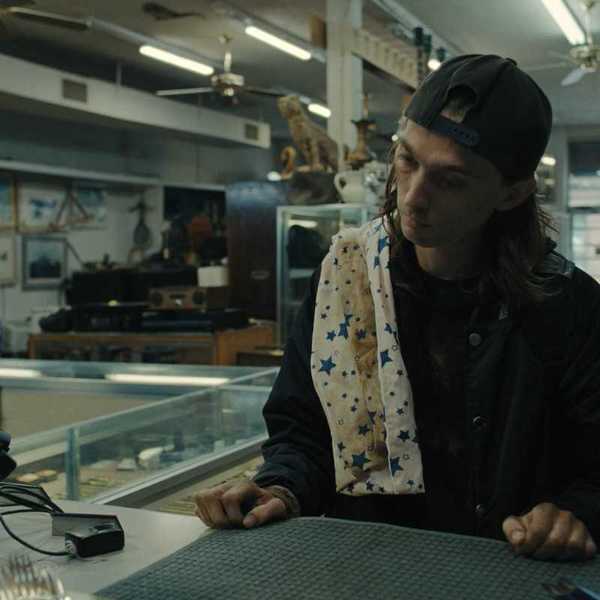
 Video Barn Courtesy of SXSW
Take the Time to Learn Your Craft
Our own GG Hawkins premiered her feature I Really Love My Husband at SXSW this year. Her advice to filmmakers is to be grateful you have time to learn.
"Straight out of college, I submitted my absolute batshit film to Sundance and SXSW and not even one small festival. I can see now I definitely wasn't ready. But I am so grateful I had these past 10 years to hone in on the craft and learn a lot. If I got an A24 feature deal at 22, I would have absolutely botched it."
Take time to read everything about writing and directing. Watch all the videos. Listen to the podcasts. Learn about every aspect of filmmaking. Be persistent. Don't rush the process just because you're impatient.
Handle Rejection Better
Jordan Michael Blake, who got his animated short into Sundance in 2025, told us he created a Gmail folder called "Emails From People Who F*cked Up Their Jobs" where he files festival rejections. He knows it's petty and immature. But it helps him keep going. He also stopped applying to so many festivals because 25 rejection emails a year was messing up his creative energy.
Creative work takes a psychological toll, but you can learn to manage it.
The Chaos Creates Openings
Our writer Jason Hellerman mused on Hollywood's current instability as potentially the best moment for indies.
When big studios contract and flee to London for tax incentives, they leave space for high-concept, low-budget films. Independent film dominated this past year's Oscars because studios abandoned the mid-budget space indies now occupy.
Don't Show Rough Cuts
2026 might be the year you get a project in the can. But there's still something practical to take forward.
At this year's Sundance, editor Benjamin Shearn said, "When someone says 'I can watch it rough,' they are lying." Get your cut to 80-85% completion before showing anyone. They'll mention everything that bugs them. They won't understand what you plan to fix later.
Clean up your audio, handle basic color correction, and address the obvious problems before anyone sees it.
 Rabbit Trap Courtesy of Sundance Institute
Money Exists If You Pursue It
We compiled a massive list of grants, labs, and fellowships that most filmmakers never apply to. BAVC Media offers $10,000 grants. The Davey Foundation supports emerging artists. Panavision provides free camera packages for low-budget indies. Sundance filmmaker Shaandiin Tome said the Full Circle Fellowship gave her the confidence and resources to actually make her film.
The resources exist. Apply to get them systematically.
Collaboration Creates Safe Spaces for Risk
Sundance 2025 editor Jess Lieberman, who worked on The Perfect Neighbor, said productive collaboration requires both assertiveness and humility.
"I am passionate about having a seat at the table, so I will pitch ideas while honoring the vision of the director. And a big part of that is always really knowing what the idea is, what it's going to do, and why I believe in it."
Filmmaking duo Gerardo Coello Escalante and Amandine Thomas, whose short Susana premiered at Sundance 2025, told us they "respect each other's visions and create a space where all ideas are considered, most of the best ideas come randomly."
Keep Making Work
SXSW filmmaker Bianca Poletti, director of Video Barn, told us, "Always be creating, and fine-tuning your voice and finding your film family. Work with people you not only respect creatively but like as humans and start to make your own crew of selected people that you trust and love and keep creating together."
Hoku Uchiyama, director of SXSW's Whitch, said, "The ability to experiment, fail, and experiment again is key. So, if you tend to write micro-budget stuff, then make a lot of micro-budget shorts."
Steven Feinartz, director of Are We Good? from this year's SXWS, told us, "If you have an idea for a documentary, get a camera and go shoot it. Simple as that. You are your own boss. But most importantly, be open to new directions. You may have an idea where you want the story to go, but don’t be surprised if everything shifts after months (or years) of filming."
Happy New Year. Let's make some great stuff this year.
- Check Out This Writing Schedule for New Screenwriters ›
- Top 50+ Most Anticipated Movie Releases of 2026 ›
- How to Close Out Your Writing Year with Intention ›
- Pop The Champagne: 10 Best New Year's Eve Movies ›
- How Casper Kelly Approached Low-Budget Production on 'Buddy' ›
- A Professor Said to Scrap It—Then It Got Into SXSW ›
- How We Stole an Airport: A Guide to Making an Indie Feature Without Permission ›
- 5 Incredible Gregg Araki Movies You Cannot Miss ›