It’s often said that a film is written three times: once on the page, once on set, and once more in the edit.
That edit is the last line of defense. It's where the story's rhythm, emotion, and voice are discovered. Few editors working today understand this alchemy better than Catherine Haight, ACE.
With a resume that reads like a must-watch list of modern television and independent film, she has been the steady hand guiding some of the most memorable character-driven stories to the screen. From her Emmy and ACE Eddie-nominated work shaping the groundbreaking pilots of HBO’s Girls and Amazon's Transparent, to her extensive collaboration with Joey Soloway on the series I Love Dick and the Sundance-winning film Afternoon Delight, Cate has a remarkable talent for finding the honest, messy, and hilarious truth in every performance.
No Film School had the honor of sitting down with Cate to discuss her incredible career, her approach to balancing comedy and drama in the timeline, and how she collaborates with directors to build worlds, shape performances, and ultimately, find the story.
Let's dive in.
- YouTubewww.youtube.com
NFS: I’d love to start with your thoughts when you first joined Sirens. What were some of your early instincts, and what intrigued you about the series?
Catherine Haight: When I first read the pilot script for Sirens, written by Molly Smith Metzler, I loved it immediately. I appreciated the combination of humor, drama, and mystery, and for a show that is ultimately about the lengths we will go to outrun our pasts and our trauma, it was decidedly entertaining. The script also introduced us to complex and interesting women who make mistakes and certainly don’t always do what’s expected, which was refreshing. Sirens plays with traditional ideas of what makes a person a villain or a protagonist, and that excited me.
I was also a big fan of Maid, Molly Smith Metzler’s previous show, so knowing her pedigree drew me to it. I was excited to work with a showrunner with a really distinct vision. Finally, I learned pretty quickly that Nicole Kassel was directing the first two episodes and that sealed the deal for me. As someone who loves being involved in projects that focus on women, both in front of and behind the camera, the project felt like a perfect fit.
NFS: Can you talk more about your collaboration with your assistant editor, as well as the other series editors you worked alongside?
CH: Once the work of cutting Sirens began, I was lucky enough to work alongside a very talented assistant, Lilly Wild (a brilliant editor in her own right), as well as fellow series editors Laura Zempel and Isaac Hagy.
Laura cut episode 2, which was shot in tandem with episode 1, so we worked very closely. Nicky had requested that we send her scenes on Fridays, so every Thursday during the shooting of eps 1 & 2, Laura and I would sit down with Lilly and Jen Bryson (Laura’s assistant and co-editor on episode 5) and watch our cuts of the week’s scenes together. We would discuss and hash out problems, challenge each other on choices we’d made, celebrate what we loved, and just generally work to make sure our work was cohesive and good.
Being able to talk about the minutiae of every single scene was incredibly fulfilling and fun for all of us. It really drove home the importance of working together in one office. While I’m grateful that we were able to work remotely during the pandemic, my experience being back in person with my colleagues and friends on Sirens made it so clear that working physically together is a big part of what makes our work better and what makes our work rewarding.
Isaac joined our team to cut episode 3, and once we had turned in our editor’s cuts and began working with our directors, Molly, and eventually Lucky Chap and Netflix, we were always checking in with one another to make sure that our five-episode show was working as one cohesive project. Molly was, of course, our leader, and all of the decisions we made along the way were in collaboration with her to help craft her unique vision of Sirens.
NFS: What was it like to edit the pilot episode in particular? What choices did you make to set the stage for the remainder of the series?
CH: Cutting a pilot is always a tricky balancing act. You have to make sure everyone understands who your characters are and what drives them, all while setting up your world and main conflict clearly. And meanwhile, it’s important to get the action moving as quickly as you can - which in this episode meant getting Devon to the island and to the house as soon as humanly possible.
In order to address these various needs that every pilot has, we did a good amount of restructuring. In the original script, the episode started with Devon getting out of jail in Buffalo. But, very early in the process, it became clear that starting with Michaela releasing Barnaby into the wild was a more mysterious, dynamic way to launch the show. To set us in Michaela’s mystical and beautiful world, and then slam us into the wildly not beautiful, mystical world of a police station in Buffalo, pulls you into the show in such a big way. It really leads the viewer to understand that we’re going somewhere different and unique, but not without some serious bumps in the road.
A second restructure we discovered is the cross-cut of Devon walking to the house and Simone getting dressed and then checking in on the staff. Originally, these were two separate sequences, but as we worked on the episode, it became clear that the sisters were on a collision course, and the best way to feel that was to intercut. This made the sequence far more dynamic and gave the episode a propulsive drive towards the first fight that takes place between them. When Simone pulls up in her golf cart to find Devon and her edible arrangement waiting on the stoop, it’s pretty clear that they’re going to clash.
NFS: We’ve discussed your collaboration with your fellow editors, but can you speak to your working dynamic with Sirens director Nicole Kassell?
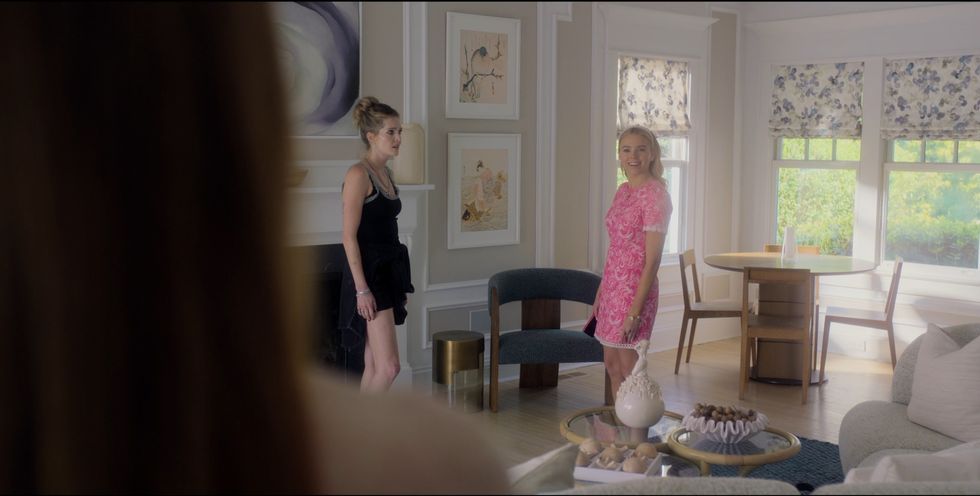
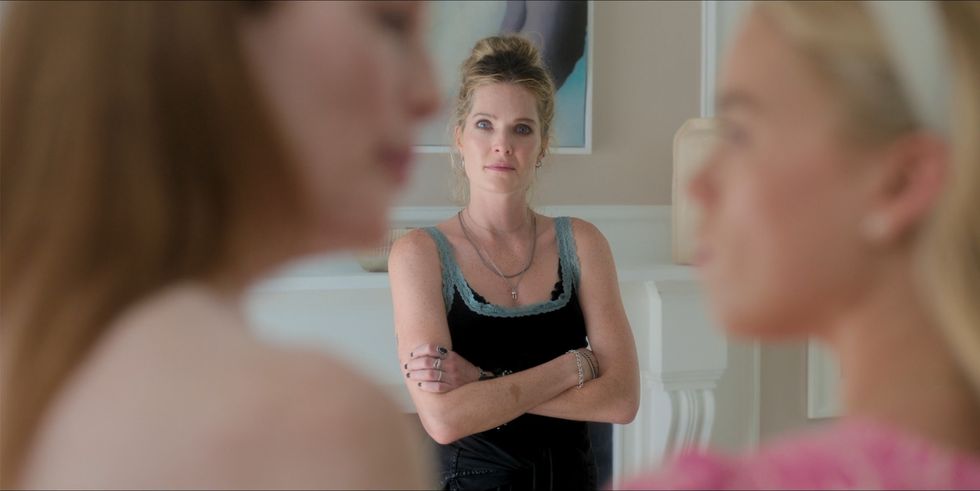
CH: Nicky did such a brilliant job directing the show, and I always tried to follow her lead with the editing. We spent a lot of time crafting the dynamics between our three main sirens and their ever-shifting triangle of loyalty and trust. For example, in the first scene at the guest house, when Simone takes Devon away from the sips and nibbles party, we begin the scene as a two-hander…but suddenly Michaela appears, and our three sirens are together for the first time.
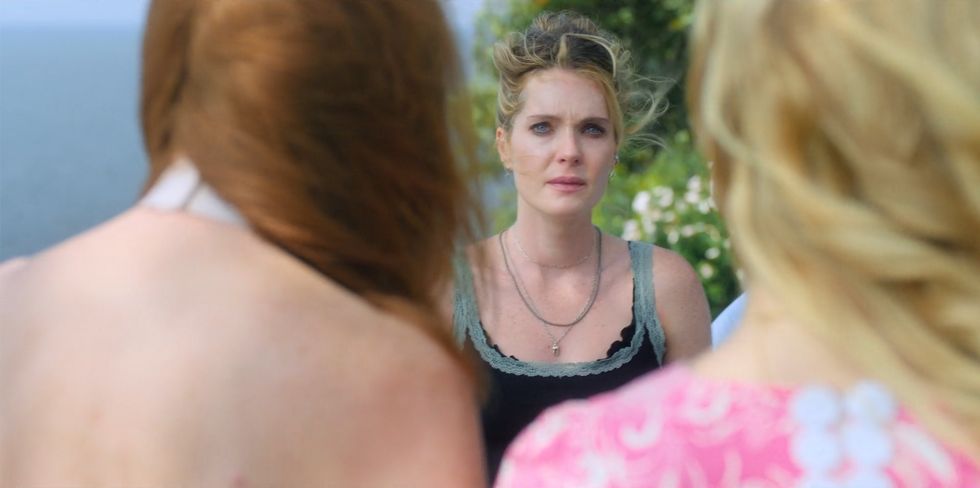
Nicky was careful to cover this scene from many angles, but most importantly from over everyone’s shoulder, and then from between the sides of the triangle, by which I mean between two of the characters with their shoulders on either side of the frame. I was always conscious of which side of the triangle held the power in each section of the scene, and specifically of Simone’s shifting loyalties. Initially, Simone is with Devon, and I cut often to the two-shot of the sisters from over Michaela’s shoulder. But as the scene progresses and Simone’s devotion to Michaela is revealed, she physically moves closer to Michaela, and we then use what is one of my favorite shots in the show: coverage of Devon that was shot between a hugging Michaela and Simone. Using this angle and cutting pattern really helps you feel Devon’s isolation.
 'Sirens'Credit: Netflix
 'Sirens'Credit: Netflix
This triangle plays out again on the cliffside scene when Michaela pays off Devon and sends her away, only this time the loyalties never shift. Devon is alone for the whole scene, and much of her coverage is shot from between Michaela and Simone, who stand as a united front. I always kept these power dynamics front of mind when editing the scenes.
 'Sirens'Credit: Netflix
NFS: Were there any ‘happy accidents’ that occurred in your editing for the series? Any challenges that turned into a positive addition to the overall story?
CH: Happy accidents are one of my favorite perks of being an editor - those moments when something unplanned reveals itself in the cutting room that helps tell the story in a unique way. At the end of the cliffside scene, a close-up on Simone was shot as she stands with Michaela and looks over the ocean. For one moment, Milly Alcock looked back towards where Devon was walking off. This close-up matches perfectly with Devon riding in the back seat of Jose’s car as she’s driven to the Whaler Inn. I was able to line the two shots up and dissolve between them in such a beautiful way - it emotionally tied the characters to each other at the very moment when one is pushing the other away. It was a real thrill for me when that dissolve came together.
 'Sirens'Credit: Netflix
NFS: How did you uncover and define the right tone for the pilot, ensuring it captured audiences’ attention and set them up for the twists and turns of the overall series?
CH: One of the challenges of cutting the pilot of Sirens was finding the balance between what we set up in the first episode and what the show pays off, and that required finding just the right balance of mystery and intrigue with our tone. As Devon shepherds us into the world of Port Haven, we need to be feeling what she’s feeling: that this is a strange place where strange things can happen. But is what she’s experiencing real? There are many questions that we set up that don’t get answered until episode 5, so we always wanted to keep you guessing while being careful not to tip things into any kind of expected tonal territory.
I can’t talk about Sirens and tone without talking about the score. We were so very lucky to have Michael Abels as our composer. His music, which we worked with in editorial from the first day of dailies, was integral to finding the right tone and shape of the show. Michael wrote demos before the show started shooting, and most of those melodies are in the final episodes. I’ve had to work with temp score for most projects, so having some of the composer’s music on day one was a real luxury. It made the show’s voice clear from the start.
As we were cutting the show, we realized that needle drops were not the sound of the show. There are no songs in the episodes that aren’t diegetic, and because of that, the score took on even more importance. Michael’s music elevated the show to new heights and carries the heart and soul of the whole thing. He truly gave us our siren song.
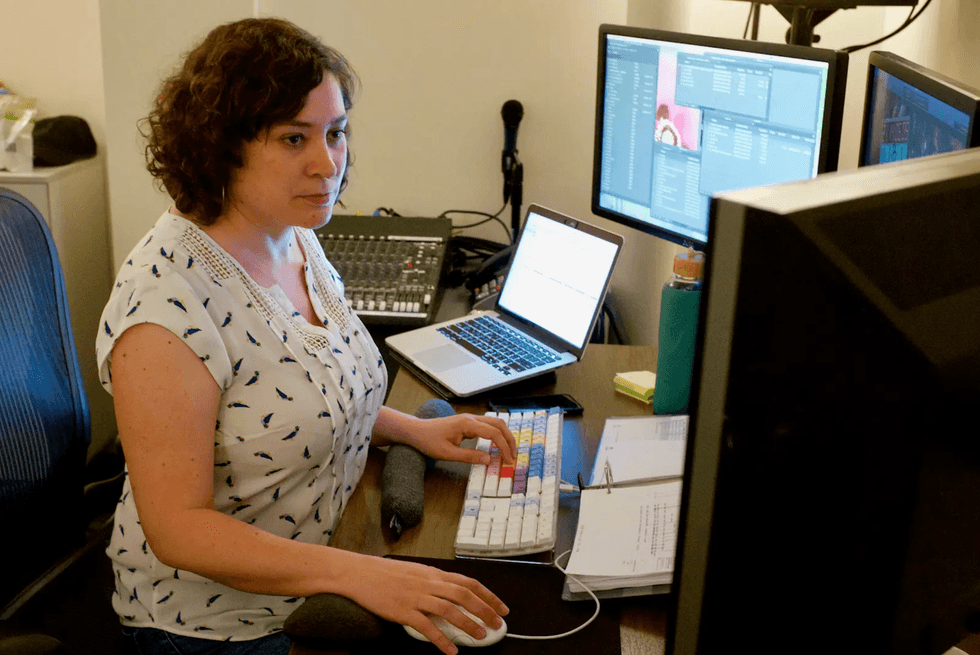 Catherine Haight working. Credit: by Abby Gentsch
NFS: Can you speak to the role that VFX played in the show, and in the pilot in particular? Did it influence any of your editorial choices?
CH: VFX played a big role all throughout the show, but especially in the final sequence of the pilot. Since (spoiler alert) it’s not possible to find a real bird that can crash through a window and die, Crafty Apes did incredible work making our CGI bird. Cutting VFX-heavy scenes is always a challenge - you have to guess at the timing of certain actions, imagine what a final image will look like, and hope that people watching the cut in that rough stage will also be able to have the imagination to see the bigger picture.
There was some back and forth about the final scene of the episode, but in the end, the edit is almost identical to our earliest versions of the sequence. I chalk the success of the initial cut up to many things: the work Crafty Apes did, Nicky’s strong hand with directing visual effects, Julianne Moore’s incredible performance…but ultimately it’s about knowing when to hold in a shot and let the tension build, and when to release it with an insane crash that leads us to feel like this island, this house, and this person is dangerous. And when we learn that Devon saw the whole thing, it only makes sense that she’d do whatever it takes to get Simone out of there.
NFS: Is there anything else you’d like our readers to know?
CH: Cutting Sirens was a thrill. Being able to work on such an emotional, funny, dynamic show alongside Molly, Nick, Laura, & Isaac was a real honor. I’m grateful to have been part of this story and this team of collaborators. We tried to live in the gray areas of life - where people aren’t just black and white - and I hope audiences will connect with the characters and have fun discussing the show after they watch.