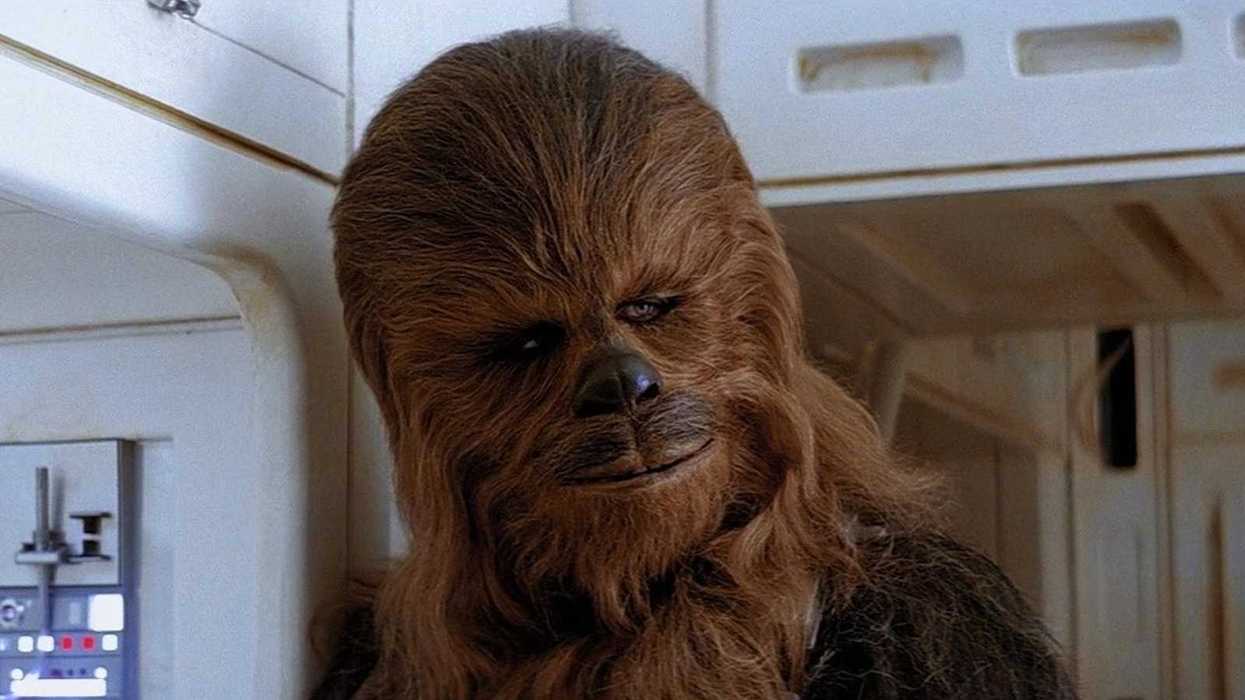
Few characters in film history will be remembered for their sounds as opposed to words, like Chewbacca from the Star Wars saga. His iconic growls, moans, and expressive vocalizations created a language of their own.
But did you know that his vocals were a mix of real animal sound recordings? These recordings were meticulously layered and manipulated to create Chewbacca’s voice. The result was an emotionally intelligent creature with an ambiguous authenticity to what he spoke. Chewbacca conveyed fear, affection, fury, and a range of other emotions primarily through a language that was ingeniously rooted in reality.
How did the makers of Star Wars develop an entire language using animal sounds? What can this teach us about authenticity in fantasy filmmaking?
Let’s jump right in and explore.
The Idea & The Execution
A great sci-fi adventure film is as distant and fantastical as authentic and believable in its own way. The story behind Chewbacca’s voice in Star Wars is perhaps one of the finest examples of how creators brought lifelike authenticity to a character that is essentially an alien creature unfamiliar to humankind.
Before jumping into the process behind this incredible technical and cinematic decision, we must discuss the genesis of George Lucas’s idea for Chewbacca’s voice. The thought of using animal sounds might sound vague, especially in the context of the late 1970s when this was conceived. But perhaps Lucas wanted to make us more empathetic towards Chewbacca, and for that to happen, he needed to create associations between Chewbacca and an actual animal.
For us to feel a deeper connection with Chewbacca, his animal-like yet alien appearance had to be matched with a voice that seemed grounded and subliminally relatable to the audience. Now, for this to work, it was also important for Chewbacca not to sound like a single, discernible animal. For example, if Lucas used the sound of a bear throughout every film, Chewbacca would sound precisely like a bear, reducing his characteristics to a single comparable animal.
Hence, Lucas and sound designer Ben Burtt decided to compile recordings of multiple animal sounds and create a special sound that belonged to Chewbacca alone. Burtt recorded sounds of walruses, badgers, lions, and bears. Then, (and this was the cleverest part), he divided these sounds, not based on the animal they came from but based on their thematic and emotional similarities.
Sounds that were compiled based on a single particular emotion, such as anger, were taped and compartmentalized. Other recordings and compilations were created based on different emotions and segmented accordingly. This ensured that the crew had a bandwidth of vocals, each with an identifiable emotion, available to use during a variety of scenes.
So, when we hear Chewbacca and witness his portrayal of a range of emotions, we are actually listening to the sounds of various animals, compiled together in a manner that creates Chewbacca’s unique identity. This makes Chewbacca intriguingly relatable, yet a one-of-a-kind character who speaks a language we don’t understand, but we can always feel and empathize with.
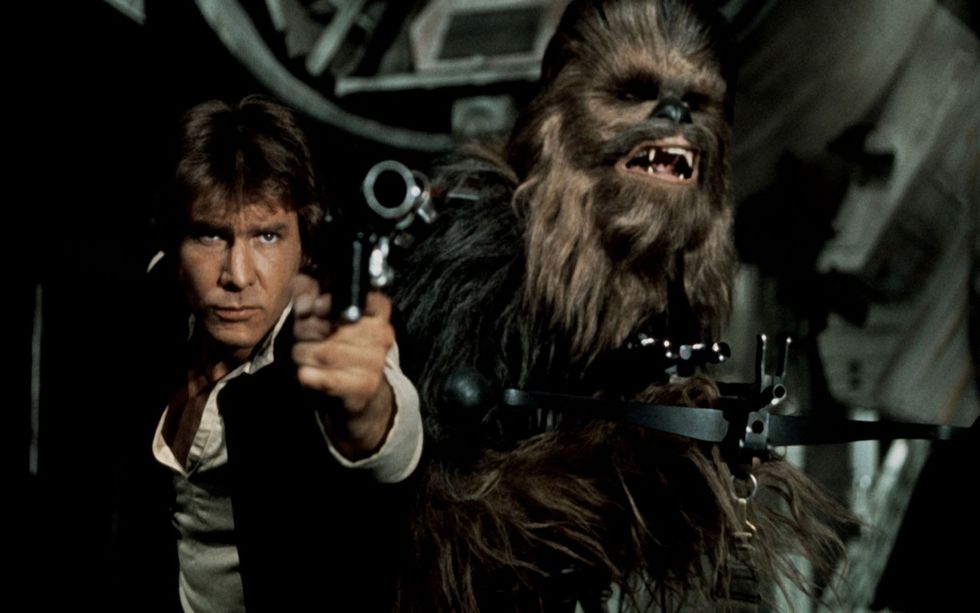 Star Wars: Episode VI – Return of the Jedi Credit: Twentieth Century Fox
What This Teaches Us About Authenticity In Fantasy Filmmaking
When we hear the term “fantasy film”, we immediately think of a world that is far away from our reality, probably filled with elements that are entirely unrealistic and well, “fantasy-like”. While this is true to a great extent, the finest fantasy films are built on foundations we can relate to, feel, and understand. George Lucas wasn’t just aware of this; he carefully created a universe and consequently a historic saga by merging authenticity with fantasy.
Chewbacca’s voice is a great example of how well this blend actually works in fantasy cinema, and it does its job on multiple levels. When an audience witnesses a character they don’t see around in “regular life”, a film establishes a distance between itself and the viewer. However, the character is important to the story, and the director wants you to empathize with them.
George Lucas brilliantly leverages this by giving Chewbacca a voice that may be a mix of different animals, but is still, at the core, real. For a second, imagine Chewbacca’s voice to be computer-generated and entirely “unheard of”. Would we relate to, follow, and empathize with him the same way we do right now? I don’t think so.
Chewbacca’s voice is his identity, and the fact that it is grounded in reality makes his character more than just an alien being. When he feels pain, we feel pain; when he is elated, we feel elated. Since he cannot speak English, the authenticity behind his voice is a big reason why this happens.
Essentially, Chewbacca’s moans and cries make us feel sad because these aren’t, like we discussed, computer-generated. These are recordings of real animals moaning and crying, compiled together in an emotionally resonant manner. It brilliantly creates associations between his voice and our own memories of sounds made by animals when they feel pain or when they are excited. A large part of this happens subconsciously, hence the effect of these real recordings is powerful and unforgettable.
Great fantasy films are a collection of bold, fearless, and path-breaking creative decisions. The story behind Chewbacca’s voice is just another fascinating example of George Lucas’s filmmaking bravado that gave us one of the greatest sagas of all time in Star Wars.
Summing It Up
The story behind Chewbacca’s voice is a lesson in how emotions and feelings may not rely as much on language, but they will always benefit from authenticity. Through this, George Lucas taught us that there are no rules on how a filmmaker can bring authenticity to their world; however, its importance can never be overstated.
Which, according to you, is Chewbacca’s finest moment in the Star Wars saga? Tell us in the comments below.