What Filmmakers Can Learn From Feeling Cringy
The value in creative risk-taking.
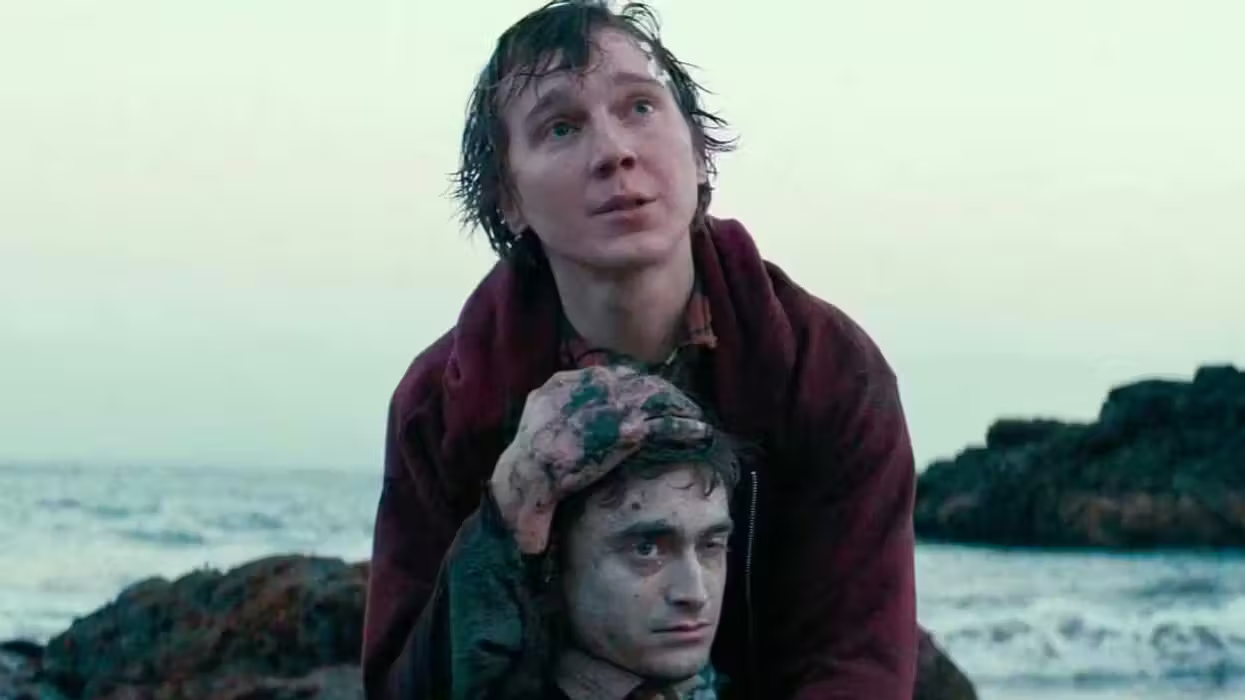
Swiss Army Man
Cinematographer and YouTuber Danny Gevirtz just hit the eight-year mark running his filmmaking channel, and he took some time to reflect on his experience in a way that can help other filmmakers.
What's the big takeaway, if you're impatient?
Basically, if what you're doing feels cringy now, you might just be early. Be willing to embarrass yourself.
Check out his video below.
- YouTube www.youtube.com
When Sharing the Process Wasn't Normal
Eight years ago, Gevirtz began documenting his work as a DP while keeping it hidden from everyone on set. Looking back on those early videos still makes him uncomfortable, but not because he did anything wrong.
"There was no one sharing their process of developing a career as a filmmaker at that time," he said. "There was really no road map for what it was that I was doing."
The filmmaking world was different then. As Gevirtz describes it, "gatekeeping was a really big thing. People did not share their knowledge openly."
Of course, we don't feel that way around here at No Film School. We're anti-gatekeeping. But back then, capturing behind-the-scenes content on professional sets wasn't widely accepted or seen as valuable.
So filming videos about his work while trying to build a traditional cinematography career felt mortifying. The discomfort was so intense that he kept it completely secret from his colleagues.
"I hid it. I hid it from everyone I worked with," Gevirtz said. "I worked with people every day who had no idea that I was trying to grow a YouTube channel, going home every night and working on the YouTube channel outside of my day of shooting."
How the Industry Caught Up
The landscape has completely shifted. Sharing your process is practically expected. Brands request behind-the-scenes documentation for their shoots. Established filmmakers are asking Gevirtz for advice on starting their own channels, which can be a viable side gig for filmmakers needing a steady income while pursuing their creative projects.
Back in 2019, we noted that YouTube's online influencers were "getting snatched up by agencies like they're going out of style" and advised aspiring filmmakers to start channels and gain followers as a legitimate path into the industry.
That same evolution is visible in success stories. The Philippou brothers (Danny and Michael) built their filmmaking skills through their viral RackaRacka YouTube channel before directing Talk to Me, which premiered at Sundance. In a 2023 interview, they discussed how YouTube functioned as their film school, with viewers able to track their growth as filmmakers through increasingly sophisticated videos.
Even documentary filmmaker perspectives have shifted. Jonny von Wallstrom wrote about his 20 years of traditional experience, discussing his pivot to YouTube and acknowledging that, while the platform doesn't serve traditional filmmaking in conventional ways, "everyone is changing with technology."
Now, the people who learned filmmaking from YouTube creators are moving into positions of power in the industry.
The Bridge You Need to Cross
If you're sitting on an idea that feels uncomfortable or unconventional, that discomfort might actually be a signal to you.
"Cringe is good. Cringe is healthy," Gevirtz said. "Cringe is the bridge that you need to get over to get to where you want to be."
That might be a video project idea you think that people might scoff at. Or a new approach to your work that doesn't fit current industry norms. The feeling that you're doing something "cringy" often just means you're ahead of the curve, that you're being yourself, and that you need to put yourself out there anyway.
Ted Hope, who has worked on experimental films such as 21 Grams and American Splendor, once said that filmmakers need to get over the cult of success and take more risks. "To increase your rate of success, fail twice as much. Experiment," he said. "Filmmakers should be more inclined to take risks without fear of being deemed an amateur and losing all credibility."
Barry Jenkins said something similar: "In order to grow as an artist, you need to examine the unfamiliar, get outside of yourself, take big risks."
Gevirtz advised, "Don't worry about what other people might think about you. Even if you're hyper aware of the fact that what you're doing feels cringy now, it probably won't be later."
The key is distinguishing between actually "bad" ideas and ideas that are just early and risky. As he says, if you feel it in your bones that it's the right move, the cringe is probably just friction from being first.
Be bold, take risks, and be willing to embarrass yourself at least a little occasionally.