The Alfred Scene That Defined the Joker in Christopher Nolan’s Hollywood Batman Era
Alfred summed up the Joker in a single powerful line.
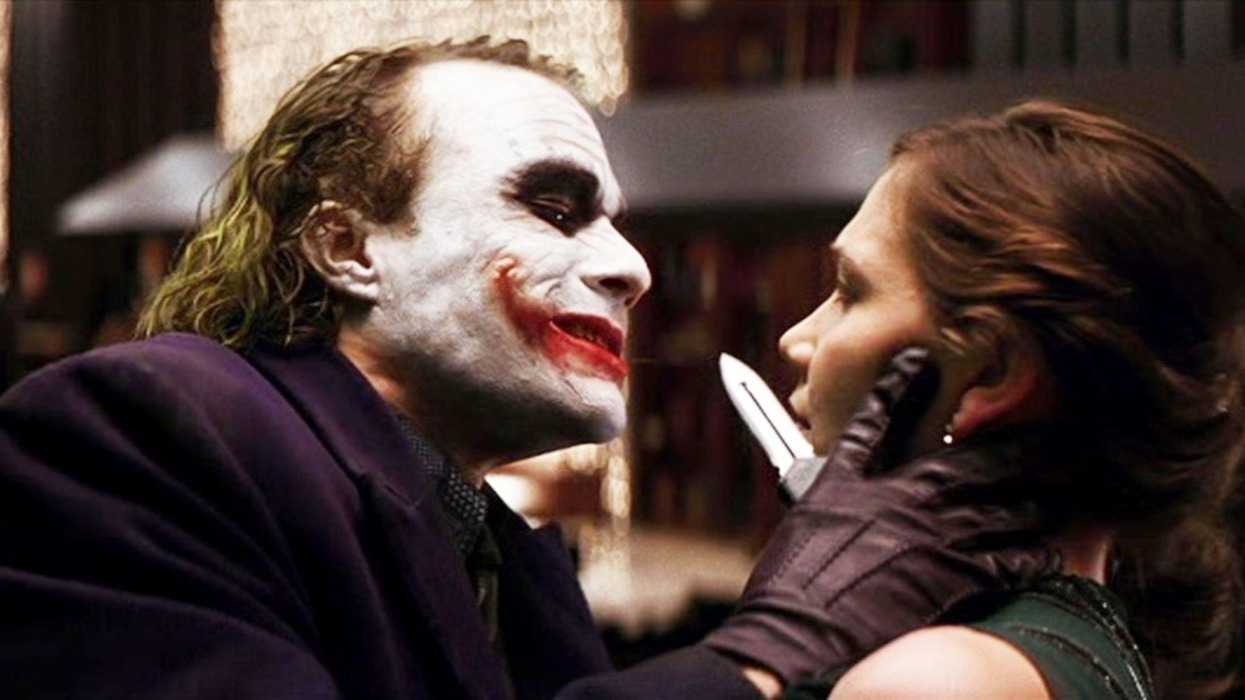
The Dark Knight (2008)
Some of the most powerful and defining lines in film history are uttered in a simple, quiet moment. No thumping music or hardcore action. Just a straightforward, effortless conversation between two actors.
In The Dark Knight, when all hell breaks loose in Gotham, we, the audience and the gatekeepers of the City, struggle to predict the Joker’s next move. Batman himself has no clear answer. But Alfred Pennyworth does.
The Joker’s troubled psyche, the potential motives behind his ferocious actions, and what he may be looking to achieve are summed up by Alfred in one single line:
“Some men just want to watch the world burn.”
Let’s try to understand this line and why it is so effective in not only defining the Joker’s mindset but also the modern antagonist.
The Origin Of Alfred’s Dynamic Line
Before we go into what the line means, we need to understand the depth of Alfred’s (Michael Caine) knowledge and why he goes on to describe the Joker in this fashion. Alfred classifies the Joker in a rare category of criminals who are not interested in money or other material gains. They cannot be “bought” or “bullied.”
Alfred shares an anecdote about chasing a bandit during his time in Burma. The bandit had been stealing jewels repeatedly. But in six months, Alfred and others with him could not find a single person who traded with him. Later, they found out that the bandit had been throwing the jewels away.
Bruce Wayne (Christian Bale) asks, “So why steal them?”
This is when Alfred goes on to explain the psyche of men, like this bandit, like the Joker: some men just want to watch the world burn.
The Power Of The Line
“Some men just want to watch the world burn,” is an ambiguous yet definitive judgment of a criminal with no defined purpose. The line does not attempt to psychoanalyze. In fact, it categorizes the Joker into a class of criminals who weaponize chaos and mayhem.
This scene links perfectly with a scene in which the Joker burns a pile of cash and says, “It’s not about money, it’s about sending a message.” As a viewer, this solidifies Alfred’s expert understanding of the Joker, a man after something much deeper and more dangerous than just money.
For me, the finest aspect of this line, and its summation of the Joker’s character, is how it openly disregards the idea of using typical traumatic backstories as reasoning for villainous activity. Joker’s backstory makes up for only a small portion of the film, and at no point does Christopher Nolan use it as a crutch.
What makes the line even more powerful is its political connotations in the real world. We often struggle to understand the criminal mind, and a line like this offers us a strong perspective on what makes certain criminals, criminals.
Before saying this line, Alfred also says, “With respect, Master Wayne, perhaps this is a man you don’t fully understand.” Batman, who is presented as a beacon of hope, a man who fights for justice, doesn’t fully understand the criminal he is trying to bring down. This makes the Joker even more terrifying, unpredictable, and a villain who became iconic for so many reasons.
What Writers Can Learn From This Line
Writing an antagonist without a clear, solidified motivation can be intimidating for a writer. What can we learn from the Joker’s ambiguity of purpose and love for chaos?
- Unpredictability is your weapon: Do not fear unpredictability. Embrace it. An unpredictable antagonist can be a formidable force. They can keep your protagonist guessing, not just about what they may do next, but about their overall purpose, eventually making them more terrifying.
- Ideology commands respect: Why do we love the Joker, and want Batman to get the better of him at the same time? Joker earns our respect because there is a philosophy behind his actions. If you can give your antagonist a well-defined ideology, you’re set for a win.
- Backstory cannot be everything: As writers, we often expect an antagonist’s backstory to explain their actions throughout the story. This can come across as a weak justification. Backstories are important, but they cannot be expected to be a fallback for everything an antagonist does. You need more. On the “back” of their backstory, what is your antagonist’s philosophy of life?
- Humor makes the darkness more visible: The Joker’s use of humor is terrifying, but it is amusing to him. An antagonist without an amusing side to them can come across as a little flat. Humor makes the darkness darker. It can amplify terror in ways that seriousness simply cannot.
- Intellectual battles can be more fun than physical battles: Physical battles often rely on how they are shot, performed, and put together. Intellectual battles can feel powerful even on the page. A villain who forces your hero into a serious intellectual battle, as the Joker does to Batman, can elevate your story’s stakes profoundly.
- Give them quirks that belong to them and only them: The Joker’s “Let's put a smile on that face” became one of his most iconic moments on screen. Tensions escalate as the Joker explains his backstory (in short) and establishes his supremacy violently. That knife, that smile, that moment before the ultimate act, they all belong to the Joker. Give your antagonist quirks that no one has seen before.
Summing It Up
Alfred’s line stays with us because it defined the Joker’s psyche with effortless sincerity and keen observation. It speaks about a villain who cannot be bought or reasoned with, making the Joker an unforgettable antagonist. Adding such layers to your villain can make them more menacing, unpredictable, and consequently, memorable.
What is your favorite Joker moment from The Dark Knight? Tell us in the comments!
- The Joker Line That Changed How Movies Portray Villains Forever ›
- 5 Tips on How Christopher Nolan Wrote the Joker and 'The Dark Knight' ›
- 7 Museum Heist Films to Watch After the Louvre Robbery | No Film ... ›
- Filmmaking's No Cake Walk. Here Are 5 Ways to Keep Yourself ... ›
- Jordan Peele and Ryan Coogler on Using Fear As Fuel | No Film ... ›
- 10 Lessons in Film Acting from Michael Caine | No Film School ›
- It takes a good fire to burn down the weeds. ›