The Joker Line That Changed How Movies Portray Villains Forever
He burnt a pile of cash and redefined the modern antagonist.
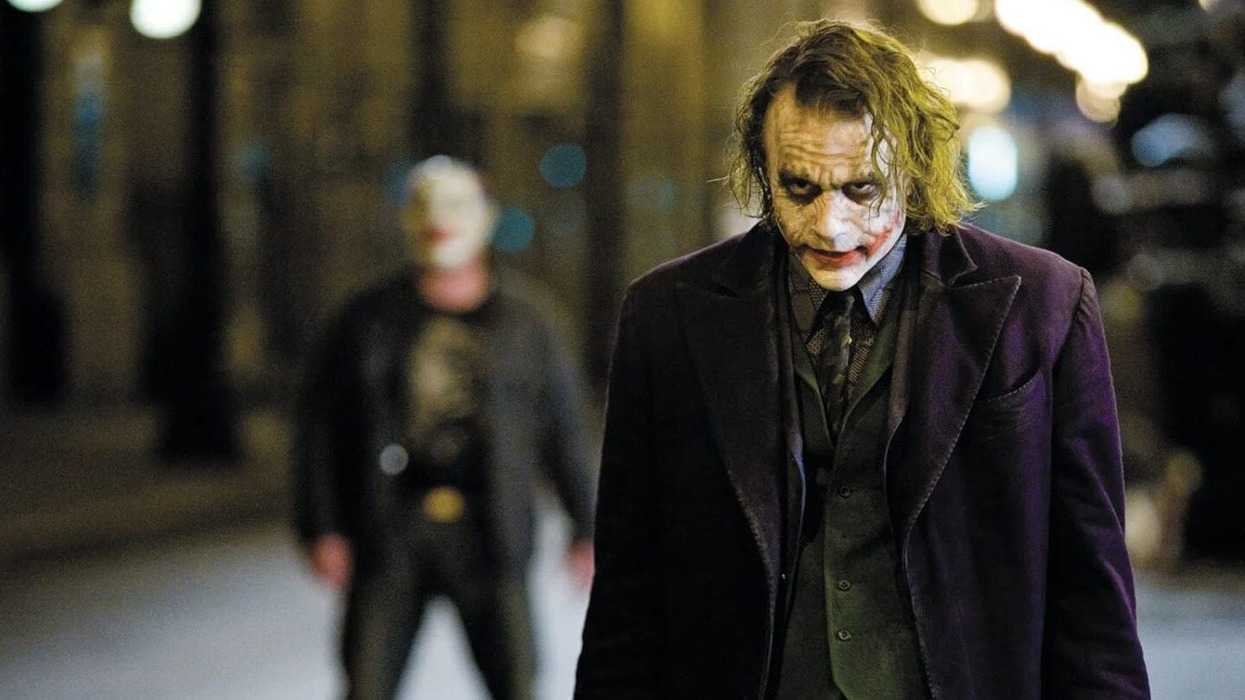
The Dark Knight (2008)
Since time immemorial, movie villains have gone to great lengths for money. Whether it’s a heist, a kidnapping, a hijacking, or any other crime, money was the ultimate goal. In The Dark Knight (2008), The Joker changed that, with style.
The Joker does not steal for money. He steals what the money stands for: the fragility of law and order. This single line from Christopher Nolan’s film crystallizes a character who functions at a level way beyond hunger and greed.
Let’s try to understand what makes this line and this scene so iconic and how it changed our interpretation of the modern antagonist.
Understanding The Line: Philosophy Over Greed
“It’s not about the money. It’s about sending a message.”
Delivered softly by Heath Ledger’s timeless and iconic Joker, this line defines his character in the most elaborate and matter-of-fact way possible. By lighting a fire to an enormous pile of cash in the background, the Joker explains his psychological motivations and disses the “typical criminal.”
Ledger plays The Joker with a constant sense of unpredictability and madness. Chaos is a part of his DNA, and this can be seen with every word, every movement Ledger incorporates in his performance. This scene is a perfect example of Joker emphasizing philosophy over greed.
The Joker is driven by the urge to create chaos and mayhem, not by the simplistic greed for money, which is what the “typical criminal” is after. His words raise the stakes astronomically because Gotham isn’t facing a predictable criminal; it is up against an agent of disruption.
He goes on to say, “All you care about is money. This town deserves a better class of criminal. And I’m going to give it to them.”
If burning a pile of cash was not enough, the Joker goes on to disregard everything the typical criminal stands for. In doing this, he creates a strong differentiation between himself and a “worse class of criminals”, not only in this particular film, but in cinema as a whole.
Why The Line Resonates
In cinema, villainous motives are often overlooked, simply because they are “the bad guys.”
Bad guys must have bad intentions and do bad things. Few films dive deeper into the intention that fuels the criminal mind. Christopher Nolan did that, in the mainstream, with The Dark Knight.
Nolan’s Joker isn’t obsessed with the reward or material gains; he wants something much deeper. Let’s say, in a hypothetical, fictional situation, a bunch of bad guys rob a bank. Once they are done, they move on to the next bank. We can understand their purpose to be, well, robbing as many banks as possible and making as much money as possible. Even though this may even work on a storytelling level, it is a much weaker understanding of the criminal psyche than the one we see in Nolan’s film.
Nolan’s Joker is driven by the need to be chaotic and unpredictable. For him, material gains are temporary, but ideology is permanent. As a criminal, he causes widespread mayhem with multiple acts of manipulation and madness. To him, it’s almost like a chess game against those whom Gotham City trusts with its present and future. In performing these strategic acts, he achieves something a lot deeper than a cash-obsessed criminal would: the entire city at his mercy, not knowing what he could do next.
“It's not about money, it's about sending a message” resonated deeply with audiences because they were exposed to an all-new criminal. A man with a deep sense of purpose behind his actions. A man whose ferocious unpredictability changed the way we see movie villains and understand them.
What Writers Can Learn From This Line
The greatest cinematic villains aren’t necessarily obsessed with money and power, but with a unique sense of purpose that makes them different from everyone else. Ask yourself, what does your villain/antagonist want above all else? If your answer to this question is a little too simplistic, go back to the drawing board and really try to understand who your antagonist is.
Nolan’s Joker is a masterclass in character motivation. He constantly keeps you guessing about his intentions while also making sure you don’t trust a word he says. Then, he goes on to burn a pile of cash and cements the philosophy that reminds us of the same thing: this man is motivated by the idea of mayhem, and he will do what it takes to keep the atmosphere chaotic.
Give your antagonist motivation that cannot be crushed easily. By this, I mean their goal should be a deeper, slightly more layered motivation that cannot be met easily with reason or satisfied instantly by bullets and explosions.
Psychological threat can be just as, if not more effective than, physical threat. A lot of films focus on physically impossible-to-beat villains. But villains who are psychologically difficult to beat are often more memorable. The Joker’s mind games constantly keep Batman and Gotham City puzzled about what he may do next.
Your antagonist’s actions must give impetus to their dialogue. The Joker doesn’t just say, “It’s not about the money.” He actually burns a pile of it. Meaningful dialogue without your antagonist acting in accordance with it will not help your story.
Finally, subverting expectations is an important lesson we can take from the Joker. He topples the antagonist trope on its head by choosing philosophy over the traditional trope of greed and hunger. His reckless love for chaos drives the story forward, constantly keeping Batman on edge.
Final Thoughts
Whenever a new villain enters the screen and explains their philosophy, we can’t help but remember Heath Ledger’s Joker. “It’s not about the money. It’s about sending a message.” This line didn’t just define the Joker, it redefined the movie villain. It raised the bar for cinema’s antagonists and reminded us that some evil forces can’t just be bought off; they have to be understood and defeated at their own game.
- A Closer Look at the Incredible Cinematography of 'The Dark Knight' ›
- Building Gotham: Inside the Production Design of the 'Dark Knight Trilogy' ›
- The ‘Dark Knight’ Quote That Plagues Nolan—and the Secret Writing Tip Behind It ›
- Watch: How Christopher Nolan's 'Dark Knight' Trilogy Emphasizes Strong Characterization Through its Villains ›
- Understanding Dan Harmon's Story Circle Through the Lens of 'The Dark Knight' ›
- 5 Tips on How Christopher Nolan Wrote the Joker and 'The Dark Knight' ›
- How Did 'Heat' Inspire Nolan to Make Gotham a Character in 'The Dark Knight'? ›
- Is Dialogue Overrated? Vince Gilligan Thinks It "Carries Too Much ... ›
- 5 Action Films with Almost No Dialogue—And Why They Work | No ... ›
- 11 Best Villains of All Time | No Film School ›
- What Is a Deuteragonist? | No Film School ›
- The 2008 Movie That Made Timothée Chalamet Want to Act | No Film School ›