Camera Operating for David Fincher—40 Takes and No Pans
David Fincher almost never pans his camera.
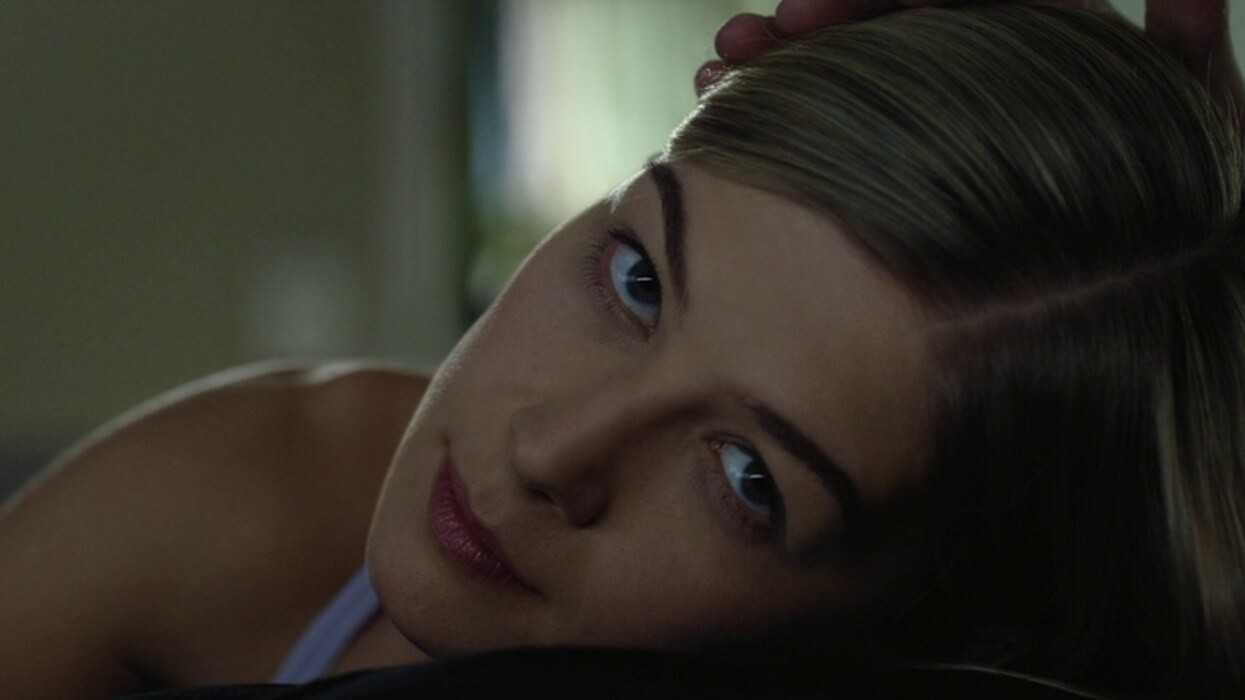
'Gone Girl'
David Fincher is one of the most exacting directors working today, demanding hundreds of takes from his cast and crew to get a version of his vision that's as close to perfection as possible.
His camera stays pretty fixed throughout this process, even when it's moving—meaning it doesn't drift or correct to get the right frame. Every movement, in characteristic Fincher style, is intentional and motivated.
Peter Rosenfeld, SOC, has a unique perspective. He's operated The Social Network and Gone Girl for Fincher, along with American Sniper and Spider-Man: No Way Home. He breaks down the experience in a clip from CinePro's CineTalk podcast with host Hugo Will.
The full episode is paywalled, but CinePro has shared some enticing clips. What this one about camera movement below.
- YouTube www.youtube.com
The Operator's Job Changes Every Movie
Before getting to Fincher, Rosenfeld clears up a common misconception. Many people, Will included, assume direction flows neatly from director to DP to operator. Rosenfeld says it doesn't.
"As a camera operator, you function as part of the three, right? There's the director, the cinematographer, and the camera operator. And your role changes on every single movie. Always different. Even if you're working with the same cinematographer, your role might be somewhat different on the next movie because the director is different."
Sometimes the director hires the operator before the DP is even on board, he says.
"And I've done many movies in my career where it's the director that hires me. I've done nine movies with Peyton Reed, you know, all the Marvel movies and stuff. And he hires me before the cinematographer is even hired. He calls you. So I have that relationship. So that's an entirely different thing. And each one of those movies was different because the cinematographer was changed. So the role that you fill is very political."
Nothing like a good reminder that relationships are among the most important currency within filmmaking.
Why Fincher Almost Never Pans
Rosenfeld calls the Fincher films the hardest of his career and the ones he's proudest of. He says that's because Fincher's way of shooting matches his own taste. The defining rule is, as we pointed out earlier, no unmotivated movement.
"The camera never moves unless it's motivated. And I'm talking about even just a corrective pan. You never do that. If you watch any of his movies with the sound off, you won't see a correction. So if my frame that you're looking at me is like this, and I do this over here, if you're operating, you're gently going to recompose. You never do that on a Fincher movie. Never. Because he allows himself a little bit of extra sensor room to reposition."
Per postPerspective, The Social Network started Fincher's habit of shooting at a higher resolution than he needed. It was captured at 4.5K with a 2K release, which left about 9% extra frame for stabilization, repositioning, and split screens. Gone Girl was shot in 6K but framed for a 5K center extraction, according to assistant editor Tyler Nelson (via Digital Films).
"When the camera does move, it's deliberate. It's a push-in, or it's something that's deliberate, but it isn't something that's just found. There's no sloppy camera work with frames readjusting."
Why go to all that trouble? Because restraint makes the movement feel deliberate and more impactful. Will, a DP himself, says Fincher's motivated movement shaped his own cinematography. Rosenfeld explains what it does for the audience.
"What that does is, when the camera does move, the audience is more aware of it. It's something we're moving on you for a reason. We've not done this on the whole first reel, and now I'm moving in on you, they know. But if you do this on every shot, it becomes just part of the language of the film, and the audience doesn't see it."
- YouTube www.youtube.com
Precision to the Scan Line
A scan line is one horizontal row of pixels in a video image. The term comes from old CRT TVs and monitors, which drew a picture line by line, with an electron beam sweeping across the screen from top to bottom. Digital images don't get "scanned" that way anymore, but people still use the term to mean a single row of the image.
Even when Rosenfeld was contributing artistically and collaboratively to a project like The Social Network, the job never got easier. Fincher's framing notes came in those units, which most of us never think about.
"He's the kind of person who, if you were standing and I dropped you down, he would say, 'Okay, split the microphone right through the connector with the left side of the frame.' And I would come down. And if I was off, he would cut. He would go, 'Peter, that's not your frame.' And we would go again. Off by, I mean, like five scan lines. He would give me instructions in scan lines. 'When she sits, I want you to be eight scan lines more to your right.' It was that kind of precision. And you have to hit that for 20, 30 takes."
Rosenfeld says that after a few days of this on Gone Girl, Ben Affleck came over and asked whether the whole shoot would run this way. Rosenfeld's answer was that it would, and it almost became a joke between them.
Will asked Rosenfeld what that's like for an operator. Does doing a shot 30 times make you feel like you're the problem? But Rosenfeld said he learned what to expect.
"I can almost predict at the beginning of a setup how many takes he's going to go. If it's a single, just a single, he might go 10, 15, maybe maximum. You know, if it's a two-shot, it's 20 and over because now he's got the ability, and you never pan. So he can use a split screen to use this guy from this take and this guy from this. He does that a lot. So you can't pan; you can't change the frame. So that may go 20, 30 takes. God forbid there are three people in the frame or more. Now we're talking into the 40s because now he's got to make sure there's a performance he likes from each one, and he'll go many takes for that."
It's a lot of work, but it can help later. If the frame never moves, Fincher can combine the best performance from each actor out of different takes. Gone Girl editor Kirk Baxter has confirmed he does a lot of invisible split screens to get the perfect take (per Digital Films).