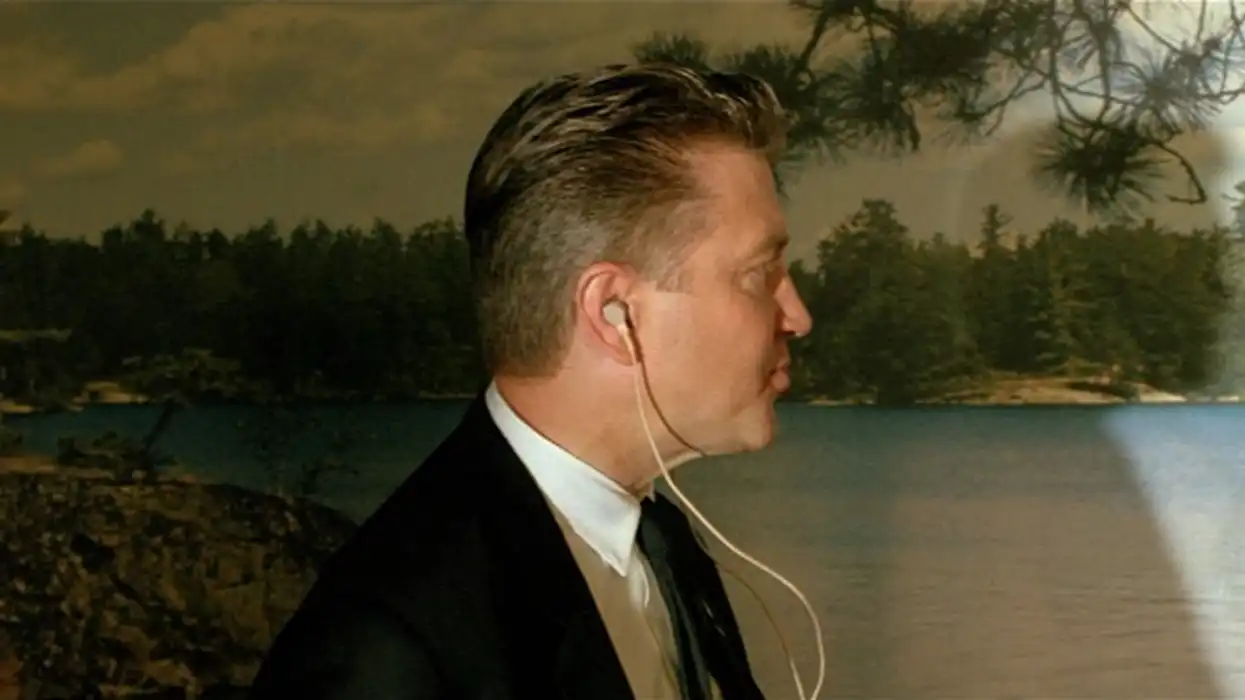
A student once asked David Lynch whether his filmmaking process mirrors Federico Fellini's. Specifically, Fellini's observation that the film he finishes is never the film he started.
The question, captured in a student Q&A on YouTube, opens something up. Lynch's answer is modest, but what follows (two stories about the directors he admired most) tells us a lot about what kind of filmmaker he was, and what he thought it meant to be connected to the people who shaped you.
Let's dive in.
- YouTube www.youtube.com
A Film Isn't Finished Until It's Finished
The student brought up how Fellini talked about a script being one thing, and the finished product being another, which felt totally different.
Lynch's response to the Fellini question is characteristically precise. His process isn't exactly the same, he said, but he knows what Fellini meant.
"Like in a script or something, it happens that you think it's this thing, and it just balloons out, it becomes something else," he says in the video.
If you're a writer, you've likely experienced this to some degree. It's rare that a draft is exactly 1:1 with what you planned in the outline.
"A thing isn't finished 'til it's finished," Lynch adds. "So you stay on your toes. You can get ideas in all of shooting and editing."
That openness to ideas arriving late, in the edit, in the sound mix, anywhere, ran through Lynch's entire approach to directing. He wasn't precious about where good ideas came from or when they showed up.
His thoughts on screenwriting are similarly practical for someone whose films avoid easy explanation. Get the ideas down for yourself first, then think about the audience later.
The Mushroom Dinner That Started Everything
Lynch's first encounter with Fellini came through a chain of happy accidents. He was in Rome with Isabella Rossellini, who was filming Nikita Mikhalkov's Dark Eyes alongside Marcello Mastroianni and Silvana Mangano. Lynch had a history with Mangano (she was married to producer Dino De Laurentiis) and found himself at a dinner south of Rome during the height of mushroom season.
Every course, Lynch says, was mushrooms.
Over dinner, he told Mastroianni how much he loved Fellini. The next morning, Mastroianni's car and driver were waiting outside Lynch's hotel. They drove him to Cinecittà, where Fellini was shooting Intervista with cinematographer Tonino Delli Colli. Lynch spent the whole day there.
"It was fantastic," he says.
Lynch and Fellini shared a birthday, January 20, as well as a filmmaking sensibility rooted in dreamlike imagery and a willingness to follow an idea wherever it led. If you want to understand the affinity, this look at Fellini's cinematic style is a good primer.
One of the Last People to See Fellini
A few years later, in 1993, Lynch was back in Rome shooting a Barilla pasta commercial with Gérard Depardieu. Delli Colli was again the DP, and both he and the production manager knew Fellini well. Word reached the crew that Fellini was ill and being moved to a hospital in the city. Lynch asked if it might be possible to go say hello.
A Thursday visit fell through. Friday evening, Lynch and Delli Colli were taken by Fellini's niece deep into the hospital. She went in first to check. Then she came back and said they could enter. Fellini was seated in a wheelchair with a small table in front of him.
A journalist named Vincenzo was also in the room and fell into conversation with Delli Colli, so Lynch says he sat down next to Fellini. Fellini took his hand. They talked for about half an hour. Fellini talked about the old days, and Lynch mostly listened. Then Lynch said goodbye, told him the whole world was waiting for his next film, and left.
That was a Friday. On Sunday, per Britannica, Fellini fell into a coma. He died on Oct. 31, 1993. Lynch was among the last people to see him.
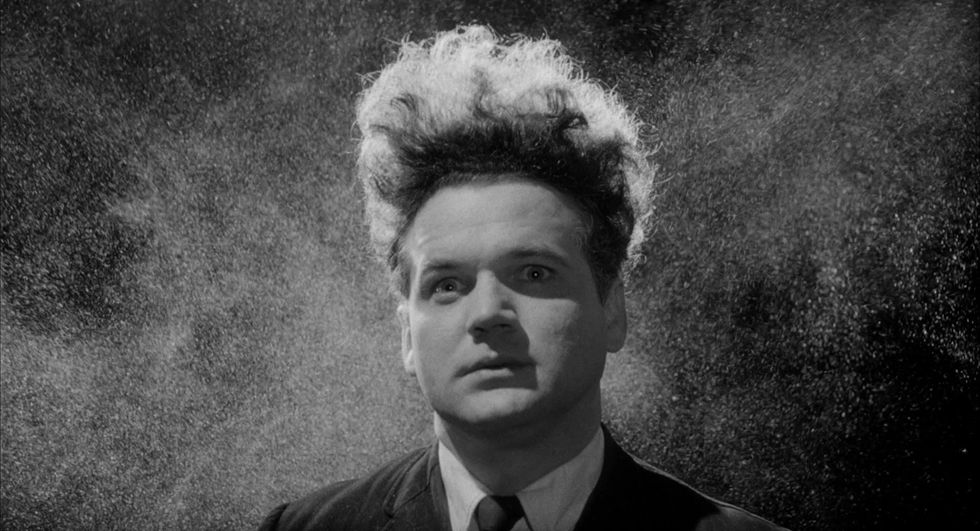 Eraserhead Credit: Libra Films International
The Kubrick Meeting Lynch Turned Down
The Kubrick story runs in a different direction. During production on The Elephant Man at Lee International Studios in England, Lynch was told that Stanley Kubrick wanted to speak with him.
Lynch said no.
He'd heard that Kubrick recorded every conversation, and that prospect spooked him completely. He declined.
It's a strange thing to imagine. Two of the most singular filmmakers of their generation, passing each other in the hallway of a London studio without ever speaking. But the story picks up shortly after, at the same studio.
Two crew members who had been working with George Lucas stopped by to say hello and introduced themselves to Lynch. They told him they'd been at Elstree Studios the day before, had met Kubrick, and that he had invited them back to his house to watch his favorite film.
That film was Eraserhead.
Lynch never met Kubrick, but Kubrick knew his debut more intimately than most of Lynch's actual colleagues ever would. According to The Guardian, Kubrick also screened Eraserhead for the cast and crew of The Shining to put them in the right frame of mind.
You can see some of what Kubrick was responding to in this look at the films he kept returning to throughout his career.
We talk a lot about networking around here because it is so important. The lesson here isn't necessarily about that, or about being in the right place at the right time. (Although that can certainly help.) It's about staying genuinely open to the filmmakers who move you, letting that show, and trusting that the work you make from that place travels further than you'll ever be able to track.
Kubrick watched and loved Eraserhead. Maybe the bigger lesson is to make the stuff that moves you, and you'll be surprised by who else is moved along with you. Your projects deserve to be out in the world. They will find their audience, whether you know them or not.
But also maybe do jump at every chance to meet directors you admire.