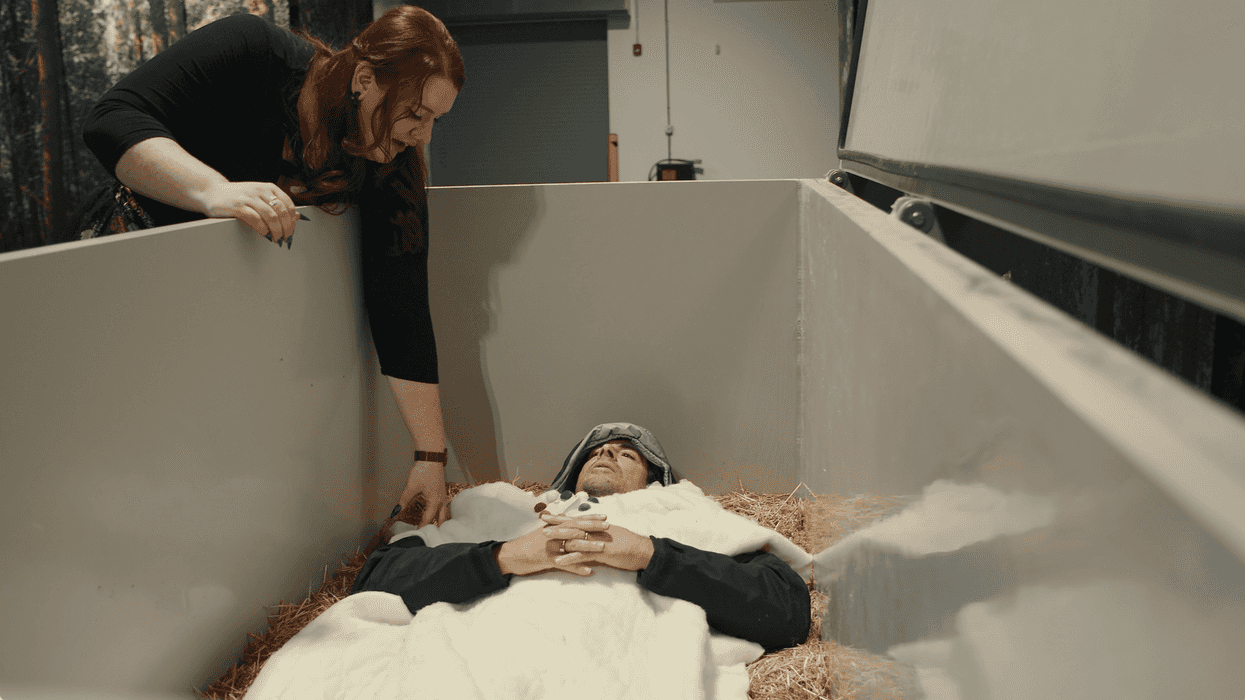
Documentary editing is often described as writing in the assembly room—a process of sifting through mountains of raw footage to find an emotional spine that wasn’t on the page. Few projects test that skill quite like Death Boom, the Tribeca-premiering documentary directed by Jessica Chandler and produced by Eli Roth that pulls back the curtain on the American funeral industry.
Tasked with shaping a sprawling, investigative look at the environmental, financial, and cultural realities of end-of-life care—all without a traditional single protagonist to anchor the narrative—editor Christopher Cavanagh, ACE, had to balance investigative rigor with deep human empathy. As his wife wisely advised him early in the process: "It’s about death. Don’t make it a funeral."
We spoke with Cavanagh about how he built narrative momentum out of an industry’s hidden truths, why he listens to his cuts with his eyes closed, and the documentary editing instincts that scripted television desperately needs to adopt.
Let's dive in.
- YouTubewww.youtube.com
NFS: Death is, obviously, a difficult subject. As an editor, how do you approach shaping a film about death in a way that feels engaging, accessible, and even entertaining without undercutting the seriousness of the subject?
Christopher Cavanagh: From the beginning, Jessica Chandler and Eli Roth wanted to tell the story as it is right now, and not some version they had preconceived. And that led to a wide-open field where we could find what was out there and have the patience to connect the dots.
My wife Amy has a superpower when it comes to summarizing, and when I was explaining to her about our approach and the tone we were trying to strike, she said, “Right – it’s about death. Don’t make it a funeral.” To me, that was both really funny and true. The key is remembering that death isn't just a difficult subject — it's a universal one. Everyone watching this film will eventually face it, or already has in losing someone they love. That shared experience is actually your biggest asset as an editor, because you don't have to convince anyone the subject matters. What you do need to do is find the entry points that let someone sit with the discomfort rather than shut down. On top of all that, I’ve always found that taboo topics make excellent documentaries, and it’s hard to find a subject more taboo than death.
With Death Boom, I was always looking for the humanity in the footage — the deathcare workers who feel called to this work, the families navigating the worst days of their lives, the moments of grace or even dark humor that remind you that people find ways to transcend even the hardest realities. When you lead with empathy rather than shock, the serious stuff lands harder, not softer. You build enough trust that the audience will go somewhere uncomfortable with you, because they believe you're not going to exploit them.
The entertainment piece, I think, comes from structure and momentum — from the satisfaction of a story revealing itself. A well-edited documentary creates the same narrative pull as a great thriller. If I've done my job right, the difficulty of the subject doesn't make people want to leave. It makes them unable to.
NFS: Documentary editing often is about finding the story in the footage. What was the biggest storytelling challenge in Death Boom?
CC: Death Boom has a compelling hook — this enormous demographic wave of Baby Boomer deaths that the funeral industry is completely unprepared for — but what we discovered in the edit is that the hook and the real story aren't exactly the same thing.
The film is actually about the death-care industry itself: the economics, the environmental costs of what we think of as "traditional" burial practices, the alternatives that exist but are being suppressed by industry groups and religious institutions, and the gap between what families think they're getting when they bury a loved one and what's actually happening. That's a rich, investigative story. But it doesn't have a traditional narrative engine — no single protagonist driving toward a resolution.
So the challenge was building that engine ourselves. It seems to me the driving force for that engine was the courage of the people that gave us access. There’s a specific example in the edit that means a lot to me. We visit a family preparing a young person for their funeral service, and they were documenting it themselves. The way we enter that scene is a shot of their camera, and in their viewfinder we can see their process of caring for their deceased family member before we see any other shots of them or move further into their story. It feels like permission to be with them. That felt very powerful to me as an editor to show the audience that we’re here in harmony with these people and not invading their space. And I think because of our director, Jessica Chandler, the whole film takes that approach. We are not shying away from this subject, and at the same time we can be fully respectful.
What I kept coming back to was: what does the audience need to feel in order to take this seriously? Not just what they need to know. Once I had a clear answer to that question, a lot of the structural decisions got cleaner.
NFS: Many documentary editors describe their role as being part editor, part writer. How much of the film's final narrative was discovered in the edit room, and what were some of the key breakthroughs that ultimately shaped the story?
CC: A significant amount. I think of editing as a form of writing — you're constantly making choices about what the story is, what it's really saying underneath the surface, and in what order an audience needs to experience things to feel the intended impact. The footage is your raw material, but the film is genuinely built in the assembly.
With Death Boom, there was tremendous research and a lot of material — expert interviews, industry access, footage ranging from striking to genuinely difficult. The ongoing question was always: what's the through-line? What are we actually following?
There were many versions of the film that had one character in the role of overarching guide. Someone we would come back to regularly. But the deeper we got, the more it became clear that the story was just more expansive, and so leaving behind the safety of that approach and trusting that the story could tell itself in a way that balanced the appearance of all of these voices was ultimately a real strength I believe. And again, that came about primarily working with Jessica and following our instincts. And being open to evolving.
What I find consistently in documentary work is that the edit reveals what the film is really about — sometimes that's exactly what the director set out to make, and sometimes it becomes something even better.
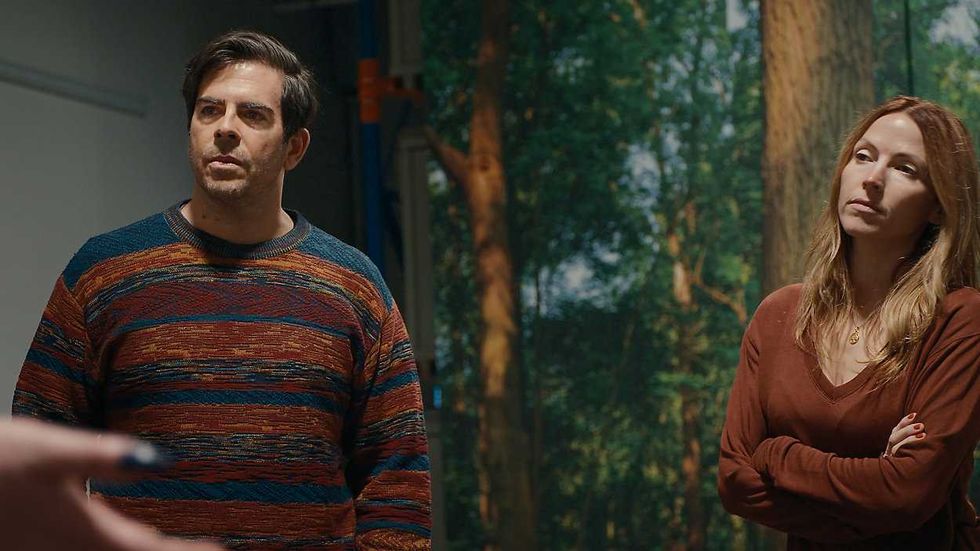 'Death Boom'Credit: QC Entertainment
NFS: Do you think the role you have as an editor in structure, pacing, and narrative construction gives you a unique advantage to storytelling as a whole?
CC: I do, and I'd put it this way: editors understand story from the inside out. We don't start with a script or a logline — we start with raw material and have to discover what it wants to be. That's a deeply active relationship with narrative, and it develops instincts that you can't get any other way.
When you spend your career asking "what does this scene need?" at the micro level — this cut, this pause, this transition — you build a very intuitive sense of cause and effect, of how audience expectation works, of when to satisfy it and when to withhold. Those instincts don't turn off when I'm thinking about story at a larger scale.
I approach every project from a writer's perspective. I'm always looking for the emotional spine — the thing the audience needs to feel rather than just understand. That's true whether I'm editing a scripted series or a feature documentary. The tools are different, but the fundamental question is always the same: what experience are we creating, moment to moment?
NFS: When you're editing a documentary on a complex issue, how do you decide what information the audience truly needs versus what is interesting but ultimately distracts from the story?
CC: The question I come back to is: does this advance our understanding of the characters and their situation, or does it only advance our knowledge of the subject? Those are different things, and only the first keeps an audience emotionally engaged.
Death Boom covers a lot of ground — embalming chemistry, cemetery economics, the environmental footprint of cremation, the regulatory landscape for alternatives like alkaline hydrolysis and green burial, the role of industry lobbying and the Catholic Church in blocking greener methods. All of that is genuinely interesting. But if I include it all at equal weight, the film becomes an encyclopedia rather than an experience.
My job is to identify the information that carries emotional weight — the detail that changes how the audience feels, not just what they know. Usually those moments live at the intersection of the factual and the personal. A statistic about formaldehyde means very little until it's attached to someone's face, their hands, their daily reality. A policy argument about water cremation becomes urgent when it's connected to a family that can't access something better. I'm constantly asking: who is telling me this, and why does it matter to them? That's where the story lives.
NFS: Because documentaries don't always have traditional narrative structures built in, what are some tools you rely on to maintain momentum throughout a feature-length runtime?
CC: Character threads are the most reliable engine. But I don’t think you can top the element of surprise. When something is surprising but it makes perfect sense, then you can’t stop watching. There are so many facets to the death care industry that are surprising – but when you stop to think why is it this way, you begin to see how momentum is built around it. Whether that momentum is financial or spiritual or something else, systems have their own center of gravity. In that sense, sometimes all we have to do is present the facts and get out of the way because the story will tell itself.
Beyond character and surprise, I think structuring information so that each new piece changes how you see what came before. That creates intellectual momentum alongside emotional momentum. And I'm very conscious of tonal contrast: you can't sustain a single pitch of intensity for 85 minutes. The moments of unexpected humor, beauty, or even relief aren't distractions — they're what make the heavier moments land when they need to.
Pacing at the cut level also matters more than people realize. The rhythm of a documentary can make ten minutes feel like three, or make three minutes feel interminable. I'm always listening to the edit — literally listening, often with my eyes closed — to understand whether something has found its tempo.
NFS: Are there storytelling techniques you've developed in documentary editing that you think remain underutilized in scripted film and television?
CC: The biggest one is probably the willingness to let silence and ambiguity do the work. In documentary, you often have moments you didn't fully engineer — an expression that's more complicated than the question called for, a pause that carries something unintended. Learning to recognize and protect those moments, rather than cutting away from them in a panic, has made me much more patient with unresolved emotion in scripted work too.
Documentaries also taught me to trust the audience more. When you're working with real people and real events, you can't explain everything — the audience has to fill in gaps, make connections, arrive at understanding on their own. That participatory quality is enormously powerful. Scripted television in particular sometimes over-explains out of fear of losing viewers, when the moments where you don't state the theme are often the ones that actually stick.
There's also what I'd call structural counterpoint — using the edit to put ideas in conversation with each other rather than in linear sequence. Juxtaposition that creates meaning neither element has alone. That's a fundamentally documentary technique, but it can be incredibly effective in scripted drama when deployed with the same intentionality.
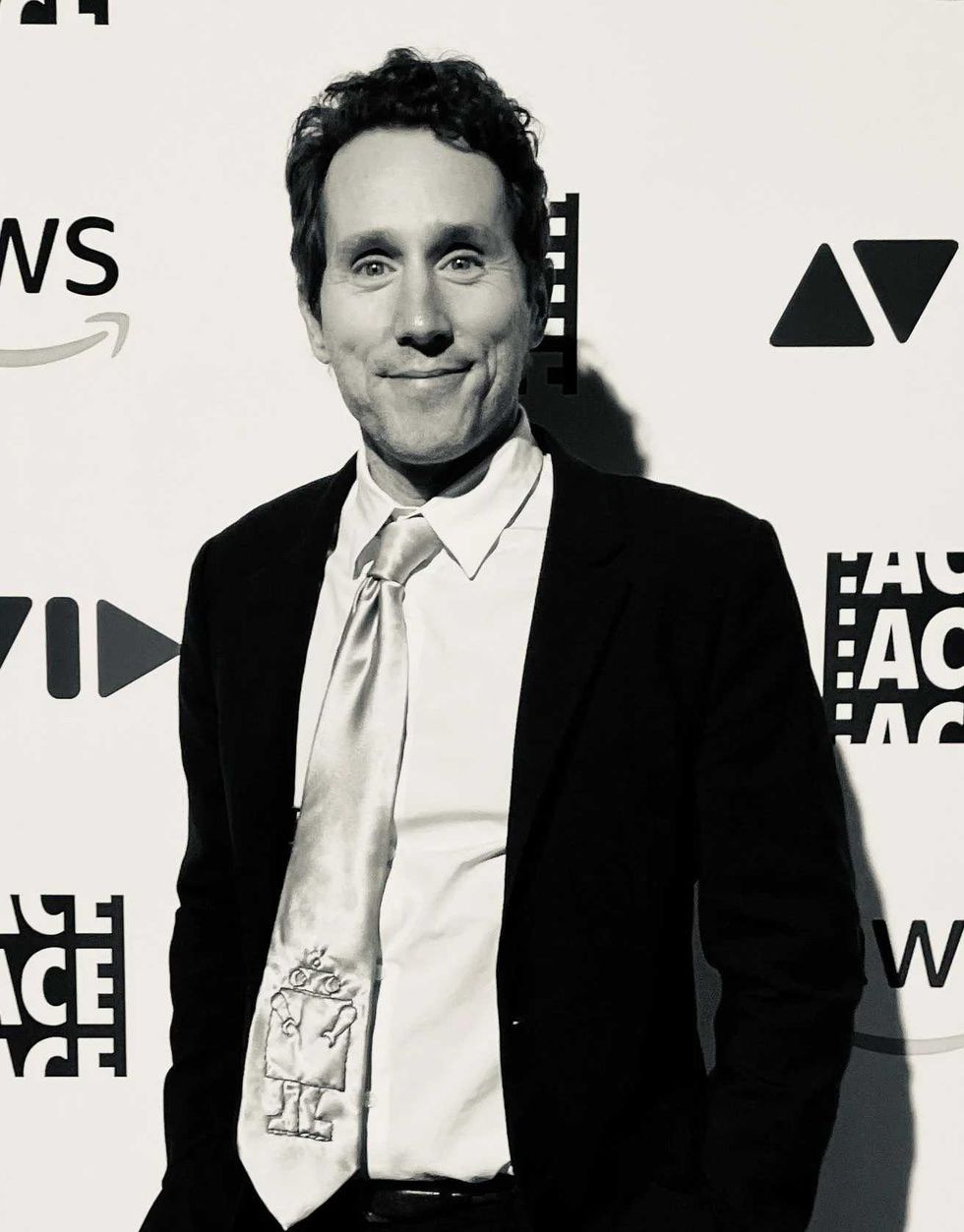 Christopher Cavanagh, ACECrdit: Impact24
NFS: Were there any moments in the edit where you found yourself rethinking your own assumptions about death, grief, or end-of-life planning?
CC: All the time. I came into this project carrying the same avoidance that I think most Americans have around death — a vague sense that there's a system in place, that it's someone else's problem to figure out, that you'll deal with it when you have to. Working closely with this material for months makes that avoidance impossible to sustain.
You become very clear, very quickly, that "the system" is an industry shaped largely around profit, and that most decisions people make in the immediate aftermath of losing someone — when they're grief-stricken and not thinking clearly — are made with almost no real information. The idea that embalming, expensive caskets, and conventional burial represent the natural or respectful way to treat the dead turns out to be, at least partly, a very successful marketing campaign.
The environmental piece changed me. Specifically, the statistics about cremation really opened my eyes because I think a lot of people I know have thought about that as the cleanest way to go. Unfortunately, it creates a lot of pollution that would be easy to avoid. There’s a moment in the film where Eli Roth says, “It’s like you can create a poison bomb or a tree. And it’s more expensive to create a poison bomb.” After living with this story for a long time, I don’t think you can disagree with that. And the alternatives — green burial, body donation, alkaline hydrolysis — are often more beautiful and more aligned with how people actually want to be remembered, if someone would just tell them these options exist. I've had conversations with my own family since editing Death Boom that I wouldn't have had otherwise. That feels like one of the best possible outcomes.
NFS: What's a lesson working on this film ultimately taught you?
CC: That the work we avoid doing is usually the most important work.
Death Boom is, on one level, a film about an industry. But underneath that, it's about the fact that we collectively refuse to engage with death — to plan for it, prepare for it, or acknowledge it until we have no choice. And that avoidance has real costs: financial, environmental, emotional. The industry has flourished precisely in that silence.
As an editor, I spend my professional life shaping stories that help people feel less alone in difficult experiences. Death Boom reminded me why that matters. Getting to be part of something that might move someone to have a conversation they've been putting off, or make a choice that's better for the people they'll leave behind — that's the kind of thing that stays with you long after you leave the edit room.