Inside the Most Uncompromising Line in ‘The Delta Force’
These words defined pure defiance.
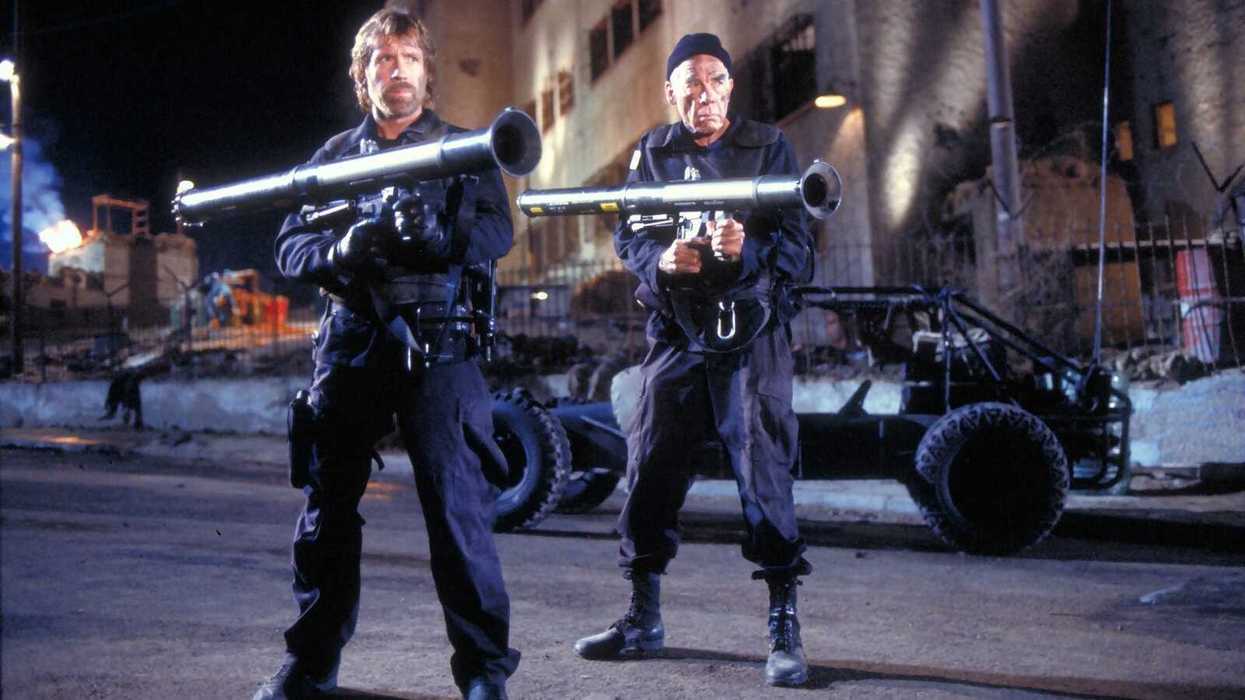
'The Delta Force' (1986)
In The Delta Force (1986), directed by Menahem Golan, one particular moment of raw audaciousness and clarity cuts through the movie’s explosions and spectacle. In the movie, when an airliner traveling to Rome is hijacked by terrorists, a highly trained squad known as the Delta Force is sent to deal with the situation.
Major Scott McCoy, played effortlessly by Chuck Norris, says the line, “I don’t negotiate with terrorists,” in a manner that feels less like movie dialogue and more like a powerful act of defiance. It is the line’s sheer clarity and precision that carries tremendous emotional and political weight.
Norris’s quiet resolve arrives without flourish but works incredibly well thanks to its utter directness and how it reveals character. His tone is relentlessly sharp, focused, and incredibly aware of every word he says. Not only does Scott McCoy leave little room for negotiation, but he also leaves no room for wasteful conversation.
What makes this line so powerful? What can writers learn from it?
Let’s jump right in and explore.
Why The Line Hits Hard
“I don’t negotiate with terrorists” might sound like a simple line, but it’s tremendously heavy and meaningful because of how it strips away political maneuvering. Around the mid-80s, hostage dramas largely centered on moral gray areas and significant political maneuvering.
The genre itself was packed with long-winded negotiations between important people on both sides of a crime. Major Scott McCoy’s direct refusal to engage in such dialogue feels refreshingly direct, especially when you consider that it was far from the norm in movies around the time the film was released.
If we take a step back and think about yet another aspect of the line, we may notice that Chuck Norris’s character does not hesitate. He drops this line without visible internal conflict or deep processing. This is crucial because it doesn’t just reveal his audaciousness and bravery, but it also makes Major Scott McCoy’s character more decisive, bold, and disruptive.
There’s a tremendous amount of immediate authority exuded by Major Scott that, in its own way, empowers the audience. In a situation such as the one he finds himself in, “negotiating” might be the presumed next step.
However, Major Scott subverts audience expectations in a manner that actually deepens our understanding of him as an officer. It is precisely this contrast between what the audience anticipates and what Major Scott delivers that raises the film’s stakes.
The Power Of Clarity
One of the most significant achievements of Major Scott’s line lies in its clarity. “I don’t negotiate with terrorists” is so potent and brutally clear that it does not demand any further explanation. During a moment in the film that is thick with tension aboard the hijacked airliner, Norris’s delivery of Major Scott’s line cuts through the chaos with immense precision and intent.
In high-stakes situations such as this, less dialogue often carries more emotional and cinematic weight. The use of “everyday language” in this line actually increases its potency. There’s something so sharp yet nonchalant about Major Scott’s line that sounds incredibly powerful.
Hostage movies do not shy away from long monologues and inspiring speeches, which, even if theoretically right, may cause a disconnect between the audience and the movie’s messaging. The Delta Force uses crystalline simplicity and a dedication to one’s beliefs in a moment where you expect precisely the opposite of what is being said.
In one single line, Major Scott’s words align dialogue, character, and the movie’s theme. Such precision is rare in cinema, isn't it?
Writing Lessons From A Defiant Quote
Here are three incredibly valuable lessons we could take from the unforgettable Delta Force line, “I don’t negotiate with terrorists.”
Big Ideas In Unbreakable Sentences
No one can debate the fact that even though Major Scott’s line may be rather simple, it encapsulates a “big idea”. “I don’t negotiate with terrorists” actually sounds like a strict policy at a time when the stakes are ridiculously high. But it is this audacity that adds tremendous weight to the character and deepens the audience’s engagement with the movie. The line lets a character’s core belief out with one precise sentence, or rather, a statement.
Subverting Expectations
It’s always a good idea never to underestimate a movie audience. We may not expect them to make certain connections, but believe it or not, in genre cinema, they may just do a lot more than we presume. As discussed, around the mid-1980s, hostage cinema followed certain conventions. “I don’t negotiate with terrorists” defies those conventions in a simple moment and subverts audience expectations because now, they don’t know where we go from here.
Combining Dialogue And Identity
“I don’t negotiate with terrorists” reveals a lot about Major Scott in a few simple words. While it may not always be possible to reveal character through dialogue, if you manage to do it, especially in a high-stakes situation, you’re likely to create something memorable. Major Scott’s words reveal who he is at the very core. His words feel like a natural extension of himself and his belief system.
Summing It Up
“I don’t negotiate with terrorists” endures because of its immense precision, directness, and the way it breaks expected patterns in hostage movies. Audiences may have expected lengthy conversations, and the movie gave them precisely the opposite. It is moments like this that pull audiences into deeper cinematic experiences because now, the writers are ahead of their thinking.
Which is your favorite Chuck Norris movie of all time? Tell us in the comments below.