Movie Myths: Did Steven Spielberg Secretly Direct ‘Poltergeist’?
This is one of those Hollywood rumors that refuses to die.
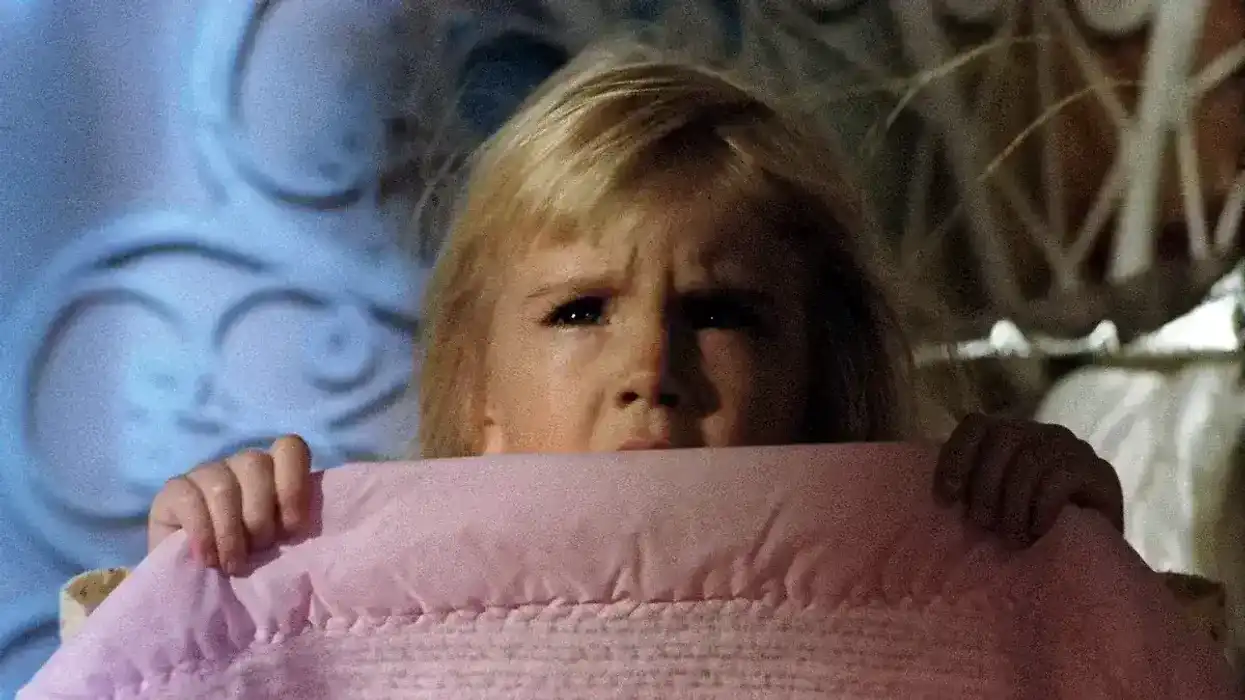
Poltergeist (1982)
Some movie myths continue to be whispered around the corners of Hollywood and theories of movie buffs alike, simply because the idea that they might be true is just too fascinating to let go of. Poltergeist (1982), officially directed by Tobe Hooper, is one such movie.
Ever since the movie hit cinema screens in 1982, a delicious rumor that the film was in fact directed by its writer and producer, Steven Spielberg, has refused to die. Unlike other such theories that are conjured by fans without any real basis, this one actually has a strong enough ground to stand on.
So, why do people think Steven Spielberg directed this movie?
Let’s jump right in and explore.
What Is Poltergeist About?
Poltergeist, officially directed by Tobe Hooper and co-written/produced by Steven Spielberg, is considered a pathbreaking horror film of its time. The story follows the Freeling family living a quiet suburban life that is disrupted by odd and disturbing supernatural events.
Steve Freeling (Craig T. Nelson) and his wife Diane (JoBeth Williams) have three children. Dana (Dominique Dunne), Robbie (Oliver Robins), and Carol Anne (Heather O’Rourke). Initially, the supernatural events that seem to be centered around the younger daughter, Carol, seem rather subtle. Soon, they begin to escalate menacingly.
The family learns that their home was built over a cemetery, which raises questions about the moral act of disrespecting the dead and building a house over their graves, eventually giving us a strong reason for the agitated nature of the spirits. As Carol is pushed into the world of the spirits, the Freeling parents face a desperate fight to bring her back.
The film explores themes of suburban neglect by showing us disruptions caused by supernatural forces. Many consider Poltergeist to be a landmark moment in horror cinema.
Why Do People Think Spielberg Directed The Movie?
It is reported that Spielberg conceived the idea of a family terrorized by aliens, which was split into two different films: E.T. the Extra-Terrestrial (1982) and Poltergeist (1982). While the filmmaker went on to direct the former, the latter continued to be laden with rumors of his involvement beyond the designated roles of writer and producer.
There were contractual agreements in place between Spielberg and Universal for E.T. The Extra-Terrestrial, which allegedly stopped him from directing another film simultaneously. Tobe Hooper was hence hired as a director. However, many believe that due to preexisting contractual conditions that barred Spielberg from directing the movie, this was done for the sake of credit.
Rumors suggest that Spielberg was on set almost daily, and his creative inputs exceeded those of his roles as writer and producer. John Leonetti (assistant cameraman) allegedly said, “Steven Spielberg directed that movie. There’s no question.” To make matters worse, Spielberg said, in an LA Times article back in 1982, that Tobe was “not a take-charge sort of guy.” This obviously did not help settle the rumors. In fact, it set them on fire.
Besides what has been speculated, I think the real reason why Spielberg is rumored to have directed this movie is because of how personal the idea was to him. This wasn’t a project he picked up to direct and wasn’t able to. This was an idea that came to him personally. I don’t think there is anything blatantly similar between the movie’s visual style and that of Spielberg’s other works. These things are the result of all the other speculation. However, there’s a catch to even that. And that is - Hooper’s other films, specifically, The Texas Chainsaw Massacre (1974).
Let’s Talk Visual Style
This is the part of the debate that I personally enjoy the most because it doesn’t focus on what people are rumored to have said or other speculative suggestions. It focuses on pure cinematic comparisons between films. So let’s do that, shall we?
Those who believe Spielberg actually directed Poltergeist point to the fact that the visual style of the movie is much closer to that of Spielberg’s other films than it is to films like The Texas Chainsaw Massacre, directed by Tobe Hooper. This is considered a damning differentiator, but I don’t think it is one.
Poltergeist and Spielberg’s movies share some commonalities. The camera movement is fluid, the lighting feels polished, and the action seems well-staged. In other words, the chaos appears to be controlled. I do agree that these aspects aren’t common to The Texas Chainsaw Massacre. But different films demand different visual styles, don’t they? Poltergeist requires a sense of calm before the storm. Even in its chaos, it needs some sense of stability because the film is set around a house and a close-knit family.
Hooper’s 1974 film is raw, grainy, and feels unpolished throughout. Now, one can make both these arguments: it is unlikely that this person directed Poltergeist or that they directed both films with distinct visual styles, deliberately.
Lastly, and most importantly, we must acknowledge that visual style is also dependent on the movie budget. Did Hooper have the means to make The Texas Chainsaw Massacre a polished horror film? Or did he smartly choose his documentary-like realism to make the most out of the financial means made available to him? This is a sticking point that can nullify the visual style comparison to an extent, and when coupled with the fact that filmmakers can choose different visual styles for separate projects, it can make these rumors sound futile.
Summing It Up
As is the case with every movie myth, this one also boils down to individuality: What do you think about it? And why? Personally, I don’t rejoice in the idea of discrediting anybody, but in the interest of exploring a movie myth, it’s exciting to jump into multiple theories that surround it.
What’s most important is that Poltergeist is a fantastic horror film that raised the bar for the genre as a whole. Everyone involved with the movie put their best foot forward.
What is your favorite scene from Poltergeist? Tell us in the comments.