When Does a Documentary Become Propaganda?
We dig into the moral and ethical decisions that go into highlighting a subject.
'Melania'
Every year, I try to catch as many of the Academy Award documentaries as possible. And if there's a big doc that goes wild online or in theaters, I seek it out. To me, watching a documentary is like reading a book; it's supposed to make you smarter and help you understand a complex issue in the world.
As filmmakers, we’re taught that documentaries are the "truth." But as anyone who has ever sat in an edit suite knows, the truth is something you manufacture between edits.
People make docs because they have a distinct point of view that they want to get out in the world or inform us about.
So, when does a documentary stop being an exploration of reality and start being a tool for manipulation?
Let's dive in.
- YouTubewww.youtube.com
Propaganda vs. Documentary
So, back in film school, I remember learning about this guy named John Grierson, who coined the term "documentary." He defined it as the "creative treatment of actuality."
Which is a fancy way of saying it's a creative way to show the world as it actually is in front of us.
That "creative" part is where all the trouble starts.
The fundamental difference between docs and propaganda is simple:
- A Documentary starts with a question and searches for an answer.
- Propaganda starts with an answer and searches for the footage to prove it.
Propaganda isn’t necessarily "fake news."
Most of the time, they use real footage to try to make their points. But this is a difference in intent.
If the film’s primary goal is to bypass your critical thinking and sell you a person, an ideology, or a war, you’re consuming propaganda.
And that's bad!
If the goal is to ask a big question and look for an answer, you're watching a documentary. Now you may not agree with the answer the doc finds, but that's okay. It's the pursuit that matters.
Why This Matters to Filmmakers
As creators, we have a responsibility to the edit and to the story.
When you’re making your documentary, ask yourself: Are you allowing the footage to surprise you? Or are you forcing the world to fit into a box you built before you even turned the camera on?
Are you making something to send a message, or are you being objective and letting the story guide you?
In order to dig deeper, let's look at a modern release to see what's what.
- YouTubewww.youtube.com
Case Study: Melania (2026)
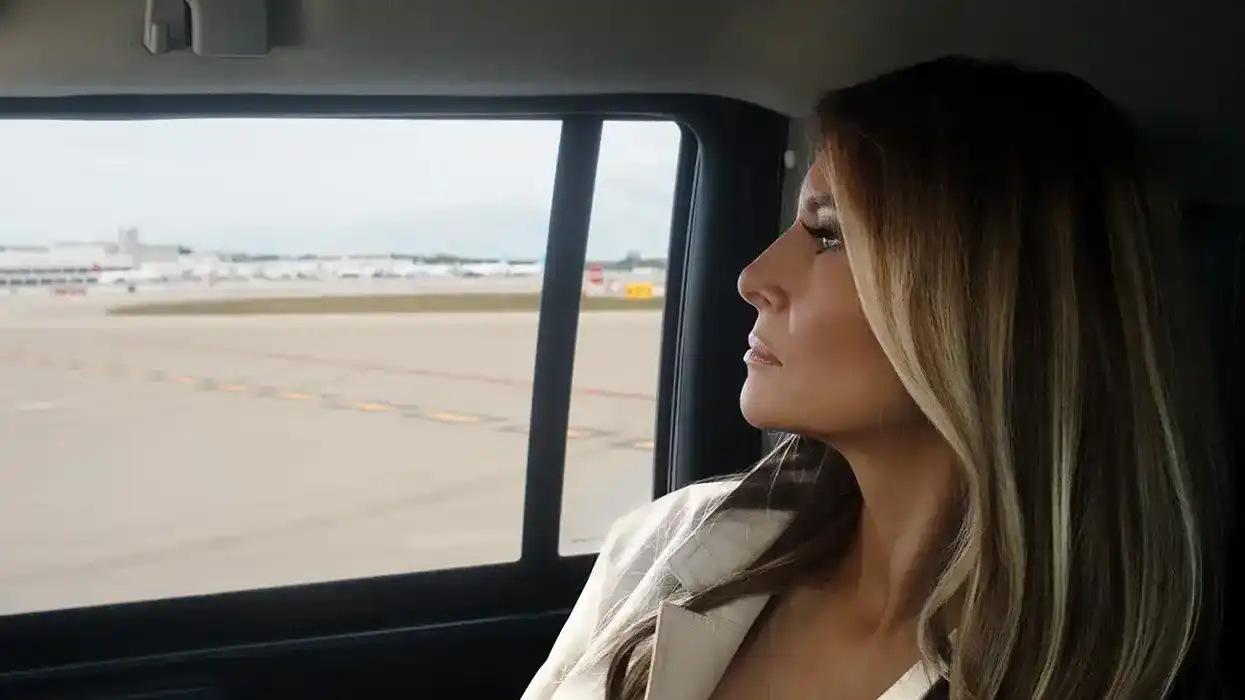
Okay, so my timeline has been blowing up with people talking about the release of Amazon’s new $40 million doc, Melania, directed by Brett Ratner.
Basically, people are all wondering if this is propaganda or just a doc they don't agree with. The story of the doc is the 20 days before Trump took office again, and the first lady's role in that transition.
Without seeing the movie, it's really hard for me to make any sort of judgment call. I would warn people that a favorable doc on Melania isn't necessarily propaganda; it might just be a bad documentary that asks puff piece questions.
But here’s why it’s triggering the "Propaganda" alarm for some people:
- The "Access" Trap: Amazon reportedly dropped $40M for "unprecedented access." But in propaganda, access is a trade for selling a point of view. You get the footage, but the subject gets the final cut. In this movie, the subject is an Executive Producer, so you aren’t watching a portrait; you’re watching a glorified press release.
- The Aesthetic of Inevitability: The cinematography is gorgeous. But when you use "God-light" and slow-motion hero walks to depict a political figure, you’re not documenting, you’re making an advertisement. Again, some style works but is style outweighing substance?
- The Erasure of Conflict: Early reviews note that the film feels "static." Why? Because conflict is the soul of drama, but it’s the enemy of propaganda. Propaganda wants to show a world where everything is under control, "safe," and "unified."
The Ghosts of Documentaries Past
There have been lots of controversial docs that are actually propaganda. And lots of controversial docs that are just docs.
Basically, you're looking at them one by one, watching them, and deciding if we're getting a reality with a question that delivers an answer.
Here are a few examples of propaganda movies disguised as documentaries:
- Triumph of the Will (1935): I mean, this is the one that everyone should know about. Leni Riefenstahl was a genius of the frame, which is what makes her work so terrifying. She used low angles to make her subject look like a giant and synchronized movement to make the crowd look like a single, mindless organism. It’s the ultimate proof that you can use "actuality" to create a total fiction.
- Why We Fight (1942) Even the "good guys" make some propaganda once in a while. Frank Capra (yeah, the It's a Wonderful Life guy) used Disney animation, found footage, and went to the front lines to film in order to convince Americans that WWII was a necessity. It was "educational," sure, but it was designed to recruit, not to nuance.
That's why this subject gets murky when you dive into it.
And an article here is not going to convince you in any direction. But I want you to have the tools to think critically and to have some media literacy, because I think it's at an all-time low.
So this is my call for you to watch stuff and judge for yourself.
Summing It All Up
What do you think? Does a filmmaker’s intent matter more than the finished product? Or is all documentary work just a polite form of propaganda?
Sound off in the comments.