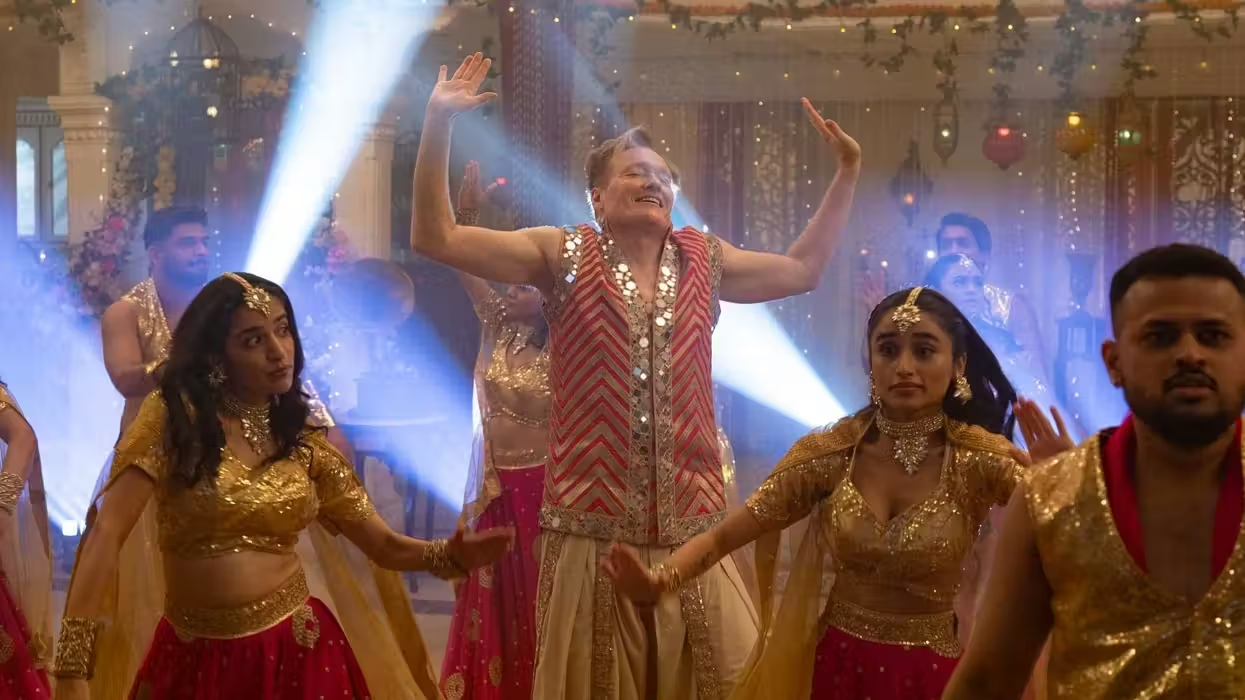
Conan O’Brien Must Go is a travel show following Conan O’Brien as he traverses around the world to meet fans from his podcast, “Conan O’Brien Needs a Fan.” Conan’s adventures capture a mix of cultural immersion and comedic absurdity. The production team began each day with dozens of ideas for segments, slowly paring down the number and landing on bits that involved monkeys in a phone store or the host himself stranded on a remote island.
As both an editor and a producer, Shaw worked with the production teams in each country for about a week at a time, editing on a rapid schedule that began during shooting. With a comedian like Conan who constantly improvises and episodes that change course in a moment, Shaw gained firsthand insight into how and why they shot each adventure, bit, and joke, which provided valuable context as he edited. Using Adobe Premiere and Frame.io for their flexibility, Shaw saved time by editing dailies and building out his timeline as the team captured footage, letting him adapt quickly and easily to on-the-fly changes. He also relied on Speech-to-Text to pin down specific lines within all of the improv.
Below, Shaw takes us inside the process of editing a show built around a host as bold as Conan.
How did you become involved in Conan O’Brien Must Go?
Matthew Shaw: The majority of my career has been anchored in Conan’s orbit, so when they approached me about leading this show in post, it felt natural. I get to keep making fun, dumb comedies with a group of people I absolutely love, so it was a no-brainer to sign on.
Going into a new season and new adventures on this show, how did you prepare your workspace to edit on a short timeline?
MS: In our initial talks, we had to figure out how this version would differ from when we made Conan Without Borders (TBS). I was given a lot of trust to build out our post world with my Post Producer Rachel Yoder, and we worked on evolving our previous workflows.
In the late-night world, we would edit, mix, and color all in the edit and would cut up until it was actively broadcasting, at times, while making the nightly show. It was always very chaotic. This new show had more modern and specific delivery requirements (5.1 mix, HDR color grades, etc.), which meant we had to actually picture lock every episode and work with finishing partners for sound and color (praise be!).
All that in mind, we decided on using Premiere with computers that could handle 4K+ multicam and Camera Raw media, allowing us to edit online from start to finish. This way, we could edit up until the last minute for lock delivery and shorten the amount of time needed to prep turnovers for finishing. We also were able to immediately deliver cuts or shots for VFX without having to worry about onlining the appropriate media.
Basically, we use Premiere to save us the most time. Conan is more in demand now than I can remember, so this allowed us to adapt to whatever curveballs are thrown at us while working around his schedule.
How did you collaborate with Director Mike Sweeney throughout production and post?
MS: Mike and I have worked together often since I first joined the Conan TV world. We understand how one another works along with our other writers; we have a quick shorthand, and we lean on each other to collaborate effectively.
At the end of season 1, I was able to travel to Ireland for our final shoot of the season, and that really is where we figured out how we want to handle the series going forward in terms of production. I’m on every shoot now, glued to my notebook and generally to a monitor.
As we film, I’m able to treat it as my dailies screening and can track beats, debrief with Mike and the team, and work as a security blanket to ensure we actually have a show to come home with. There’s so much found comedy, improv, and the original plan almost always changes, so having firsthand experience on set, I’m able to build further context on why things happened how they did, and that’s very informative in how we edit.
Each night I do all my project and dailies prep, and ideally before we’re off the next day, I’ll roughly have sorted and cut down the previous day.
Within a couple of days after returning, we’ll have all of these initial segments uploaded to Frame.io, and the writers will divvy up who’s responsible for the early cuts. After a few versions, we’ll all come together to refine and eventually build out the whole rough cut and so on until we lock.
Tell us about your favorite moment from Season 3, and why it stands out to you.
MS: One moment that sticks out is in our India episode, where we have a segment about monkeys stealing cell phones. I mentioned earlier how I think of this as a fake travel show, and this is the perfect example.
Monkeys stealing cell phones is already absurd, so it’s a perfect setup for our comedy. We made a remote-controlled monkey and, at an AT&T store, were able to bait monkeys into stealing burner cell phones. It’s just so perfectly stupid, and worked out almost exactly as we hoped. I remember everyone in awe when we had maybe 6 monkeys take a phone, and eventually I saw a shot that looked like a monkey being led to the store by our robot. That’s the exact shot I knew would connect everything. Every screening we had of the segment always killed, and I think it perfectly encapsulates the mission of the show—nonsense fun while abroad.
What Adobe tools did you use to edit Conan O’Brien Must Go and why?
MS: We used Productions in Premiere, After Effects, Photoshop, and Frame.io on this project. We also used Media Encoder and relied on Speech-to-Text to quickly find specific lines as needed in transcripts.
Since almost all of our graphics and VFX are done in After Effects, we’re able to send cuts from Premiere and start immediately. Ultimately, working in the Adobe infrastructure for this series allowed us the flexibility to maximize our time in post and minimize some of the more time-consuming processes, such as transcoding and offline to online.
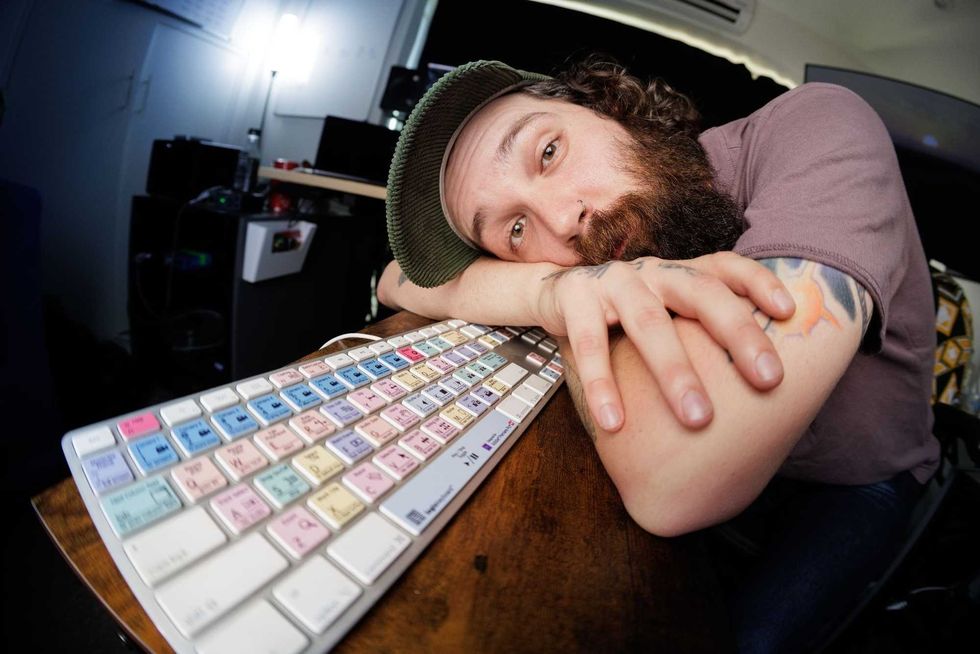 Matthew ShawCourtesy of Matthew Shaw
Image Courtesy of Chris Weller
What were some specific post-production challenges you faced that were unique to this season? How did you tackle them?
MS: Generally, our challenges stem from having such a rapid production schedule. We have 5-6 shoot days on location, sometimes starting the day we arrive. If we have 20 ideas when we arrive, 10 might be canceled in favor of something new that came up on the day—it’s very jazzy and keeps us on our toes. With that, it’s hard to truly plan the post-production process for each episode because we don’t always know what’s coming.
When we were in the Philippines, a country made up of thousands of isles, one of the ideas was to leave Conan deserted on an island. The majority of the trip was based in Manila, but we ended up in Batangas, where we had a small island for the final shoot. The morning of, the coast guard stopped all boats from going out, so we turned to plan B. Could we fake it in the hotel and turn it into a remote island with VFX in post?
It turned into a lot of walking along the shore in the rain. We found a rock outcropping, then figured out how we could simply shoot it from the water on sticks and also with a drone to really make it feel remote. We shot the master shot on a drone, pulling away from Conan, then shot a few plates over open water, matching the speed and move of the Conan shot. It was a lot of “in theory, this will work.”
Back home, I roughed out a version of the edit in Premiere, and we felt better that it was going to work. Then Graphic Artist Chris Weller took over to work his magic, and it looked fantastic in the end. Being on location helped us mitigate the real challenges that would have come our way had we not been on-site.
What's your favorite Premiere shortcut or hack, and why?
MS: I love the handoff between Premiere and After Effects. We’ll prep specific VFX sequences with the appropriate media, export the sequence as a project, and pass it along to Chris for his VFX/GFX treatments.
Since we’re all on shared storage, it allows us to begin builds while we’re still in the rough cut phase, remove a lot of the middleman steps, actively work through sometimes simple, sometimes not-so-simple builds, and continue to figure out what we need and address those needs almost instantly.