A Look Into the Edit Behind 'Sara Bareilles: Good Grief' with Armando Croda
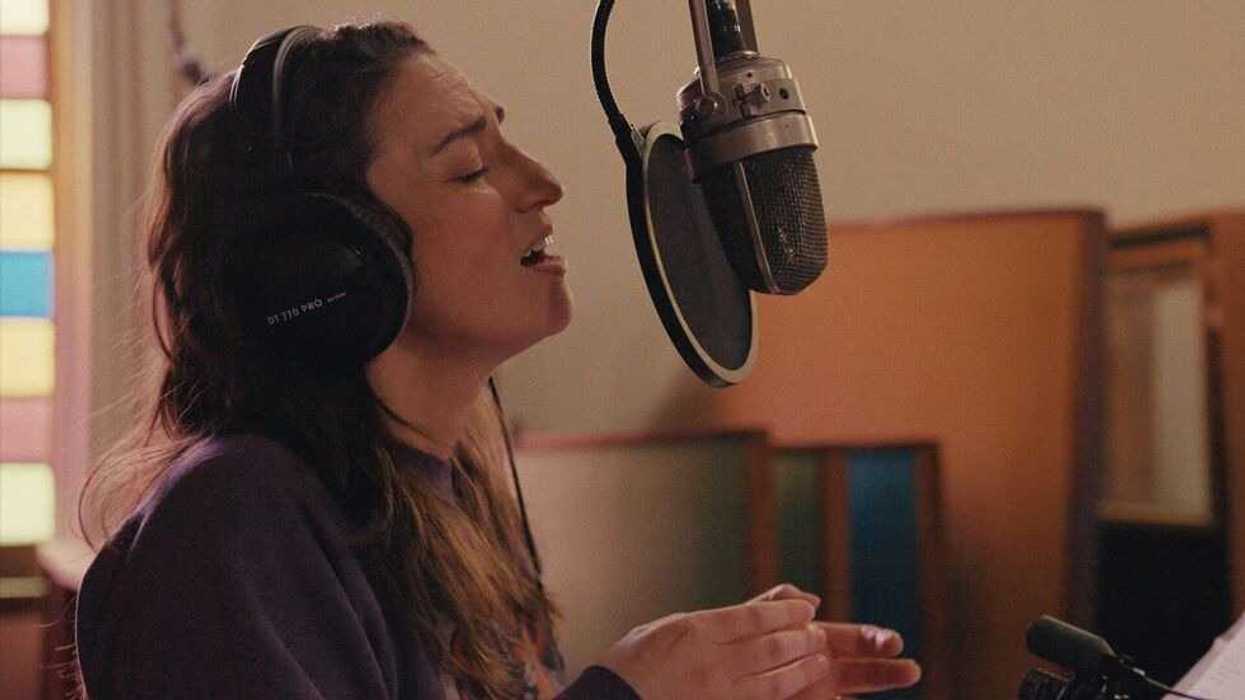
Following her return to the recording studio after seven years away, Sara Bareilles: Good Grief takes viewers on the emotional journey of an artist coming back to her craft following a period of personal hardship and grief.
'Sara Bareilles: Good Grief'
Tribeca alum Josh Alexander directs this intimate look at a musical icon as she reunites with her closest collaborators to record a new album, transforming her grief into music and exploring the joy and pain of healing along the way.
Production spent six days shooting Bareilles’ studio sessions, coming away with emotionally raw footage that Editor Armando Croda took on in the edit bay. He spent days digesting the footage with Alexander as they dialed in the narrative beats of the film. Ultimately, capturing the film’s full emotional register meant letting the music lead. Croda did exactly that, using Bareilles’ tracks as emotional devices that move the audience forward in time.
Working without an Assistant Editor, Croda set up his own Premiere timeline, stating, “I feel that every time there is a [Premiere] update, my workflow gets better and better. I deal with a lot of footage when editing documentaries, and Premiere has done an incredible job understanding this by making the Production groups, nesting files, synchronizations, transcriptions, time code recognitions, audio waveforms, key frames, audio dissolves, etc.” In addition to Productions in Premiere, he relied on the Matrix Audio tool to creatively experiment with sound effects.
Croda walked us through the ins and outs of editing Sara Bareilles: Good Grief. Read more of the conversation below.
Tell us about Good Grief. What is it about, and what made you want to get involved?
Armando Croda: Good Grief is a documentary film about singer/songwriter Sara Bareilles, who hasn't been back to the recording studio in seven years. After going through a very rough grieving process and struggles with anxiety and depression, she finally decides to go back into the studio, and she does it by her own rules. She calls in people she trusts because she needs a safe space where everyone can be vulnerable and honest, and open to grieve along with her. This experiment quickly turns into a life-changing experience for all the musicians, the filming crew, and me, the editor.
This is a unique and delicate six-day journey that takes us through our own grief, invites us to be present to listen, and speak with profound honesty. This film changed my life—like all the films I edit for Josh Alexander, a very close collaborator with whom I have edited 6 films. It was an easy decision for me to get involved because I know I will learn something deep and meaningful in the process, as I do anytime I edit a project with Josh.
How did you set up your timeline for this project? What steps do you normally take to begin a workflow?
AC: With Josh Alexander’s films, I usually do Camera B in the production, which helps us start the editing conversation and define the style, tone, and narrative devices early on. However, this one was different because I had an accident and went through surgery, so I wasn't able to join the production. Luckily, Jenna Rosher was brought on to DoP this film—I have great admiration for her work on Jesus Camp and Billie Eilish: The World is a Little Blurry—and I decided to step back and wait for the surprise.
I usually work with assistant editors, but given that the production shoot lasted only six days, I decided to set up the project files myself. While not my typical workflow, this helped me get familiar with the footage, especially because I had 19 audio tracks from Nikola Chapelle (my favorite sound mixer). He gave us pure gold, and I wanted to be very careful with how I organized and set up the files and timelines to deeply understand what happened in those six days.
What conversations did you have with your director to align on the creative vision for the project? What did collaboration look like throughout production and post?
AC: Josh and I work very closely; he is the only director I work with 100% of the time in the edit. We need each other to talk about the scope of the scenes, the narrative devices, the story beats, etc., and we like to be in-person because we can work on making necessary shifts and larger changes to the project.
We start by watching the footage together in full, both making notes, and by the end of each day, we share them, and almost every time we agree on what story beats in the footage and what we can do with it. This is the most important and precious time of the whole process (while being the longest and slowest), but once we do this properly, the rest of the editing is the easy part.
After this, we play around with narrative devices to set up the style, tone, rhythm... so we edit a verité scene, maybe a montage, an opening, and so on. Then we work on the structure with our story beats. Usually, for this process, Josh takes a week off to get distance from the footage and think through how to script the film, while I reorganize the footage and project files. We then come back and tackle the structure with index cards on a wall. Finally, I am ready to fully edit.
Tell us about your favorite scene or moment from Good Grief.
AC: One of my favorite scenes is the first one I edited for our narrative device tests, and it is exactly in the midpoint of the film. It is a scene about a very touching song called "Ladies in a Line," in which we decided to do an ellipsis from a verité scene into the next day, using the music as an emotional device that moves the audience in time. I had just been experimenting, but it turned out to be a very successful and emotional sequence for this moment in the film. I never re-edited, and it remained intact from my very first pass, which was a happy surprise.
What Adobe tools did you use on this project, and why did you choose them?
AC: I am a streamlined editor, so I used Adobe Premiere on this project, but not many of the integrated tools. I deal with a lot of footage when editing documentaries, and Premiere has done an incredible job understanding this by making the Production groups, nesting files, synchronizations, transcriptions, time code recognitions, audio waveforms, key frames, audio dissolves, etc.
What's your favorite Premiere shortcut or hack, and why?
AC: One that I have been using a lot lately is in the audio, and it makes a wonderful effect that I love. First, you separate audio from video, then you pick a moment in the scene where you want to have a profound and deep seamless change of mood, and you use the razor to chop the audio in/out in the desired section. Then you go to effects and choose the Matrix Audio effect and drop it in. Immediately, you get a deep tunnel effect that gets you ready for experimentation.
Who is your creative inspiration?
AC: Lately, it is Walter Murch. His new book, "Suddenly Something Clicked," was a true inspiration for everything I edit, because his work with sound is very inspiring. His Skip Cut techniques are very similar to some of the work I’ve done, and it’s cool to watch the story move forward with this technique.
Additionally, Latin American cinema in general is always very refreshing, deeply unique, and inspiring to me and my work, including all the films from Kleber Mendoza, Pedro Gonzalez Rubio, Nelson Carlos, Laura Amelia Gúzman, and Israel Cárdenas.
What advice do you have for aspiring filmmakers or content creators?
AC: Be as free as possible when you approach a film and its challenges. Feeling free and unafraid will take you to a place of discovery that will surprise you and the directors you work with. Editing films is always about how you tell the story; you need to connect on many levels and be present in the film space.