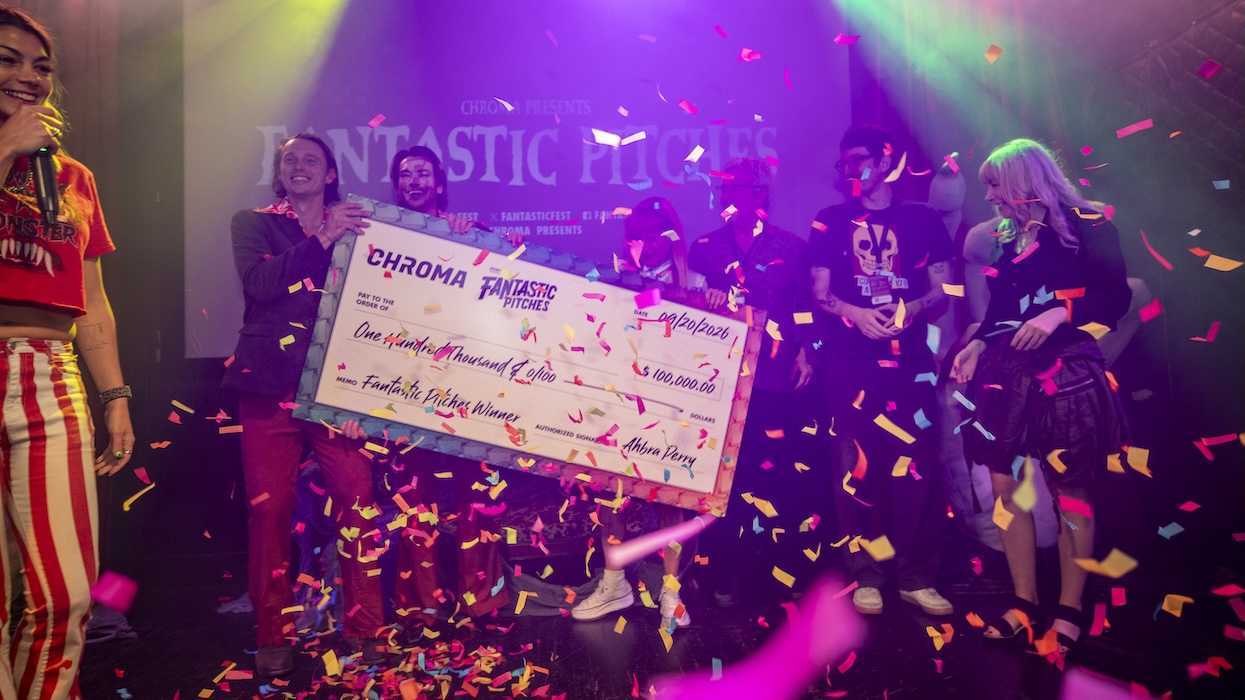
Fantastic Fest Triumphs With 'Fantastic Pitches'
“We learned by making mistakes and doing things out in the world. We learned by touching the stove.”

'Into the Sky'
In this episode of the No Film School Podcast, recorded at Fantastic Fest 2026 in Austin, No Film School founder Ryan Koo talks with Into the Sky writer-directors Drew Mylrea and Evan Buxbaum about the decade-long path to making their sci-fi comedy. They trace the project from an early script that Evan initially rejected through Black List evaluations, financing, casting Sam Richardson, and an ambitious 25-day production with dozens of locations and hundreds of VFX shots.
Drew and Evan also explain how they divided responsibilities as co-directors, used LiDAR scans and LEGO figures to pre-visualize scenes, navigated production setbacks, tested unfinished cuts with audiences, and learned to trust their instincts while making an independent film designed to feel like a blockbuster.
In this episode, we discuss:
- How Drew and Evan became filmmaking collaborators after spending hours together shooting a Method soap commercial in a tiny shower
- Evan’s experience making Sun Belt Express and the long gap between his first and second features
- Why Drew kept returning to the alien-abduction concept that eventually became Into the Sky
- Revisiting old material after years of becoming better writers and filmmakers
- How strong Black List evaluations gave the filmmakers psychological momentum to commit to the project
- Spending roughly two years rewriting the script and assembling financing
- Why casting director Kate Geller became an important part of building the movie’s cast
- How attaching Sam Richardson helped the project gain momentum
- The pressures created when an in-demand actor gives an independent production a narrow shooting window
- Walking away from a “turnkey” production-services solution that would have forced most of the movie onto a single estate
- Finding the town of Catskill, New York, and rebuilding their location strategy around what the movie actually needed
- Why filmmakers sometimes have to reject the easiest logistical solution when it threatens the film creatively
- Shooting the movie in 25 days while managing frequent company moves
- How Drew and Evan divided directing responsibilities according to their complementary strengths
- Drew’s focus on visual storytelling, camera placement, and spectacle versus Evan’s focus on performance, character, and dialogue
- Using iPhone LiDAR scans and Polycam to create digital models of locations
- Printing location blueprints and using custom Lego figures and a Lego camera to block scenes with the AD and cinematographer
- Building detailed storyboards and turning them into rough animatics for complicated sequences
- Trying to create an “indie blockbuster” without a blockbuster budget
- The challenge of completing approximately 500 visual-effects shots with an extremely small VFX team
- Why extensive preparation became a starting point for improvisation once production problems appeared
- Delaying a cornfield sequence until the final day of photography so the corn would be tall enough for the scene
- How rain, heat, scheduling problems, and other uncontrollable factors reshaped the production
- Watching dailies and determining whether scenes needed to be reshot
- Why a scene they believed needed a reshoot ultimately used mostly material from the original shoot
- Working 12-hour shooting days followed by another four or five hours of preparation each night
- Splitting up the first stages of post-production so Drew could eventually watch the assembly with fresh eyes
- Why comedy becomes difficult to judge after watching the same material dozens of times
- Screening cuts for friends and family to measure real laughter and audience energy
- Using QR codes and Google Forms to collect individual reactions before a group discussion could influence everyone’s opinions
- Measuring character likability and other audience responses between different test screenings
- Asking test audiences to respond to major VFX sequences while those sequences were still extremely unfinished
- The moment completed visual effects and music finally made the filmmakers feel that the movie was working
- Their goal of making large, entertaining movies with heart on an independent scale
- Why Drew and Evan believe their filmmaking education ultimately came from making things, making mistakes, and “touching the stove”
Guests:
Subscribe to the No Film School Podcast on:
Get your question answered on the podcast by emailing podcast@nofilmschool.com
Listen to more episodes of the No Film School podcast right here: