9 Films That Changed the Oscars Forever
These groundbreaking movies reshaped Academy history and redefined Hollywood’s highest honor.
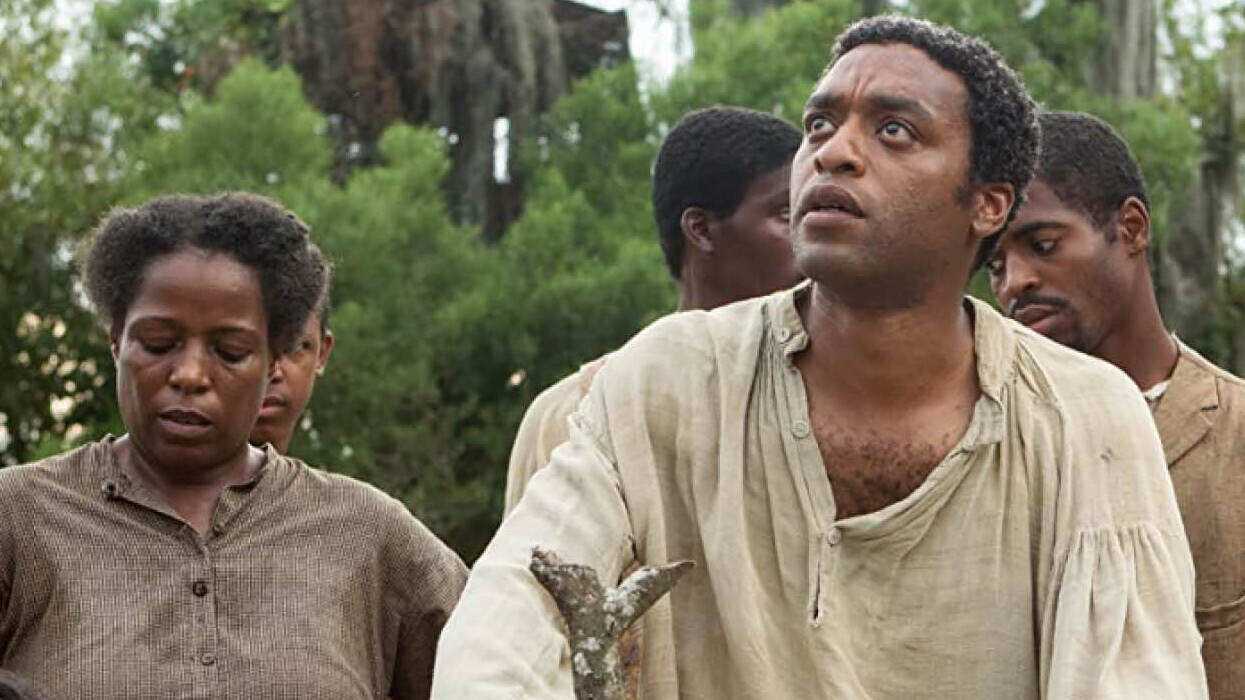
Chiwetel Ejiofor in a still from 12 Years a Slave
The Oscars have long been considered the ultimate touchstone of excellence in filmmaking. The award’s journey itself, from its first celebration to today, is a fascinating tale of survival and evolution.
When we talk of evolution, it’s not only the time that we are talking about. Time changes everything; there is no surprise in that. What’s remarkable to note here is that sometimes a single movie—its nomination or win—readjusted the machinery that works underneath and inside this world-famous ceremony. It wasn’t only about who took home the statuette or how groundbreaking the movie was. Those are surface impacts.
We are talking about the more seismic shifts these movies caused to the ways the Oscars function. Some movies introduced a new genre, a new category, some movies impacted representation, and some movies introduced new trends in campaign strategies. In this article, when I say a film “changed the Oscars,” I’m referring to the film’s impact that transcended beyond its own award success.
Here is the outline of 9 movies that changed the Oscars.
1. The Jazz Singer (1927): The Award Show’s First Identity Crisis
Written by: Alfred A. Cohn | Directed by: Alan Crossland
Cinema was born into silence and thrived in it for over 60 years. We’re talking no audible dialogue, no foley, no background score—just classical music or scores from orchestral pits for the entire runtime. That means the Oscars didn’t (I mean, couldn’t) recognize sound as a craft that could be rewarded.
Then came The Jazz Singer (1927). It introduced synchronized sound. This was the first time the world felt an exhilarating shock since it saw the Whitley family strolling in their garden in 1888. After The Jazz Singer dropped, the talkies soon began to outpace the silent films. The Oscars were only a year old, but ‘the sound’ was too important a revolution for them to ignore. That year, The Jazz Singer received a “special award” as a token of acknowledgement, but it was three years later, in 1930, that the Oscars gave their first formal award in the sound category.
2. Gone With The Wind (1939): The Blueprint for the Epic and the Producer Problem
Written by: Sidney Howard | Directed by: Victor Fleming
Gone With The Wind was more of an event than a movie. At the 12th Academy Awards ceremony, it won eight competitive awards because of its unprecedented scope, record-breaking box office, and widespread critical acclaim. But it also proved to be gear-shifting in several ways that nobody foresaw.
It allotted unprecedented prestige to the “epic” genre, causing filmmakers to produce movies that had large canvases, lengthy runs, and expansive casts. However, more importantly, the movie is known for being the first to feature a Black person ever to win an Oscar. Hattie McDaniel’s win was a monumental moment that shattered the racial barrier when the culture of segregation was rife. It’s a different story, though, that at the actual ceremony, McDaniel was made to sit in her “black corner” instead of with the rest of the cast.
3. Ben-Hur (1959): The Rules of the Sweep
Written by: Karl Tunberg | Directed by: William Wyler
Biblical epics were already a Hollywood mainstay by the time Ben-Hur blasted into theaters with its iconic chariot races. But it was only after it won 11 Oscars that the industry realized that winning multiple awards had more to do with the strategy than just craft or luck.
Studios were quick to follow suit. They launched spirited campaigns to accommodate the scope for both artistic and technical excellence. Now they were no longer aiming for an Oscar; they were aiming for an Oscar sweep. Even the Academy embraced this idea of a “complete triumph,” allowing the Oscar ceremonies to transform into dramatic events of “record breaks.”
4. The Godfather: Part II (1974): The Sequel That Could
Written by: Mario Puzo & Francis Ford Coppola | Directed by: Francis Ford Coppola
Hollywood, for long, perceived sequels as something inferior; commercial add-ons or second-class citizens in the world of movies. They were viewed as unlikely contestants in the race for the Oscars’ top honor. That all changed when Coppola’s The Godfather: Part II won Best Picture.
The belief that a sequel could never reach the excellence of its original was shattered. This movie proved that a “part 2” could be as artistically precious as, or even surpass, its “part 1.” Suddenly, sequels were not only about capitalizing on commercially viable concepts, but they were also about the visionary expansion of the original. The Academy had always snobbishly looked down on serialized narratives, but with The Godfather: Part II, it was forced to acknowledge that sequels could carry the same prestige as standalone narratives.
5. Shakespeare in Love (1998): The Campaign That Changed the Game
Written by: Marc Norman & Tom Stoppard | Directed by: John Madden
Shakespeare in Love was a charming piece of period romance, and there wouldn’t have been any raised eyebrows towards its Oscar win if it weren’t for Saving Private Ryan. Steven Spielberg’s war drama, according to most, was unequivocally a superior production in every way and was expected to win Best Picture.
The possible ideal outcome, however, was manipulated by Harvey Weinstein’s unrelenting and aggressive campaign, which included private screenings and focused lobbying. Going a step ahead, Weinstein also engaged in a manipulated narrative, a significant part of which was to badmouth Saving Private Ryan. The ensuing backlash served the Academy a lesson: if it didn’t stay vigilant, it was possible to overshadow genuine excellence by unfair marketing campaigns. As a result, the Academy put new regulations in place to stop aggressive lobbying.
6. Shrek (2001): The Film That Forced Animation Onto the Ballot
Written by: Ted Elliott, Terry Rossio, Joe Stillman & Roger S.H. Schulman | Directed by: Andrew Adamson & Vicky Jenson
Animation escaped the “kids only” label with Shrek. It argued that animated movies can go beyond being funny and colorful and make a definitive artistic statement. The movie was obviously madcap funny, but it was also satirical, self-aware, and totally festive at the box office.
The Academy had always brushed aside animated movies as nothing more than isolated technical references. Shrek’s success, however, was such that the Academy was forced to take notice and add a special category, the Best Animated Feature, to its ballot. By doing so, the Academy ensured that animated movies would never be overlooked in favor of live-action cinema.
7. The Dark Knight (2008): The Snub That Expanded the Ballot
Written by: Jonathan Nolan & Christopher Nolan | Directed by: Christopher Nolan
The Dark Knight, as we know it, is not just a superhero movie. It’s realistic storytelling with blockbuster energy. It has set many filmmaking trends over the years and is still lauded for its narrative, artistic, and technical brilliance. So, you can imagine the backlash the Academy had to endure when it left this Christopher Nolan masterpiece out of the ballot.
Fortunately, the Academy still had time to fix its error. It extended the Best Picture slate from five to ten nominations and offered a fair chance to movies that were equally viable as winners. This was one instant when the Academy was made to readjust the size of its ballots to accommodate both the artistic prestige and the populist blockbusters.
8. 12 Years a Slave (2013): A Landmark for Representation
Written by: John Ridley | Directed by: Steve McQueen
With changing times, the Academy was no longer able to cover its inadequate portrayal of slavery or to carry out its slacking representation of Black cinema. That changed with Steve McQueen’s 12 Years a Slave winning the Best Picture and becoming the first Black film to do so.
It was a decisive victory in terms of representation, but it still didn’t directly address Hollywood’s diversity issue. What it managed to do, though, was to start the debate. It highlighted the need for inclusive storytelling and the Academy’s membership reforms. Now, every passing year, we see the Academy's endeavors to fill the systemic gaps and give a fair representation to minorities.
9. Parasite (2019): Shattering the “Foreign Film” Ceiling
Written by: Bong Joon-ho & Han Jin-won | Directed by: Bong Joon-ho
There have been instances (20 in total as of 2025) where non-English films were nominated for the Best Picture category—11 in 90 years before Parasite and 8 in five years after. This statistic should tell you how impactful Parasite’s Best Picture win was. A Korean language movie with subtitles surpasses the mainstream English movies to win the top honor at the Oscars; no one would have thought this would be possible a few years ago.
The previous such nominations indicated the Academy was acknowledging the excellence in non-English filmmaking. Parasite’s win, on the other hand, indicated it was now willing to accept that it could be superior from time to time and was willing to reward it for this. It also destroyed the artificial distinction between “Best Picture” and “Best International Feature,” thereby acknowledging global cinema as essential rather than incidental.
- Golden Globes vs. Oscars: 5 Surprising Differences You Might Not ... ›
- Oscars 2025: We Rank The 10 Best Picture Nominees | No Film ... ›
- Independent Film Dominated the Oscars. Why? | No Film School ›
- Our 2025 Oscars Best Director Prediction | No Film School ›
- Predict the Oscars and Win a Month of Black List Hosting and ... ›
- Our 2025 Oscar Predictions: Who's Taking Home Best Picture? | No ... ›
- 10 Categories That Should Be Added to the Oscars | No Film School ›
- The First Oscars Were Nothing Like You Imagine ›
- Scarlett O’Hara’s “I’ll Never Be Hungry Again” Promise in ‘Gone With the Wind’ (1939) ›
- 9 Movies With The Most Oscar Nominations Ever: The All-Time Leaders ›