Hollywood, 1929. A room full of movie moguls, silent film stars, and tuxedoed dreamers gathered not for glitz, not for TV ratings (those didn’t exist yet), but for dinner.
That’s right—just dinner. The very first Oscars ceremony was a far cry from a spectacle. It was a private banquet at the Roosevelt Hotel with about 270 guests, no live broadcast, and a runtime shorter than most acceptance speeches today. No suspense either: winners were announced three months before the ceremony, so no mouth-covering, shocked expressions.
And yet, tucked between the courses and small talk was the spark that lit a century-long obsession. The “dinner party” was, in fact, the quiet birth of Hollywood’s loudest tradition.
May 16, 1929: A Humble Beginning
Today’s Oscars are a glitter-soaked marathon of designer gowns, teary speeches, high-stakes predictions, and other high-profile controversy, broadcast live to millions and dissected frame by frame on the internet.
But rewind to May 16, 1929, and you would find a low-key scene that wouldn’t even qualify as a decent afterparty by today’s standards. No red carpet, no live feed, and no global fanfare. Just 270 guests politely sipping wine at the Hollywood Roosevelt Hotel while munching on chicken à la king.
That night’s agenda was just handing out 12 awards in a tidy 15-minute stretch—no envelopes, dramatic pauses, or orchestral cut-offs.

Then why bother? Louis B. Mayer, the founder of the Academy of Motion Picture Arts and Sciences (AMPAS) and the mastermind behind the award ceremony, was blunt about it.
"I found that the best way to handle [moviemakers] was to hang medals all over them," Mayer reportedly said (per Lion of Hollywood). "If I got them cups and awards, they'd kill themselves to produce what I wanted. That's why the Academy Award was created."
The Oscars, in their original form, weren’t built to honor art or talent. They were built to manage egos, tighten control, and keep the talent hungry.
Be that as it may, this quiet dinner party marked the beginning of something huge. What started as an industry’s self-congratulation session turned into the most watched, most scrutinized, and most emotionally fraught awards show in the world. The first Oscars ceremony wasn’t aiming to be legendary, but they accidentally built a tradition that’s still rolling almost a century later.
The Setting: A Far Cry from the Red Carpet
The first Academy Awards didn’t unfold beneath klieg lights or next to a golden statue the size of a small car. It took place in the Blossom Room of the Hollywood Roosevelt Hotel, a charming but unflashy banquet space tucked off Hollywood Boulevard.
No cameras. No stage. Just a few dozen tables, white tablecloths, and the vague hum of jazz drifting in from somewhere nearby.
The 270 guests, most of whom had shown up straight from the studio lot. Producers, directors, actors, set designers—folks who knew each other, or at least knew someone’s secretary. It wasn’t glamorous; it was functional.
There were no gasps or envelope fumbling, either. All the winners had known three months prior that they had won. So when Douglas Fairbanks—the first Oscars host—handed out the awards, it felt less like a show and more like a Monday night office dinner that just happened to invent Hollywood’s most enduring spectacle.
The Ceremony: 15 Minutes That Changed Hollywood
To put it mildly, the ceremony was more sober and subtle than the best man’s speech at a wedding. There were no speeches, let alone an opening monologue. No jokes about actors’ egos. No musical numbers dragging on for applause.
Douglas Fairbanks, the swashbuckling silent film icon and then-president of the Academy, kept it brisk. He simply stood up, called out the anticlimactically announced winners on stage, handed over the trophies, and sat back down. The whole thing was done in 15 minutes, barely long enough for the wine to warm.

Twelve awards were given out, with Wings taking Best Picture and Janet Gaynor winning Best Actress for a trio of performances. Emil Jennings, the winner of Best Actor, had already left America for Germany (with the advent of sound in cinema, his thick German accent was a no-go anymore), so they mailed his statuette to Germany.
Charlie Chaplin won an honorary award but didn’t even show up. No one played clips from the winning films because there weren’t any clips queued up.
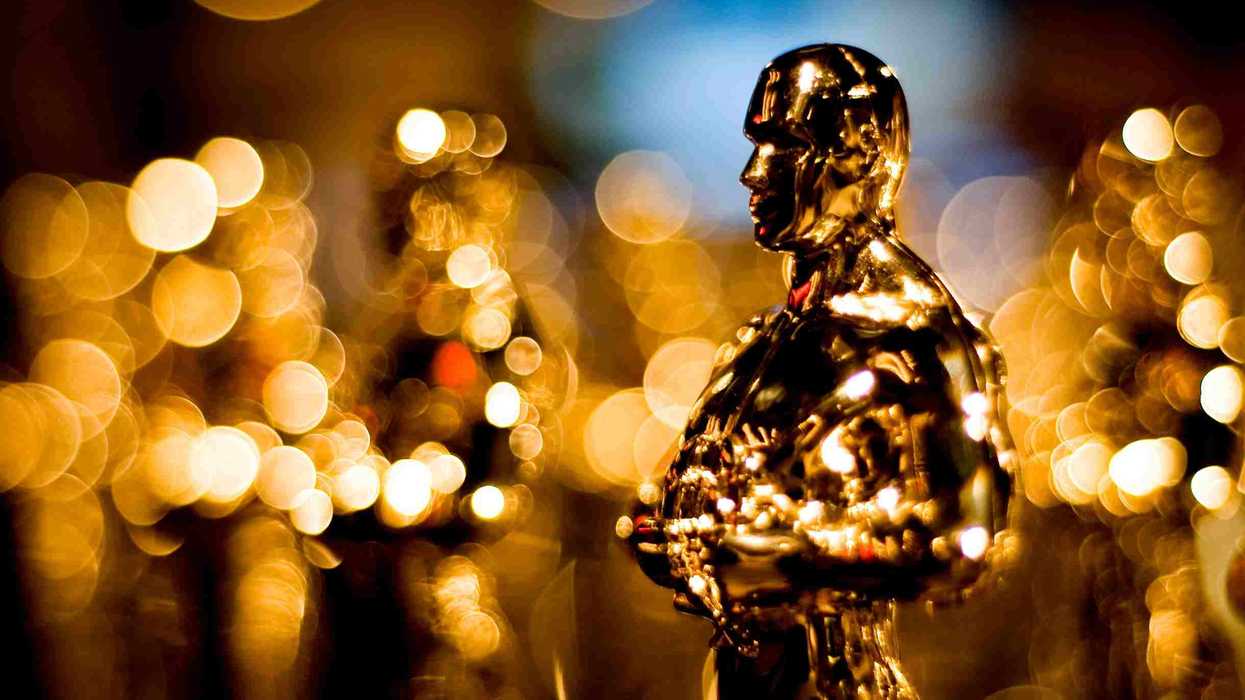
The statuette itself, though now iconic, didn’t yet have a name. It had been designed by MGM’s art director, Cedric Gibbons (who reportedly sketched it on a table napkin), but no one had called it “Oscar” yet. It was just a golden knight with a sword standing on a film reel—elegant, mysterious, and probably heavier than expected.
Tickets to the evening were five bucks apiece, roughly $85 today, not bad for a night that ended up rewriting the script on Hollywood recognition.
As for an after-party, there wasn’t one. The dinner just sort of… kept going. Dessert arrived. Conversations drifted. And somewhere between coffee refills, the ceremony quite unceremoniously gave birth to “the Oscars.”
Behind the Scenes: The Unseen Drama
For all its formality and polite applause, the first Oscars were not born out of pure admiration for cinema. Behind the neatly arranged dinner tables and handshakes was a nervous industry trying to keep itself from coming apart at the seams.
In 1929, the AMPAS wasn’t an award-dispensing machine. It was a peacekeeping experiment. The studios were on edge. Labor tensions had been simmering between executives and talent, with unions forming and negotiations getting messier by the week. The awards were a shiny distraction.
The ceremony’s blink-and-you-miss-it length wasn’t due to a lack of creativity. It was because AMPAS had bigger fires to put out. Awards were secondary to business. Press coverage was sparse, almost reluctant. Newspapers barely gave the ceremony more than a paragraph, and some trade publications seemed unsure whether the whole thing would even happen again.
Not everyone bought into the premise. There was quiet skepticism among actors and directors who suspected the ceremony, the award, and the whole dinner party were more about control than celebration. Studio rivalries were still simmering beneath the surface, and plenty of major names skipped the event altogether.
So, while the guests clinked glasses and the awards changed hands, a silent gamble unfolded. The Academy was testing whether flattery in the form of gold-plated statuettes could hold a volatile industry together.
The Legacy: Seeds of a Global Phenomenon
If you told someone in 1929 that this modest dinner would snowball into a cultural monolith with international broadcast rights, decades of controversies, and a red carpet that stops traffic, they would probably have laughed over their pudding.
The 3rd Academy Awards in 1930
But less than a year later, the Academy doubled down. By 1930, the Oscars were on the radio. By 1953, they hit television. Suddenly, this quiet industry ritual had an audience.
The appeal wasn’t just the awards. It was the mythology. Hollywood had found a way to celebrate itself globally, and audiences couldn’t look away. Over the years, the ceremony swelled into a glittering, self-produced spectacle where the line between art and marketing blurred.
But even now, fragments of that first night linger. The Academy's insider nature dates back to its roots—a tight-knit, invitation-only gathering of insiders awarding their own. The secrecy around the votes and the controlled messaging are all vintage 1929.
It wasn’t meant to be iconic. But by codifying how Hollywood sees itself and wants to be seen, the first Oscars gave the industry a mirror.
And the Oscar Goes To…
The Oscars began as a 15-minute dinner detour with no suspense, drama, camera, or real sense of occasion—yet that modest evening spawned one of the most elaborate, expensive, and emotionally loaded events in entertainment history.
What started with a few handshakes now fuels red carpet empires, million-dollar campaigns, and careers built (or broken) by a single envelope.
The irony is almost cinematic. A ceremony designed to pacify creatives and polish the studio system’s image became the very symbol of artistic achievement. Louis B. Mayer didn’t set out to build an institution. He set out to keep filmmakers in check. But in doing so, he gave Hollywood its annual confessional booth, runway, battleground, and trophy case, all rolled into one.
The first Oscars didn’t sparkle, but they struck a nerve. Small night. Big consequences.
- Independent Film Dominated the Oscars. Why? ›
- Who Are the 9 Actors With the Most Oscar Nominations? ›
- Oscars 2025: We Rank The 10 Best Picture Nominees ›
- Our 2025 Oscars Best Director Prediction ›
- Our 2025 Oscar Predictions: Who's Taking Home Best Picture? ›
- Golden Globes vs. Oscars: 5 Surprising Differences You Might Not Know ›
- 9 Films That Changed the Oscars Forever ›