7 Best Korean Movies of All Time
The iconic films that put Korea on the world cinema map.
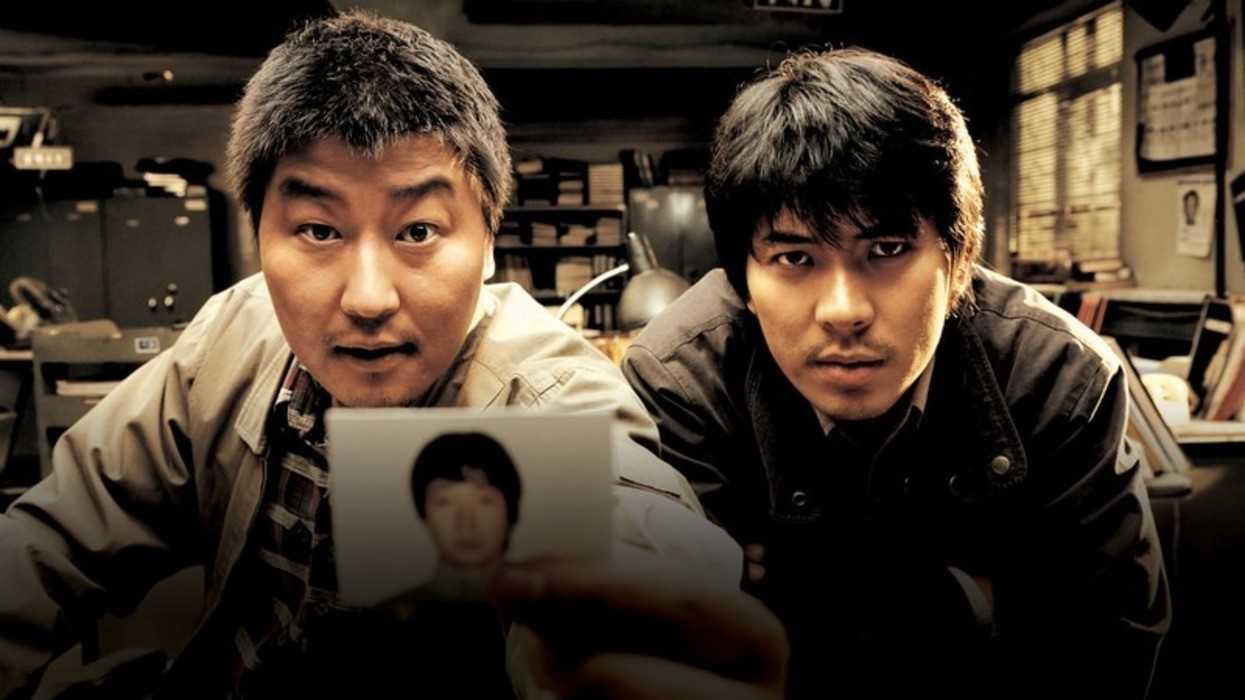
'Memories of Murder' (2003)
Korean movies have not received the attention they deserve for a very long time, largely due to their limited global exposure.
Overshadowed by its contemporary dominant film industries and logistical factors like the lack of distribution channels, language barriers, and cultural unfamiliarity, Korean films were confined to niche international film circuits or just to domestic audiences.
Hallyu, the Korean cultural wave, made a slow and steady difference until 2019, when Parasite became the first Korean film to win Best Picture at the Oscars. The historic win cemented Korean storytelling in world cinema forever, bringing its long-overdue recognition.
Let’s look at the best Korean films out there in this article! If you’ve only been watching romantic K-dramas, this list will open up a different world of Korean storytelling for you.
Best Korean Movies of All Time
1. Memories of Murder (2003)
Directed by Bong Joon-ho
I am crazy for thrillers, and I stumbled upon this movie randomly one day and decided to give it a chance.
One of Bong Joon-ho’s earlier films, this is one of the best crime-thrillers ever made. Based on Korea's notorious serial murders, the film follows two detectives (Song Kang-ho and Kim Sang-kyung) who struggle to find a killer who has been hunting down women on rainy nights.
The film's highlight is its end—you never reach a satisfying conclusion, only continue to live with the “memories of murder.” The film is adorned with dark humor and social commentary while focusing on investigating the serial killer. Long takes and naturalistic lighting beautifully present the oppressive atmosphere of rural 1980s Korea, while the gripping narrative explores themes of justice, truth, and the cost of failure.
Memories of Murder is a brilliant reference for using vertical space and architecture as metaphors for social hierarchy.
2. Oldboy (2003)
Directed by Park Chan-wook
Park Chan-wook’s Oldboy is an emotionally intense revenge thriller. Oh Dae-su (Choi Min-sik) is put behind bars for 15 years without an explanation and then suddenly released. As he tries to discover what happened, who did this to him, and why, we explore the complicated themes of memory, revenge, and secrets.
The ending is morally ambiguous, on par with its disturbing climax, which will linger in your mind for days to come. Oldboy's innovative use of color and lighting to reflect psychological states also shows how symbolic violence can better support certain narrative themes than gratuitous gore.
3. The Wailing (2016)
Directed by Na Hong-jin
The Wailing should be declared a cult-classic horror movie. It brings atmospheric tension while building a complex and layered narrative.
In a remote village plagued by a mysterious illness causing violent deaths, a hapless policeman, Jong-goo (Kwak Do-won), sets out to save his daughter as she awaits her death after being afflicted by the disease.
The film sensitively explores faith, doubt, and evil, balancing horror with layered tragedy—an influence of filmmaker Na Hong-jin’s Christian background, probably.
The film is a masterclass in misdirection, too, as it blurs lines between good and evil, human and supernatural, culminating in a gut-wrenching tale of faith and trust. The use of visual motifs in The Wailing deserves a special mention.
4. Parasite (2019)
Directed by Bong Joon-ho
This film earned Bong Joon-ho the Academy Award and worldwide recognition for Korean cinema. One of the best cinematic depictions of classism, it realistically approaches human emotions, afflictions, temptations, and privilege. It also taps into the dark realities of society, hierarchy, and money.
Parasite follows the impoverished Kim family as they infiltrate the rich Park household by taking up menial household jobs under false pretenses. It is fun and lighthearted as we explore the gnawing differences between the rich and the poor until one day, the Kim family discovers a secret in the basement, culminating in violence and tragedy.
Once again, the use of vertical space and architecture as metaphors is brilliant. Director Bong storyboards extensively for all of his films. Considering the perfection in Parasite, storyboarding is something you might want to try out as a filmmaker. It will help you gather your thoughts better and work as a reference to the edit, helping you make informed cinematic decisions at every step.
5. The Handmaiden (2016)
Directed by Park Chan-wook
Park Chan-wook’s The Handmaiden is an intricate thriller that judiciously combines erotica with suspense and historical drama. The story follows a con artist who hires a handmaiden to help defraud a Japanese heiress.
The narrative takes us on a journey of complex emotions, shifting loyalties, love, betrayal, and empowerment while tapping into themes of female agency, sexuality, and colonial oppression. The Handmaiden shows how eroticism can be used to explore power and oppression in a narrative.
6. A Tale of Two Sisters (2003)
Directed by Kim Jee-woon
A masterful way of exploring the horrors of a dysfunctional family, Kim Jee-woon’s A Tale of Two Sisters uses supernatural elements to grapple with guilt and trauma.
The narrative follows Su-mi (Im Soo-jung), who returns from a mental institution with her younger sister Su-yeon (Moon Geun-young) to live at their country home. Kim builds atmospheric tension through cinematography, sound design, and colors while engaging an unreliable narrator to shoulder the narrative and blur reality and hallucination.
This film is a masterclass in exploring trauma, guilt, and family dynamics through horror tropes.
7. Poetry (2010)
Directed by Lee Chang-dong
Following an elderly woman facing Alzheimer's, Poetry sees Mi-ja (Yoon Jeong-hee) joining a poetry class to grapple with the discovery of a heinous family crime. As she finds strength and purpose in the autumn of her life, Lee Chang-dong crafts a narrative that leaves us with a smile in the end.
The narrative unfolds with quiet dignity as poetic visuals, sensitive portrayal of marginalized characters, and subtle symbolism breathe life into the complex themes of aging, morality, and the search for purpose.
While the BTS squad will make your heart skip a beat, the above-listed Korean films will surely blow your mind. So check out these films whose stories transcend genres, and let us know which one you liked the most!
- 25 Favorite Films of 'Parasite' Director Bong Joon-ho ›
- Watch Hwang Dong-hyuk and Bong Joon-ho in Conversation ›
- 193 Classic Korean Films Are Free to Watch on YouTube Right Now ›
- Korean Masterpiece 'Memories of Murder' Helps Teach the Virtues of Ensemble Staging ›
- South Korea's New Big-Budget Alien Movie Is Making a Huge Global Play - Will It Work? ›