Forgotten Classics From the '70s: The Gene Hackman Thriller That Won Best Picture
The French Connection won five Oscars, so why don't we talk about it more?
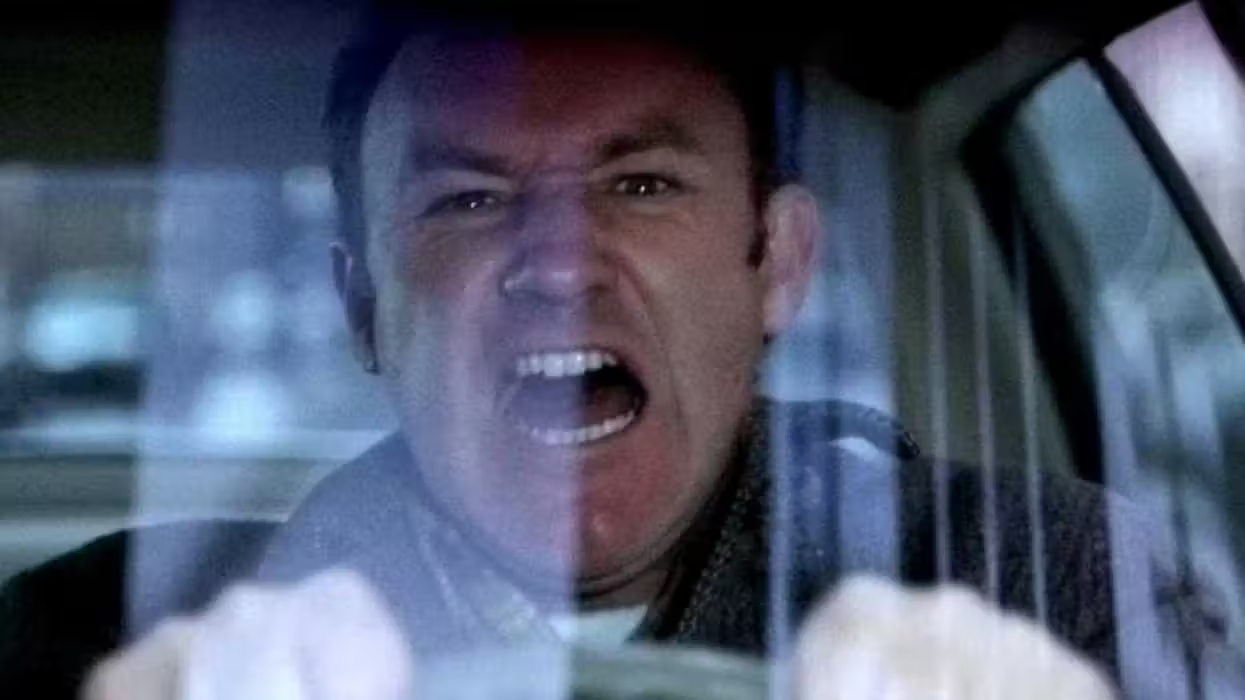
'The French Connection'
The 1970s were an awesome time for Hollywood. We had this revolution of storytellers who brought their own style and vices to cinema. Not only did they help invent things like the blockbuster, but they also had an appetite for challenging films that pulled the very nature of America to the forefront and shook up a stagnant system.
These films became part of the cultural lexicon and never really left the conversation. Think of movies like The Godfather, Taxi Driver, and Rocky. We're seeing them in popular culture constantly.
But there is one masterpiece that I think gets left out of a lot of these cinephile conversations, even though it's the most influential action-thriller ever made.
We’re talking about William Friedkin’s The French Connection.
This was a landmark movie of the '70s. It won five Academy Awards, including Best Picture, Best Director, and Best Actor for Gene Hackman.
But we're calling it a forgotten classic because I think the cop movie has largely shifted to TV, and we're not seeing as many modern films influenced by this one.
Let’s dive in.
- YouTubewww.youtube.com
The Birth of the Anti-Hero: Popeye Doyle
Look, he's got a goofy name, but if you want to write an anihero, Popeye Doyle is a character you should study. When we meet him, he's dressed as Samta and chasing down a perp that he summarily beats for making him run.
Gene Hackman didn't play Doyle to be liked.
And he wasn't written to be someone you should aspire to be like. In fact, a few years ago Disney got in a lot of trouble for censoring The French Connection, particularly because Doyle is not a good guy...but he is the hero of our story.
Doyle is bigoted, short-tempered, and obsessive, and he operates in a moral gray area that makes him kind of a crooked cop to boot.
This is a guy who is driven by the sheer obsession of the hunt. He wants to get his guy, no matter the cost. And this unyielding corruption and changing of suspects into a grand conspiracy really landed with 70s audiences.
Guerrilla Filmmaking and the Greatest Car Chase
William Friedkin made this movie in a way that made you feel like a voyeur. You're peering in windows, watching cops from afar, and only brought into the intimate moments like you; you're one of the conspirators or one of the cops chasing them.
There's this rawness, a reality that just presents the streets to us and asks us to participate in being both cop and robber.
And you cannot talk about The French Connection without talking about the car chase that I consider to be one of the best of all time. It's a terrifying race after an elevated train that has you on the edge of your seat.
They would never shoot the scene practically today, but back then, they hit the gas, going 90 with Friedkin running the camera and people being terrified.
The production famously didn’t have the proper permits to clear the streets of Brooklyn, so they just shot it doing whatever they wanted.
- The Real Danger: Stunt driver Bill Hickman drove a 1971 Pontiac LeMans at speeds up to 90 mph for 26 blocks under the elevated train tracks for them to get the shots needed. The near-misses with oncoming traffic and pedestrians? Those were mostly real and had real reactions from the people they almost hit.
- The Bumper Cam: To give the audience a terrifying sense of speed, Friedkin mounted a camera to the front bumper of the car, just inches off the asphalt, and under-cranked the camera (shooting at 20 or 21 frames per second instead of 24) to make the motion look even more frenetic when played back at normal speed.
- Handheld Chaos: Legendary cinematographer Owen Roizman shot much of the movie on the fly, abandoning steady tripods for handheld.
- YouTubewww.youtube.com
Why Filmmakers Need to Re-Watch It
Do you need to feel the vigor for filmmaking again? Do you want to feel alive and feel the beating heart of a movie again? This is the film that can change your perspective and excite you.
The French Connection stands as a reminder of what can be accomplished when a director prioritizes atmosphere and tension over perfection.
It's a messy movie, and that's what makes it kind of great; it feels so human and so alive.
Friedkin shot scenes with natural light and shot on location in freezing winter temperatures without dressing up the scenery. It's grimy and dingy,the trash on the streets was real, and the pedestrians and background noise are real.
Watch how Hackman uses his eyes, how Roizman handles a camera in tight spaces, and how editing can turn a simple foot pursuit through a subway station into something kinetic and special.
- YouTubewww.youtube.com
Summing It All Up
Hollywood careers are notoriously hard and can take a while to manifest, but the quickest way into it is to take a tired genre and flip it on its head. That's always been true, and it's why The French Connection became such a hit and why it launched Friendkin's career and surprised so many people at the time.
Watch it to get inspired to grab a camera or a pen and tell a story that you know, and that can inspire other people to go out and make something.
Let me know what you think in the comments.