11 Iconic Freeze-Frame Moments in Cinema History
A guided tour of 11 iconic films whose single frozen images became cultural landmarks and cinematic legends.
The 400 Blows (1959)
If you know the language of film, you can understand what I mean when I say that freeze-frames tell you how to remember the film you have just watched.
In pure descriptive terms, it’s a technique that pauses the visual/action to hold on a single (frozen) frame to create the effect of a still photograph. It draws your attention to a specific moment, creates a dramatic (sometimes, even comedic) effect. Its aim is to highlight the mood or emotion of the story and its characters. This frame is also a commentary on the whole narrative and the character involved in it. The narrative coming to a standstill is your clue to take a closer look at the story’s emotional arc.
Freeze-frame, as the name suggests, is a way to solidify everything the movie has to offer—its story, characters, theme, emotions, message—into one single image. It ingrains these elements into your memory, like a photograph. It’s not just a fancy cinematic stunt. This is how a filmmaker tells you which feeling you need to take with you.
These 11 iconic examples show how this technique is used in movies to convey feelings.
11 Iconic Freeze-Frames in Cinema
1. Sunset Boulevard (1950)
Freeze Frame: Norma Desmond’s close-up
Written by: Charles Brackett, Billy Wilder, D. M. Marshman Jr. | Directed by: Billy Wilder
In the climax, the police and reporters flock to Norma Desmond’s (Gloria Swanson) mansion to arrest her for the murder of Joe Gillis (William Holden). Norma descends the grand staircase, having completely lost touch with reality. After giving a speech as if she were talking to the film crew, she declares to “Cecil B. DeMille” that she is ready for her close-up. As she dramatically moves towards the camera for her “close-up,” the visual freezes and fades. Since then, this frame has turned into the iconic portrait of fame, delusion, and Hollywood enigma.
2. The 400 Blows (1959)
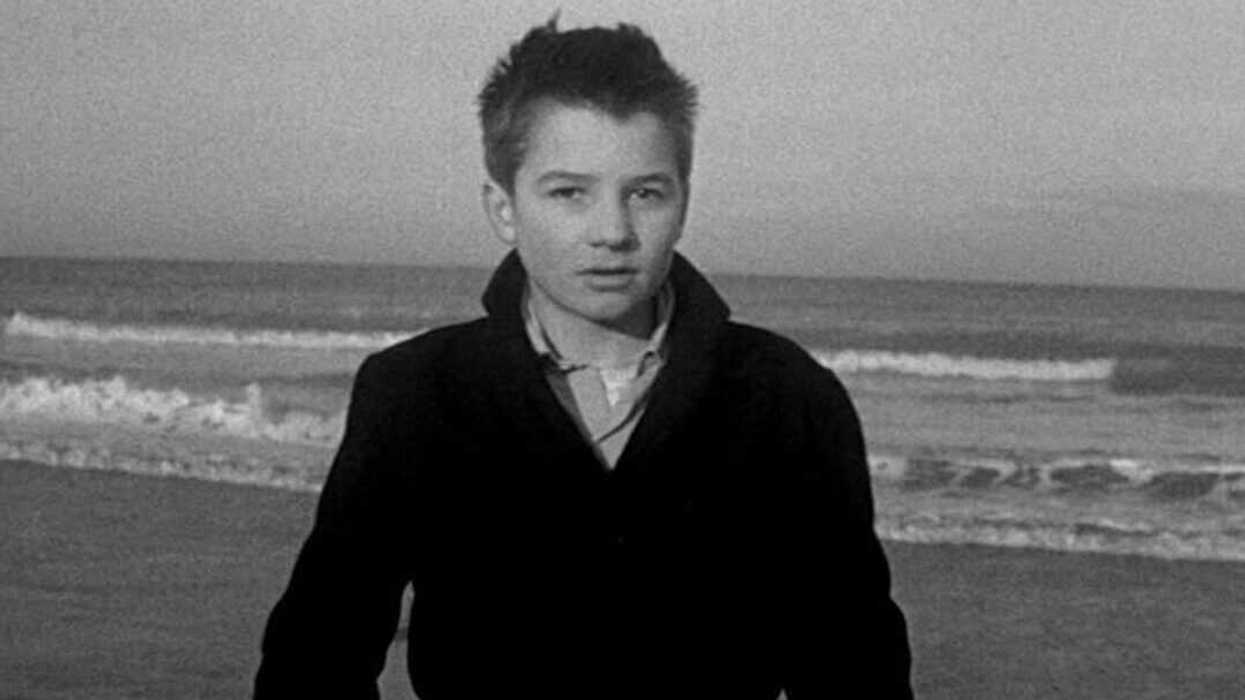
Freeze Frame: Antoine’s final beach glance
Written by: François Truffaut, Marcel Moussy | Directed by: François Truffaut
Antoine Doinel (Jeanne-Pierre Léaud) escapes his reform school and runs to the beach. Once there, he suddenly turns towards the camera, and the camera freezes on the mishmash of uncertainty, confusion, relief, and anxiety on his face. This frame is iconic, not only because it represents the movie, but also because it corresponds to the French New Wave storytelling.
3. Butch Cassidy and the Sundance Kid (1969)
Freeze Frame: Butch and Sundance charging into gunfire
Written by: William Goldman | Directed by: George Roy Hill
Butch (Paul Newman) and Sundance (Robert Redford) step out of hiding and into the gunfire standoff that they cannot escape alive. Instead of showing their end, the frame freezes on them mid-charge. Had we seen them getting pierced through by bullets, it would have concluded their story. But by freezing them midway, the director symbolically preserved their partnership at its peak. We know what happened, but we don’t see it happening, and it gives this final moment a bittersweet taste. Instead of being about a bloodbath, the image becomes about loyalty, courage, and defiance.
4. The French Connection (1971)
Freeze Frame: The final shot in the factory
Written by: Ernest Tidyman | Directed by: William Friedkin
As Jimmy “Popeye” Doyle (Gene Hackman) chases Charnier (Fernando Rey) out of the factory, a single gunshot is heard, and abrupt stillness settles down. The frame freezes on a vague ending, leaving the conclusion in doubt. The following title cards reveal the fates of various characters involved in the story. This freeze-frame and the subsequent title cards underline Popeye’s doggedly relentless (almost obsessive) pursuit of the criminals. It also shows the movie’s refusal to give a neat closure.
5. Rocky III (1982)
Freeze Frame: Rocky and Apollo’s secret third fight
Written by: Sylvester Stallone | Directed by: Sylvester Stallone
Rocky Balboa (Sylvester Stallone) and Apollo (Carl Weathers), old rivals and new friends, square off in a friendly round of boxing. You can see mutual respect, but also hints of old competitiveness. When the frame freezes on them mid-punch, it seals their new friendship. The emotional depth of the frame, which captures both, went on to become the franchise’s heart.
6. The Karate Kid (1984)
Freeze Frame: Mr. Miyagi smiling at Daniel’s victory
Written by: Robert Mark Kamen | Directed by: John G. Avildsen
Daniel’s (Ralph Macchio) final victory is a big emotional payoff, and it reflects on Mr. Miyagi’s (Pat Morita) face in his happy smile and quiet pride. One thing that stands out about this frame is that it freezes on Mr. Miyagi and not on the trophy, signifying what the real prize is. The final frame of the movie, which is about mentorship and growth, becomes the movie’s well-deserving emotional anchor.
7. The Breakfast Club (1985)
Freeze Frame: John Bender’s fist pump in the air
Written by: John Hughes | Directed by: John Hughes
As Bender (Judd Nelson) walks across the football field, he pumps his fist in the air. It’s a small act of rebellion and self-confidence, which, through this movie, also turned into a generational symbol. It perfectly captures the spirit of high school, which is usually a mix of uncertainty, drive, frustration, identity, and small victories that make you the person you grow up to be.
8. Thelma and Louise (1991)
Freeze Frame: The car suspended over the canyon
Written by: Callie Khouri | Directed by: Ridley Scott
Thelma (Geena Davis) and Louise (Susan Sarandon) are on the run from the FBI. During the climax, this chase puts them 100 yards away from the edge of the Grand Canyon. Thelma suggests they should drive off the cliff instead of letting go of their newfound freedom. Louise agrees, and they drive off the cliff. The frame freezes while their car is suspended mid-air. The image implies their complete freedom, which no one can take away from them. The image was so impactful that it almost instantly became synonymous with rebellion, solidarity, and freedom.
9. Run Lola Run (1998)
Freeze Frame: Lola smiling with the money-filled bag
Written by: Tom Tykwer | Directed by: Tom Tykwer
In this German movie, a young woman, Lola (Franka Potente), must race against time—in three different variations of the same situation—to secure 100,000 marks to save her boyfriend, Manni (Moritz Bleibtreu). The first two variations are bust, but in the third one, she saves her boyfriend and ends up with extra money, something Manni is not aware of. After the dust settles and they walk home, Manni sees the bag and asks what’s in it. Lola smiles, and the frame freezes on this moment. This frame is the perfect culmination of the chaotic events of the film. It also reflects the movie’s playful approach to fate, chance, and last-minute luck.
10. Billy Elliot (2000)
Freeze Frame: Billy jumping into the air during his Swan Lake lead
Written by: Lee Hall | Directed by: Stephen Daldry
Adult Billy (Adam Cooper) takes a graceful leap in his Swan Lake performance, and the frame freezes on his full visual, suspended in the air. This frame signifies the point in his life that his entire childhood struggle was aimed at: a cathartic moment of complete artistic release. The image has, ever since, become an empowering symbol of determination, support, and unabashedly embracing your identity.
11. Harry Potter and the Prisoner of Azkaban (2004)
Freeze Frame: Harry grinning with the Firebolt in hand
Written by: Steve Kloves | Directed by: Alfonso Cuarón
After the film’s adventures have culminated in a happy ending, Harry Potter (Daniel Radcliffe) receives a powerful broomstick, Firebolt, from his godfather, Sirius Black (Gary Oldman). His friends goad him into riding it. He obliges and soars through the sky only to be frozen in his ecstatic vision. Aside from capturing Harry’s unfiltered joy, the frame is also known for indicating the third film’s shift into a more adventurous and self-assured tone. The frame has become one of the franchise’s most recognizable final images.
- What Are The Best Gene Hackman Movies of All Time? | No Film ... ›
- Robert Redford, Hollywood Icon Who Transformed Independent ... ›
- What Are the 10 Best Billy Wilder Movies? | No Film School ›
- 10 Storytelling Tips from Billy Wilder | No Film School ›
- The Meaning Behind the Final Close-Up in 'Sunset Boulevard' ›
- The Dark Meaning Hidden Inside the Iconic Line in 'Sunset Boulevard' ›
- 11 Unforgettable Movie Frames That Became Modern Art ›
- The French Connection ›