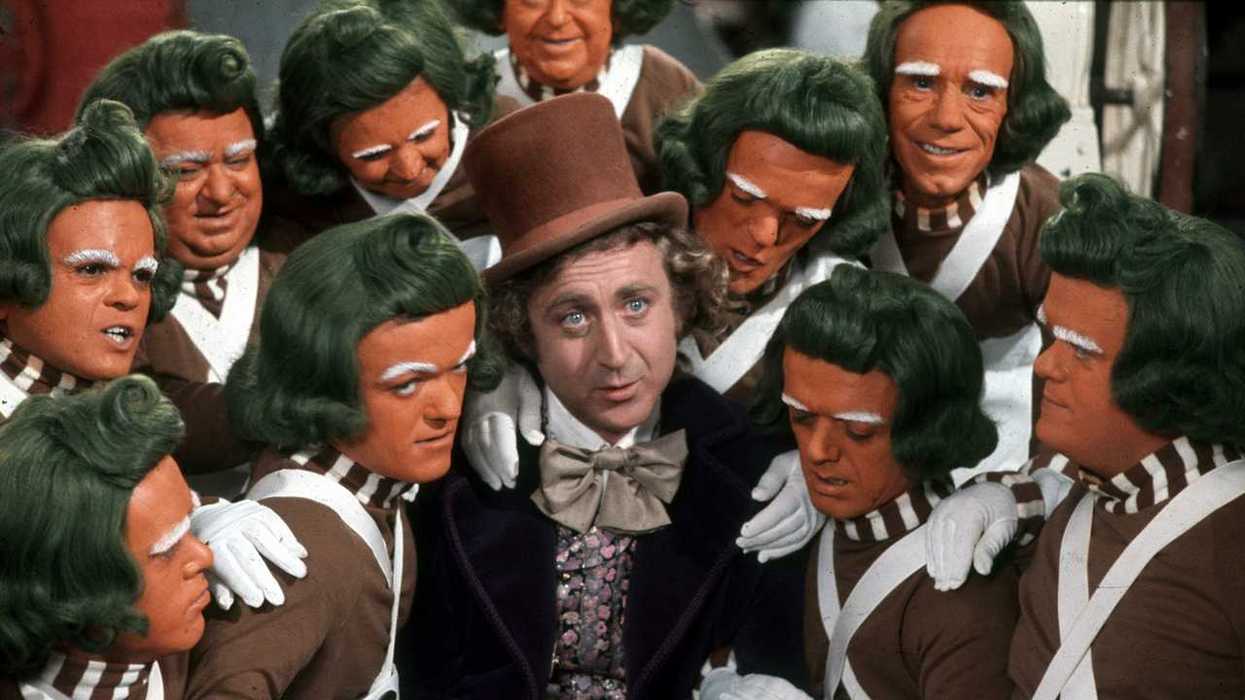
The genius of the late, great Gene Wilder can be traced through his quirky, timelessly charming, and distinct acting roles. However, the mysterious, hat-donning Willy Wonka remains one of his most memorable characters with one of the all-time best entrances.
Before he handed out free golden tickets in the 1971 classic Willy Wonka and the Chocolate Factory, Gene Wilder gave one of the most iconic character introductions in movie history. Confusing the golden ticket bearers, he entered the frame with a cane and a limp and launched himself into an impressive somersault. His entrance not only defined his acting prowess but also the fearless artist in him. But here’s the bummer—this entrance almost never happened. Moreover, Wilder put a stipulation on the movie, and this creative gamble made Willy Wonka a legend. Let’s find out why.
Willy Wonka & the Chocolate Factory (1971)
Story
Along with four children, a poor, sincere boy, Charlie (Peter Ostrum), receives the last golden ticket tour of the eccentric Willy Wonka’s (Gene Wilder) one-in-a-lifetime chocolate factory. Wonka leads the five children into his mysterious factory, and after a test of his character, Charlie becomes the rightful heir to Wonka’s chocolate empire.
Willy Wonka’s Magical Entrance
Wilder’s famous entrance was not in the script—a creation of Wilder’s genius. At the factory gates, where all the golden ticket bearers are waiting, Wonka arrives leaning on a cane and walking with a limp. The excited people gathered are confused by the factory owner’s frail-looking frame.
After a few steps, Wonka’s cane gets stuck in the cobblestones, but he takes a step without it, still leaning on an imaginary cane. Soon, he realizes, starts falling forward, and times it with a perfect somersault, greeted with clapping and smiles. With a single flip, Wonka turns into a dazzling performer.
The Dealbreaking Entrance
Gene Wilder liked the part when he was first offered the script and Roald Dahl’s book, but he had a different vision of how the character should be introduced. Before agreeing to play Willy Wonka, Wilder wrote a letter and afterwards spoke to the director, Mel Stuart—he put a stipulation on the movie.
First, Wilder asked them why they wanted him to play Wonka. The director mentioned his movie, Start the Revolution Without Me (1970), and knew he would be right for the part.
Then, Wilder told them about his entrance—that he wanted to come out of the door carrying a cane and walk toward the children with a limp… At a certain point, his cane sinks into the cobblestones, but he keeps walking. He then starts falling forward, and just before hitting the ground, he turns it into a beautiful somersault and bounces back.
Stuart asked the reason behind such a physically bizarre entrance, to which Wilder replied, “Because from that time on, no one will know if I’m telling the truth or lying.”
Wilder Almost Turned Down the Movie
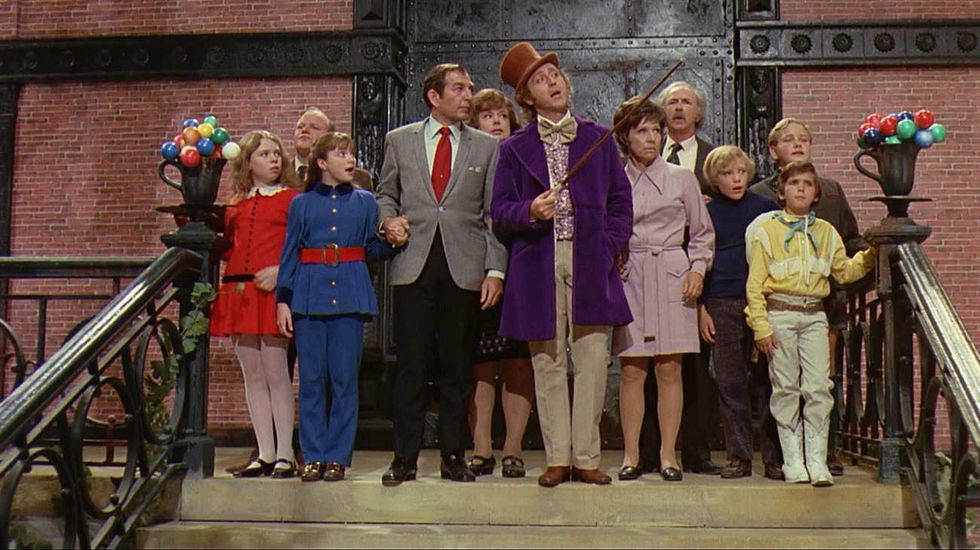 'Willy Wonka & the Chocolate Factory' (1971)Credit: Paramount Pictures
Wilder was not bluffing about how he wanted to introduce Willy Wonka in the movie. In his memoir, Kiss Me Like a Stranger, and in later interviews, he remembers when Stuart pressed him on what he wanted to do that for. And whether the entrance should be in the film.
In an interview, Wilder said, “I wouldn’t have done the film if they hadn’t let me come out walking as a cripple and then getting my cane stuck in a cobblestone, and then doing a forward somersault…”
So, turning down the movie was not based on money, scheduling, or ego; it was based on the character’s logic. Wilder wanted to shake the audience’s trust right from the very beginning.
What Makes Willy Wonka’s Entrance a Genius?
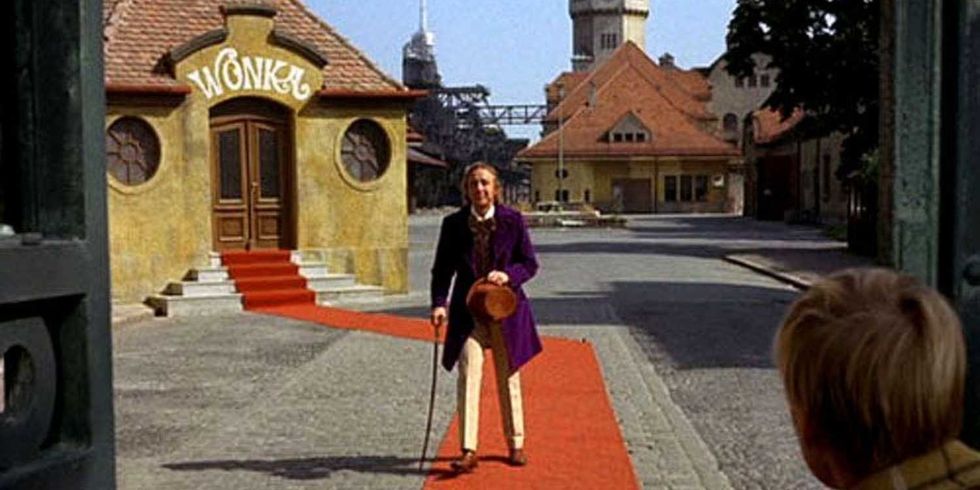 'Willy Wonka & the Chocolate Factory' (1971)Credit: Paramount Pictures
1. The Unpredictable Nature of Wonka
The crowd turns from confused to utterly shocked by Wonka’s walk, as Wilder reveals it was an act. From that moment on, Wonka had the power to surprise the children; no one would know whether he was telling the truth or not. The theatrics take over.
2. Setting the Film’s Tone
Willy Wonka & the Chocolate Factory has a special space between children’s fantasy and something darker. Wonka’s iconic entrance seems clownish, but it is a forced deception. Critics also pointed out that Wonka is a trickster, and his more intense scenes in the movie might feel more jarring and stranger than his initial appearance.
3. Visual Storytelling
You will never find any expository line stating that Willy Wonka is an unpredictable man who can’t be trusted. Wilder’s genius lies in the fact that he defined the character of Wonka without any exposition. It comes through a physical gag that works on psychology without even speaking a single line of dialogue.
Final Thoughts
Over time, Gene Wilder’s Willy Wonka entrance has been deemed one of the greatest iconic character introductions of all time. Wilder knew it was important to establish the character’s mischievousness right from the start and refused to do otherwise—a sign of a great artist.