Striding Into Legend: 10 Most Iconic Walks in Cinema History
From confident struts to emotional journeys, we break down the 10 most memorable walking scenes ever filmed.
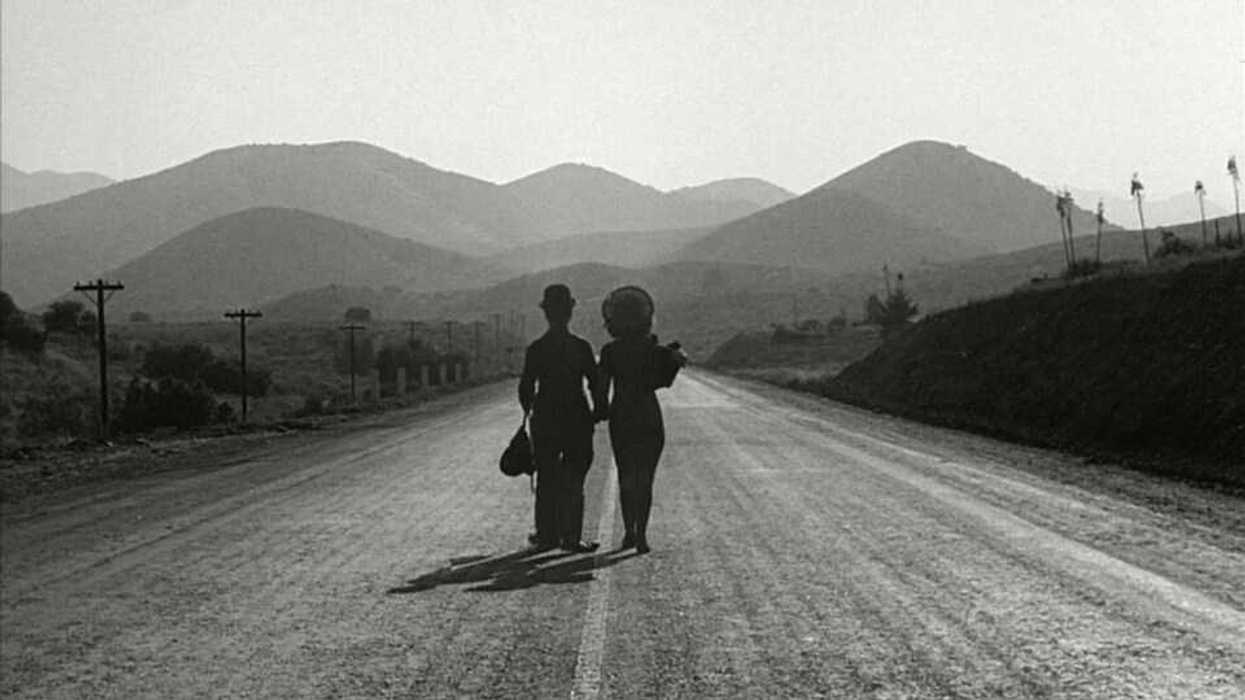
‘Modern Times’ (1936)
Babies taking their first walk or cats doing their signature “catwalk” is absolutely adorable. But barring these angelic exceptions, there is nothing special in someone walking. It’s a basic human movement; step forward and repeat. Everybody does it. So, logically, it shouldn’t be special in movies as well. And yet, sometimes it is.
In cinema, a walk can serve as a multipurpose narrative tool: it can introduce a legend, reveal an emotional state, or quietly close a story. In good hands, a walk doesn’t even need dialogue. Only posture, pace, and purpose, and that’s it. Heavy lifting is done. Many iconic moments in films have occurred simply because a character moves from point A to point B. It makes sense because movement is the purest form of storytelling.
At times, these “walking” moments might appear to be accidental, effortless, or just situational. But they aren’t. These moments are well-planned, well-crafted, and well-executed. The performance of walking has a specific intent.
Let’s look at 10 such iconic “walks” in cinema.
10 Movie Walks That Became Cultural Moments
1. Tramp walks into the hopeful future (Modern Times, 1936)
Portrayed by: Charlie Chaplin | Written by: Charlie Chaplin | Directed by: Charlie Chaplin
In the film’s denouement, the Tramp (Charlie Chaplin) and Ellen (Paulette Goddard) are forced to flee from the authorities for the umpteenth time. Ellen is frustrated and feeling hopeless because of the never-ending streak of failures. The Tramp, however, ever optimistic, reassures her and promises that tomorrow will be beautiful. They walk down the road towards an uncertain future, but with hopeful hearts. This moment highlights the resilient spirit despite the crushing weight of the Industrial Age. Chaplin uses his trademark waddling gait to show that moving forward is the only option left.
2. Dorothy Follows the Yellow Brick Road (The Wizard of Oz, 1939)
Portrayed by: Judy Garland | Written by: Noel Langley, Florence Ryerson, and Edgar Allan Woolf | Directed by: Victor Fleming
Here, Dorothy’s (Judy Garland) walk (or journey) on the Yellow Brick Road serves as the literal path of the narrative. The iconic skip-step movement and the vibrant, spiral road were how the audience was introduced to the enchanting, vibrant, and famously Technicolor world of the Land of Oz. The youthful and energetic choreography of the skipping contrasts with the sepia-toned reality of Kansas. Dorothy’s tippy-toeing is one of the most iconic cinematic images of all time.
3. Ratso Rizzo's "I'm walkin' here!" Moment (Midnight Cowboy, 1969)
Portrayed by: Dustin Hoffman | Written by: Waldo Salt | Directed by: John Schlesinger
As Rico “Ratso” Rizzo (Dustin Hoffman) is walking along the road with Joe Buck (Jon Voigt), a cab almost hits Ratso. What happens next is famously improvised: Ratso angrily thumps on the cab’s bonnet and yells, “I’m walkin’ here! I’m walkin’ here!” This moment is considered an ideal example of how an actor stays in character without breaking continuity. Hoffman’s unscripted moment created a gritty, authentic portrayal of New York City survival. This moment turned a simple street-crossing into a cultural touchstone for urban defiance and street-level reality.
4. The Copacabana Entrance (Goodfellas, 1990)
Portrayed by: Ray Liotta | Written by: Nicholas Pileggi and Martin Scorsese | Directed by: Martin Scorsese
In this famous continuous tracking shot, the camera follows Henry Hill (Ray Liotta) and Karen Hill (Lorraine Bracco) through a kitchen and into a crowded nightclub. The walk is smooth, unobstructed, and confident, and it perfectly walks the audience through the seductive power of the mob lifestyle. Since the camera never cuts away, we feel like we are following Henry into his world. This is a perfect example of establishing a character’s status from his movement.
5. The Slow-Motion Crew Walk (Reservoir Dogs, 1992)
Portrayed by: Various Actors | Written by: Quentin Tarantino | Directed by: Quentin Tarantino
This is perhaps the most famous walk, where characters are literally just walking in slow motion. It comes in the opening sequence, right after the diner scene, and features the protagonists (a group of criminals) strolling down the street. There is no other motive behind this shot other than establishing the “cool” factor and the group chemistry. This sequence created the “power walk” and “victory walk” tropes in movies.
6. The “Foot Massage” Argument (Pulp Fiction, 1994)
Portrayed by: John Travolta and Samuel L. Jackson | Written by: Quentin Tarantino | Directed by: Quentin Tarantino
As they walk to carry out their “hit job,” Jules (Samuel L. Jackson) and Vincent (John Travolta) engage in a friendly argument over the ethical ramifications of a “foot massage.” The contrast between the violent nature of their job/task and the casual, nonchalant nature of their conversation is what makes this walk iconic. The camera stays centered on them, focusing on their effortless banter and professional detachment. It’s a classic character-building moment.
7. Maximus Through the Wheat Fields (Gladiator, 2000)
Portrayed by: Russell Crowe | Written by: David Franzoni, John Logan, and William Nicholson | Directed by: Ridley Scott
This opening sequence (which reappears occasionally) is one of the defining images of the movie. All we see here is the hand of a man, Maximus (Russell Crowe), caressing the crops as he walks through the wheat field towards his home/family. This slow, tactile moment is deeply peaceful, and yet it arouses a sense of longing and melancholy. This walk is a visual bridge between the brutal reality of war and the afterlife. The gentleness and peacefulness of the walk highlight Maximus’ internal longing for rest and family after having spent years in combat.
8. Frodo's Walk to Mordor (The Lord of the Rings: The Return of the King, 2003)
Portrayed by: Elijah Wood | Written by: Fran Walsh, Philippa Boyens, and Peter Jackson | Directed by: Peter Jackson
While all the walks I mentioned before make up for good scenes, this walk is the backbone of the whole movie; rather, the entire Lord of the Rings franchise. An epitome of a grueling and physically, mentally, and spiritually taxing journey, this walk is heavy, labored beyond imagination. With every step Frodo (Elijah Wood) takes, the burden of the ring he is carrying increases. His continuously increasing torture mirrors the rising high stakes of the mission. And it’s all shown through the physical toll taken on Frodo’s body and mind.
9. Jack Sparrow's Introduction (Pirates of the Caribbean: The Curse of the Black Pearl, 2003)
Portrayed by: Johnny Depp | Written by: Ted Elliott and Terry Rossio | Directed by: Gore Verbinski
Jack Sparrow (Johnny Depp), in his iconic character introduction, stands atop a sinking mast and effortlessly and casually steps onto the dock as his boat fully submerges. The perfection of this introduction cannot be highlighted enough. The walk is flamboyant, slightly off-balance, perfectly timed, and as bizarre as it gets—exactly like Jack Sparrow, the crazy pirate. This simple walk saved the movie several minutes of elaborate character introduction. Everything we need to know about Jack—that he is crazy, he is crazy lucky, and very, very eccentric—it’s all there in this walk.
10. Joker Walking Away from the Hospital (The Dark Knight, 2008)
Portrayed by: Heath Ledger | Written by: Jonathan Nolan and Christopher Nolan | Directed by: Christopher Nolan
Heath Ledger, with his career-defining performance as the Joker, gave some truly bizarre dimensions to the already psychotic character. In this scene, after blowing up the massive hospital complex with a remote control, he walks away—dressed like a nurse—with a strange, playful skip. When the series of explosions stops, he even famously halts to fiddle with the remote. That nochalant demeanor, that crazy kid-like romp, as flames burst out behind him; you just can’t look away. Again, this walk defines the character: a psychopathic criminal who finds genuine joy in chaos and treats big tragedies like a playground game.
- Joker’s Iconic Bathroom Dance Wasn’t in the Script ›
- The Foot Massage Power Play: Why Jules and Vincent’s Debate in 'Pulp Fiction' Was Never About Feet ›
- Analyzing the ‘Reservoir Dogs’ "You Shoot Me in a Dream..." Threat That Sounds Like a Joke ›
- The Improvised Scene That Defined ‘Reservoir Dogs’ ›
- ‘Reservoir Dogs’: The Slow-Mo Walk That Defined Cool ›
- How a Street Incident Turned into the Most Iconic Line in 'Midnight Cowboy' ›
- 11 Great Technicolor Movies Across History | No Film School ›
- Chaplin's 'City Lights' Holds the Record for Most Retakes ›
- Iconic Movie Scenes That Almost Didn't Make the Cut | No Film School ›