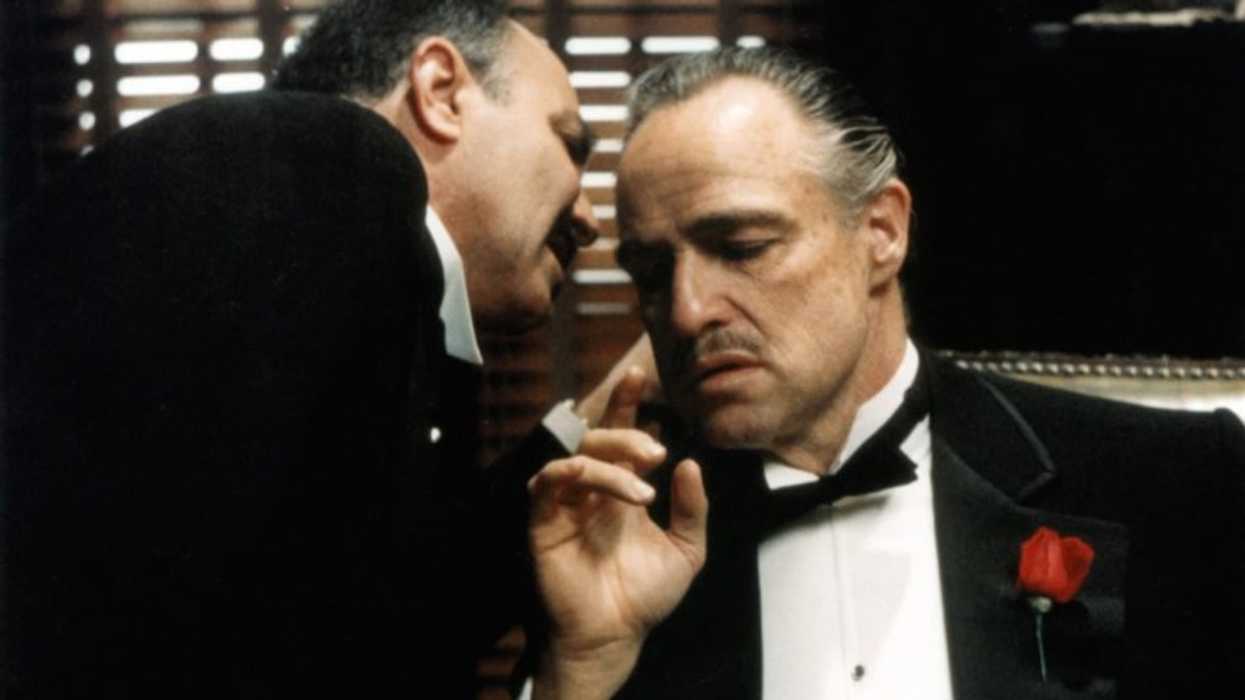
When we talk about a movie like The Godfather today, it's hard to believe there was a time when they didn't think it would make any money or be successful.
But you gotta remember, back in the '60s, gangster movies were absolute box office poison. Paramount had just watched Kirk Douglas tank in The Brotherhood, so the idea of another expensive Italian-American mob movie was... not exactly a winning proposition.
So, when studio exec Robert Evans snagged the rights to Mario Puzo’s novel, it wasn't a guaranteed hit. It was a gamble.
In order to make the movie, Evans put producer Al Ruddy on the case to find a director who made sense for the project.
And that's where this weird series of events begins.
Let's dive in.
- YouTubewww.youtube.com
The Search for a Director
Finding someone to direct the movie was reportedly a nightmare. The studio's wish list seemed like a bunch of unattainable guys: Arthur Penn, Otto Preminger, Peter Bogdanovich, Orson Welles, Sergio Leone...
But they all said no.
Paramount really wanted someone to take this job, but no one was stepping forward. So they turned to a young director whose biggest hit was a musical called Finian's Rainbow, named Francis Ford Coppola.
They thought he had two big things going for him.
- He was Italian-American.
- He'd probably do it for cheap.
As it turns out, Coppola didn't want to do it either. He read Puzo's novel and thought it was lowbrow, beneath his artistic aspirations.
But one person stepped forward and told Coppola he was making a huge mistake. And that was George Lucas.
The Failure That Launched a Masterpiece
Coppola was producing his film-school buddy, George Lucas's movie, through his production company, American Zoetrope. Their whole mission was to make personal, indie films outside the broken-down studio system.
They’d even landed a seven-picture deal with Warner Bros., and were about to debut Lucas’s first feature, THX 1138.
But that movie, while heralded today, had some issues back then: it didn't make any money, and the execs hated it.
That wound up destroying the deal American Zoetrope had at WB. Coppola was drowning in debt and needed a movie to get them out of it.
So, Lucas told Coppola he's gotta do The Godfather.
It was a safe bet that could get him and his company back on track.
As they were making The Godfather, Lucas also gave Coppola important notes on different scenes to add tension and develop Michael Corleone's character.
 Al Pacino as Michael Corleone in 'The Godfather' Credit: Paramount Pictures
Making History
As you probably know, Coppola took the movie and made it into the greatest film of all time.
But here's the lesson: Coppola didn't just half-ass it. He didn't take the paycheck job just for the money; he put all of himself into it. He saw it not as a cheap gangster flick, but as an epic tale of family and a metaphor for capitalism.
The movie was a huge hit.
It saved Paramount, it won Best Picture, and it redefined American film. Coppola followed it up with Part II, which many argue is even better, becoming the first sequel ever to win Best Picture.
And George Lucas? The guy whose failure set this all in motion? He made a little Best Picture-nominee called American Graffiti, which gave him the clout to make his own rather well-known trilogy...Star Wars.
As it turns out, the failure of THX 1138 was the single best thing that could have happened to either of them.
It forced Coppola to take a job he didn't want and turn it into a masterpiece to save his company. And it taught Lucas a hard lesson about the studio system that would lead him to build an empire.
Summing It All Up
Sometimes, the projects you're forced to do, the ones you take just for the paycheck, become the ones that define you. But only if you, like Coppola, find a way to make them your own.
Let me know what you think in the comments.