Sunrise on the Reaping hits theaters this week, so die-hard Hunger Games fans have been revisiting the original films, as well as the more recent prequel, The Ballad of Songbirds & Snakes.
For good reason. The original series was a complex, groundbreaking work of young adult fiction coming on the heels of a huge YA boom that started around Harry Potter and Twilight and continued into a dystopian genre explosion where Hunger Games fit perfectly.
If you haven't rewatched the films in a while, you'll likely be surprised by the storytelling depth and creative filmmaking, particularly of the early couple of entries, which took its subject matter incredibly seriously. As the series went on and its popularity grew, many film critics seemed to see some mirroring in the promotional materials and storytelling, with Panem's world almost leaking into how the studio and creative teams were treating the plot—as sensationalism, with a focus on fast-paced action and what could be sold alongside the films to make everyone more money.
With Sunrise on the Reaping nearing, and director Francis Lawrence back at the helm, we decided to take a look back at the series and how its tone and cinematic approach have evolved through the years. We're doing so with the help of The Writer's Block and some astute analysis of the books and movies, focusing on point of view, how the camera plays a part in that point of view, and how to capture a book's thesis via point of view.
Check it out here.
- YouTube www.youtube.com
When the Director and the Book Want the Same Thing
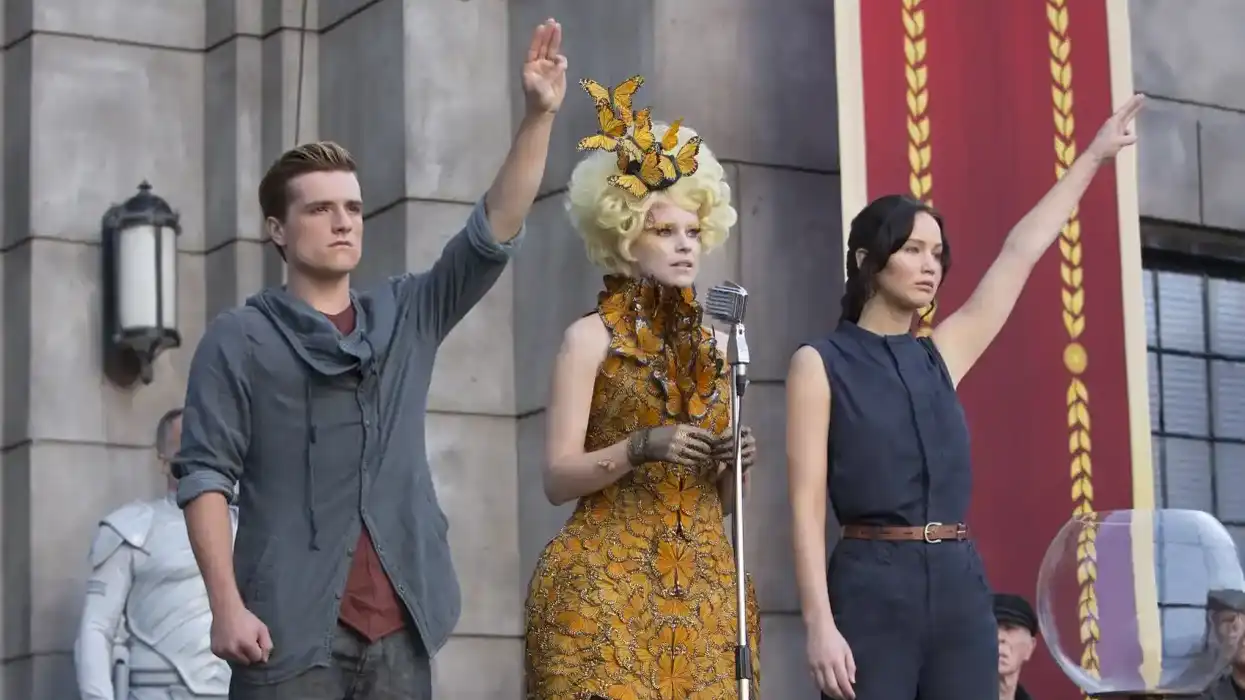
Catching Fire is the video's example of perspective and director melding almost perfectly. The second entry in the series finds Katniss (Jennifer Lawrence) pulled again into the games for the Third Quarter Quell after having just survived her first games. The second book is about the Capitol dazzling people so they won't notice the districts are starving.
Francis Lawrence's penchant for glossy spectacle fits that story. Katniss gets made over as a pawn, everything gets clean and pretty, and the Quarter Quell games are bigger and flashier.
Where the first movie was gritty, often shot close and handheld, this movie takes a step back so we can see the scope and grandeur of the games, with Katniss dwarfed within them.
As The Writer's Block points out, the books shift in theme as Katniss moves through them and becomes part of a revolution. The question is whether the director of the adaptation changes with the books as each story shifts focus. The argument here is no.
An Objective Camera and an Interior Book
Mockingjay is a war story told almost entirely from inside Katniss' damaged head, in first-person present tense. The third book concludes the series, but the adaptation opted to split the story into two films, Parts 1 and 2, which keep nearly every plot point but very little of her inner voice.
And, yes, it's difficult to tell an interior story in a visual medium. I think attempts are made here to make Katniss' world close and suffocating. Lots of story happens in underground bunkers with no natural light. It's drab and gray. An objective camera looks great on the Capitol. But here, it's a little boring. And having a character sidelined with mental struggles doesn't make for much action, so the film struggles a bit to balance this.
The video also points to "The Hanging Tree." In the book, Katniss sings the song to push away memories of the arena, and the grim lyrics make her rethink her own choices. But in the film, it's used to kick off a montage of the rebellion. And it is a banger, okay? But it's not aligned with the story Suzanne Collins originally told.
Not to mention, it then got a pop remix that went mainstream. It's also a banger, but it feels a little tone-deaf and weird. It's likely that studio and audience pressure contributed to these tonal misses—after all, these are still movies, and they still need to appeal to wide audiences and make their budgets back. It's a give and take.
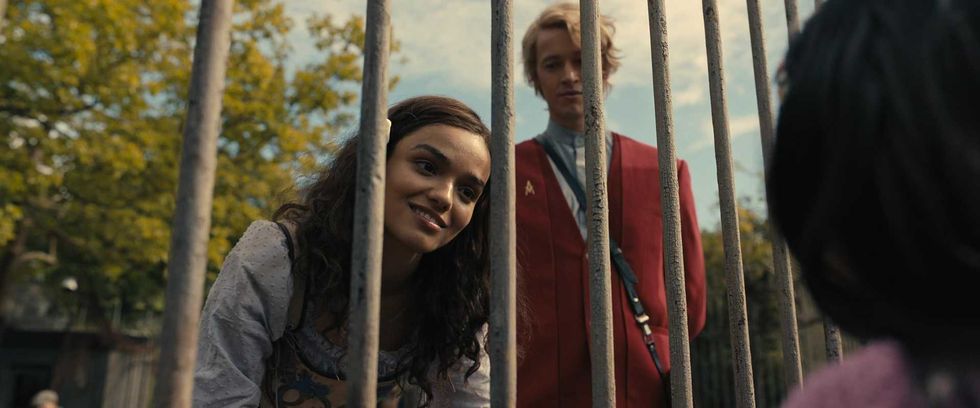 'The Hunger Games: the Ballad of Songbird and Snakes' Credit: Lionsgate
Songbirds, Snakes, and Shooting Up Noses
"I like an audience to feel intimate with the actors, and when you use wide-angle lenses you maintain a sense of geography and scale as opposed to a long lens that compresses everything and throws everything out of focus to isolate a character. The environment vanishes, and I feel that, subconsciously, audiences feel the distance."
On the story side, the 10th Hunger Games are meant to be shabby. Ratings are falling, and the broadcast is low-tech. Part of Snow's arc is working out how to make the games worth watching. Lawrence shot several sequences in IMAX anyway for the first time since Catching Fire, which has that famous aspect ratio change when Katniss is thrust back into the games.
And apparently we'll see it again. Willems told Entertainment Weekly that the tributes' arrival in the Sunrise on the Reaping arena will widen to IMAX, mirroring Catching Fire. But at this point, is it a gimmick? Is it saying the same thing that Catching Fire did so creatively? It's up for debate amongst fans.
What the First Film Got Right
We don't want to dunk too hard on Lawrence, who should be credited for ushering in one of the most influential film series we've seen in decades, and doing so more than capably. But the video does point back to the O.G. director, Gary Ross, who directed the first film. Ross passed on Catching Fire and blamed the "fixed, tight production schedule" for not leaving him time to write and prep it, per the Washington Times.
The video credits Ross' shaky handheld camera with keeping the audience in the arena with Katniss, scared and disoriented. Some critics hated it in 2012, but it now often surprises new viewers with how serious and grounded the film's approach is.
The video argues a Ross version of Songbirds would have stayed inside Snow's calculating head and shot the games from a distance, through cheap monitors, the way Collins wrote them. Alas, we'll never know.
Are you excited for Sunrise on the Reaping?