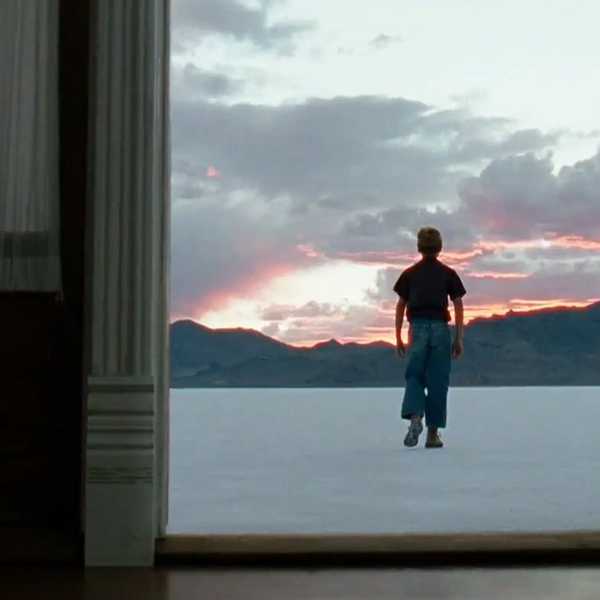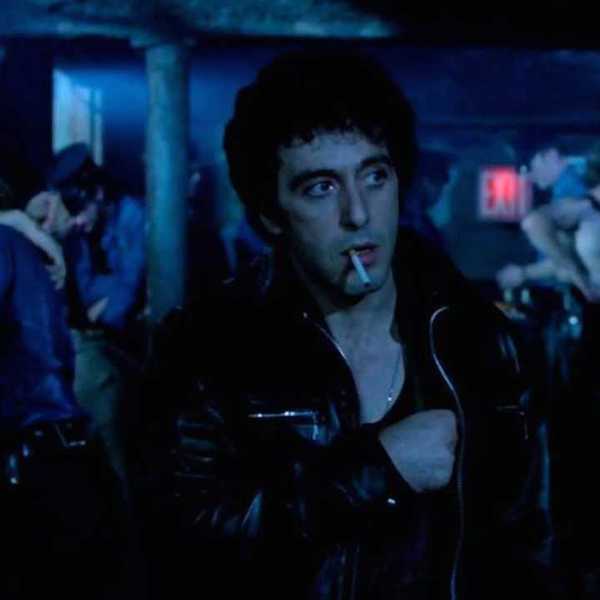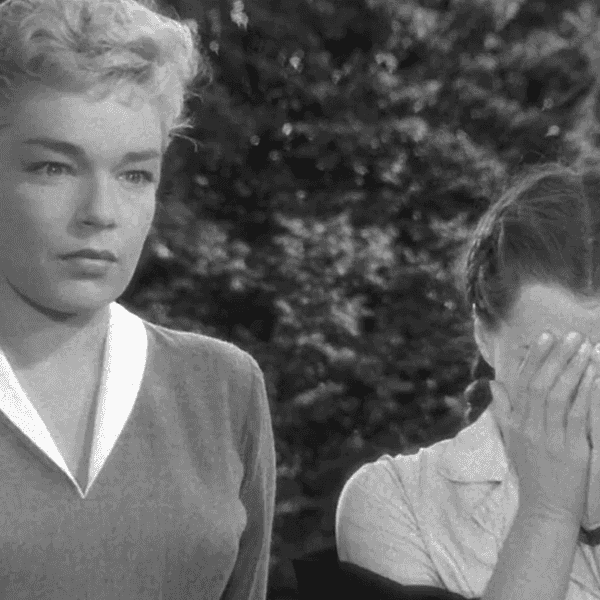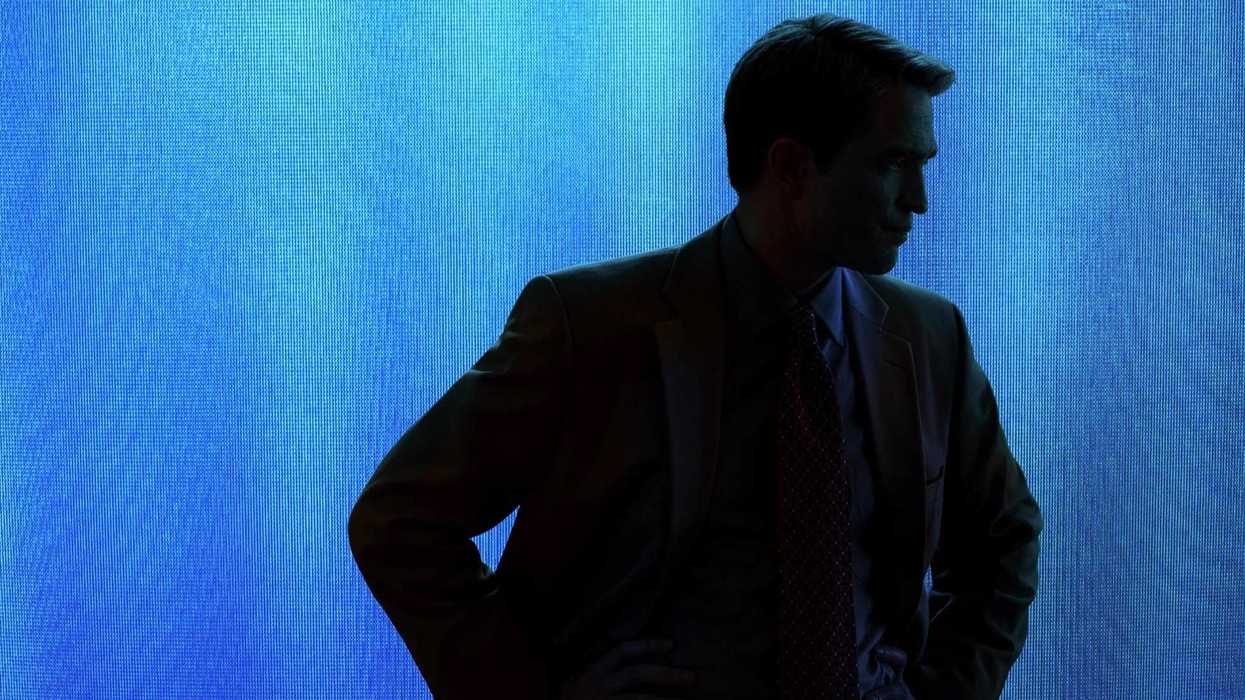
"You see how this looks, right?"
Well, do you? Primetime is one of the year's most visually striking and unique films, so the way it looks is pretty wild, actually.
Robert Pattinson plays Chris Hansen, reaching for fame and a primetime slot with his show, To Catch a Predator. But the film is not concerned only with the titular and typical predators, but the kinds of sharks within media, too, who will devour anyone on the way to that coveted recognition.
Director Lance Oppenheim shot a lot of Primetime in standard definition, on purpose. Oppenheim is a documentary director making his first fiction feature (he was also on this year's stellar You Can See Everything). David Bolen is the DP.
Primetime uses camera formats to separate what is fact and fiction, to a degree. MiniDV means what we're seeing is real. An $80 tube camera means we're seeing what's happening inside someone's head. The Alexa rests in the middle. A colonoscopy camera lets us travel the World Wide Web.
It's a wild visual commitment, but there's a way to give each format a job.
Today we're looking at Primetime's cinematography via Archer Green's new video essay. Check it out below.
- YouTube www.youtube.com
The MiniDV Is the Fact-Checker
Whenever Primetime needs you to remember the camera is rolling, it switches to MiniDV, a digital video tape format introduced in 1995.
Oppenheim and Bolen shot the sting houses on the Panasonic DVX100B, a standard-definition camera from 2005. In an interview with the MPAA, Bolen said they usually ran eight of them.
The DV footage looks like 2000s television, a little bit ugly and grungy. It signals "reality TV," so we believe what we're seeing.
Shooting a feature on MiniDV has always come with trade-offs, though, and older cameras don't give you many settings to work with. In an interview clip featured in Green's video, Bolen said matching the cameras was a losing battle.
"We couldn't get them to match. Like, no matter what we did with the settings, some would skew red, some would skew green, some would—the exposure seemed off."
Oppenheim kept it, because the original show was just as uneven. In To Catch a Predator, the color and exposure often differ completely between two shots, for comparison. It was a mess there, so the filmmakers let Primetime be a mess, too.
On 28 Days Later, Danny Boyle used up to eight Canon XL1s to shoot his empty London streets, according to American Cinematographer, which is one of the reasons 28 Days Later could never be made today.
Shooting Fiction Like a Documentary
Oppenheim's documentaries, like 2024's Spermworld, are about real people but look more like a scripted feature. (We talked about his approach on the podcast when he made Ren Faire.) So his documentaries look like fiction.
With Primetime, he just flipped it.
That's why there might be a DV camera in a bathroom, a place no actual crew in the story would put one. But if this were a documentary, you might be able to justify that coverage. So we see a weird DV camera angle when characters chat in one important bathroom scene, and it might feel weird, but not so weird that it totally distracts the everyday viewer.
On set, instead of moving on once a scene was fully covered, the team would set up different cameras and shoot it again. The edit decided which version made the movie. In an interview clip in Green's video, Oppenheim understood this felt weird.
"People looked at us like we were Tommy Wiseau or, you know, I was Tommy Wiseau, and David was Tommy Wiseau's DP, but I think it paid off," he said.
Editor Daniel Garber has cut Oppenheim's films for years. Oppenheim said Garber pushed the look further than he and Bolen had planned. Oppenheim called it "a media collage."
Garber talked about his side of the process with us on the NFS Podcast.
 'Primetime' Credit: A24
The $80 Tube Camera Is All Feeling
The tube camera is a broken broadcast model from the 1980s, which is technically two decades older than the story. It's used mostly when Hansen is rehearsing his opening lines, and during the district attorney's suicide. But Oppenheim said he almost wanted to go much further than that and shoot the whole thing on this funky camera.
The image looks broken with split colors. This camera puts us inside someone's head. Oppenheim said that was the point.
"I want this to look bonkers. I want this to feel as heightened and subjective to the characters' experiences as possible."
Other filmmakers have gone back to 40-year-old tube cameras for this kind of analog weirdness. We've covered the Sony AVC-3260 vacuum tube camera behind Computer Chess too.
There's a fourth camera, and it shows up once. When Hansen first spots "the whale," the predator he's convinced will make his career, the film switches to a medical camera. The camera travels through a tunnel of LED lights, so the shot seems to dive into Hansen's computer screen and come out on the other side to his target.
The Alexa Is in the Middle
Most of Primetime was shot on the ARRI Alexa 35, Bolen told the MPA. Oppenheim and Bolen had to create their own look for this camera using color and texture, unlike on their funky old cameras.
They let the lights be hot and blow out. At night, the main light is often a screen, a computer or a TV that glows like an alien light source.
Bolen told Phantasmag, "There was this feeling that the monitors were consuming them and making them go crazy."
For texture, Bolen told the MPA they printed the digital footage to 16mm, which gives it real grain.
Green points out that when the formats switch, it's tied to point of view.
For example, when Dan (Skyler Gisondo) works his first sting, the scene opens in DV, then moves to the Alexa for the rest, because we're inside his nerves. Once he settles in, his scenes stay in DV. Hansen gets the same treatment when a suspect rattles him, and the movie drops back to DV once he pulls himself together.
The result is an incredible visual work that both keeps us at a distance and lets us right into the characters' minds.