Inside the Iconic "It’s Alive!" Moment in 'Frankenstein'
Two words that marked the beginning of a new kind of horror.
'Frankenstein'
If you think about it, the horror genre is an absolutely widespread buffet with changing menus. At the same time, it’s so exclusive for each one of us that we all have that one moment from that one particular film that defines horror for us.
For me, that moment is when Frankenstein’s monster is born. A story of a mad scientist and his creation, the birth of Frankenstein’s monster isn’t distinguished only by fear in James Whale’s Frankenstein (or even in Mary Shelley's novel). Rather, the moment transcends horror by giving us a glimpse of the possibilities of destruction and chaos that can be solely caused by a single man’s quest to become God.
In this article, we’re unveiling how the iconic scene of the birth of Frankenstein’s monster scratches on our deepest, darkest fears of what would happen if mankind doesn’t learn how to tame its ambitions.
The Scene
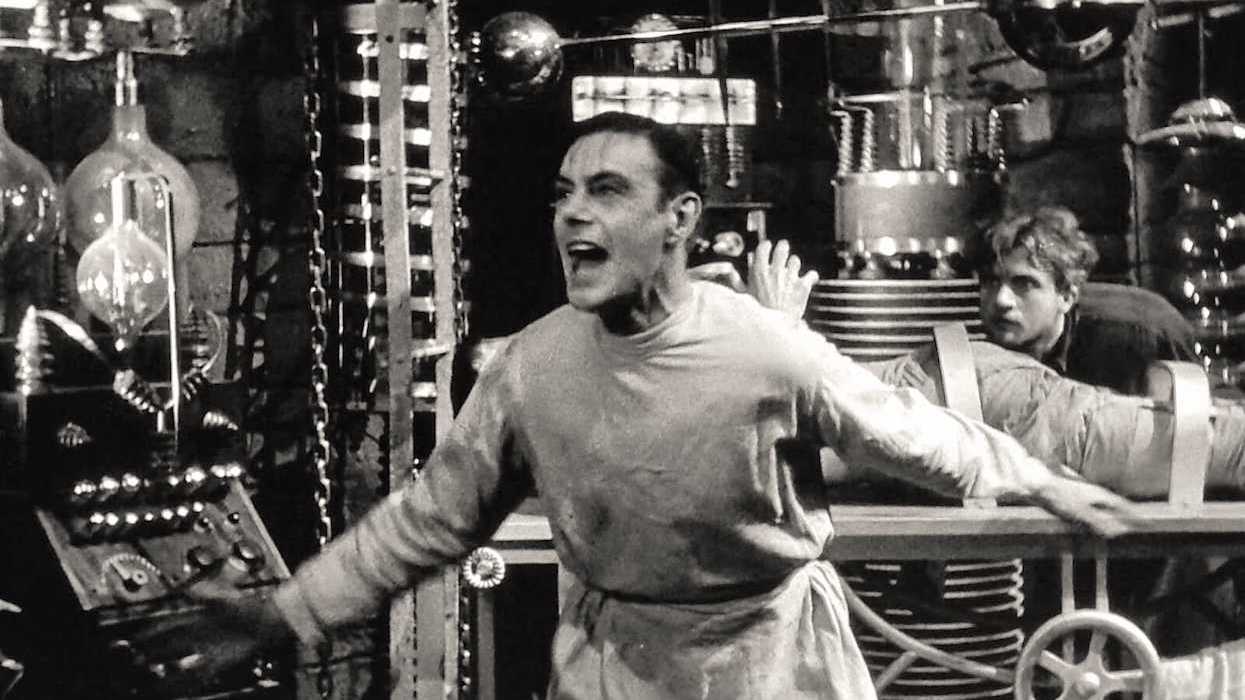
The scene opens on an anxious note. Dr. Henry Frankenstein (Colin Clive), who has been living a secluded life working on his outrageous experiment, is being visited by his fiancée Elizabeth (Mae Clarke), his mentor Dr. Waldman, and his best friend Victor Moritz (John Boles). Dr. Frankenstein is visibly agitated and excited as he explains the magnanimity of his experiment to his visitors, who are seemingly against it. Ignoring everyone’s concern and warnings, Dr. Frankenstein is adamant to prove the wonder of his research: that he has found a way to create life.
He takes them into his laboratory and immediately begins his experiment. The lifeless, assembled corpse is placed on a stretcher, bound by strips of metal. The stretcher is then raised above the roof and placed into the night sky during a lightning storm. Electricity strikes the lifeless body, after which the stretcher is brought down. Dr Frankenstein excitedly rushes to check the outcome of his experiment. Moments later, the corpse’s fingers begin to slowly move, indicating the presence of life.
Dr. Frankenstein cannot believe his eyes when he sees that his subject, an assembled body stitched together, has come to life. Excited, he begins murmuring, “It’s alive!” His murmurs grow louder in joy and triumph, with the words, “It’s alive” echoing through the room.
Breaking Down the Emotions Behind “It’s Alive”
“It’s alive” is Dr. Frankenstein’s “eureka” moment. The birth of his creation is a life-altering moment for him—for good or for worse, only time will tell.
However maniacal or dangerous his plan may have been, watching his years of hard work bear fruit makes Dr. Frankenstein brim with excitement. Theoretically, he was sure that he had found a way to create life, but that meant nothing until it could be achieved practically. During his research phase, he had tested his method on various lower organisms before he could try it out with a human corpse. The result had been positive so far, but this was his final test. If this worked out, he would have achieved what no man had ever achieved before. He would become God.
“It’s alive” is a declaration of victory. It’s the answer to all the doubt and disbelief that Dr. Frankenstein was subjected to. It marks the triumph of “possible” over “impossible” caused by sheer hard work and determination, and a moment of wonder, as a lifeless, assembled body comes to life through a scientific experiment.
Frankenstein was the highest-grossing film of the year, establishing Universal Studios as one of the horror maestros. A novel blend of psychological terror, forbidden science, and gothic atmosphere, Frankenstein’s essence continues to echo in the genre even a century later.
Do you think it was a good adaptation of Shelley’s novel? Let us know your favorite moment from the film.
- 'Mary Shelley': The First Female Saudi Arabian Filmmaker Brings 'Frankenstein' Back to Life ›
- Guillermo del Toro Says 'Frankenstein' Is the End Of An Era For Him ›
- All Frankenstein, All the Time: 'The Bride!' Trailer Is Here ›
- Mel Brooks Turned 93 So Enjoy These Hilarious "Young Frankenstein" Bloopers and Outtakes ›
- The 9 Best Frankenstein Films ›
- We Finally Know What Guillermo del Toro's 'Frankenstein' Monster Looks Like ›
- 10 Unique Retellings of ‘Frankenstein’ You Need to See ›