Simple Cinematography Tricks from a Docu DP's Field Notes
Six tips from the field.
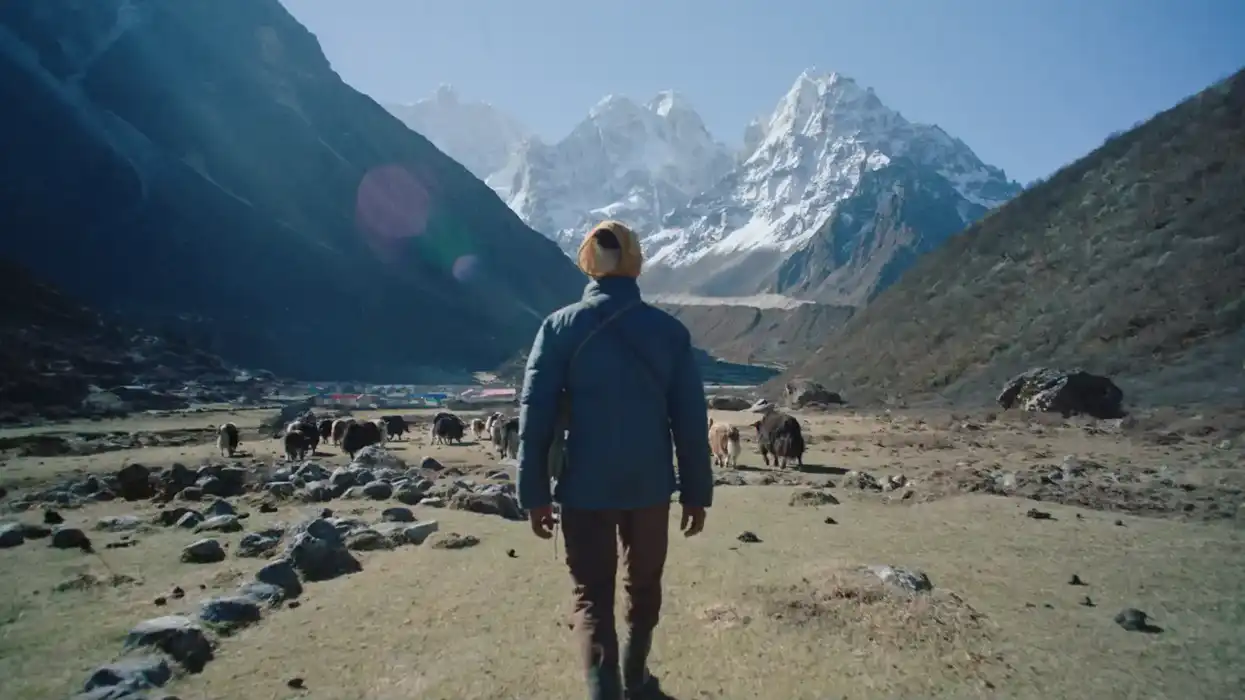
Most cinematography tips assume a stage, a bunch of actors and lights, a grip truck, and time. Documentary shooters rarely get any of those.
Jakub Chlouba is a documentary cinematographer who shoots a lot of NGO work in remote places, including Nepal. He also directed The Elephangelist, a documentary about a scientist mapping wildlife and exposing ivory poaching networks in Central Africa. If there's someone who's used to the old run-and-gun, it's probably him.
In his new video, he walks through what each project taught him.
"So from my experience, if you are a documentary cinematographer and you're working in remote places and you're working a lot with NGOs just like I do, the work that you do is a lot about problem solving. And because of that, it almost never happens that you walk into a perfect location or that you bring all the lighting equipment that you might wish for."
These are tricks for when you can't control everything, which describes most indie shoots too.
- YouTube www.youtube.com
Every Surface Is a Light Source
On a mobile crew, you're probably not lugging around a ton of bounces or sheers. Before you buy another silk, look at the room you're standing in. Chlouba demonstrates in his video.
"If I give you an example, right now I'm just being lit by a window light. So, I have a window right here, and the sun is in this direction in the sky, and it's shining into a gray wall, and that gray wall is actually bouncing the light inside my face. So, that's a perfect example of how a surface can serve as a light source. Now, the same goes for, you know, dark surfaces. Dark wood, for example, becomes a really good negative fill."
Snow does the fill work for you outdoors. In a dim room, a small light bounced into a corner reads as natural. He suggests training your eye by noticing how leaves, wood, and walls reflect, even without a camera.
Theo Gee made the same call when lighting a documentary interview in 30 minutes. He’d normally put up black negative fill in a bright room, but the dark walls on that shoot were already doing the job, so he skipped it. Read the room before you rig.
Pack a Shower Curtain
Ah, yes, we love an unconventional tool! Diffusion doesn’t have to come in a gear case. In his kit, he loves to keep a cheap shower curtain.
"And then I also have two window curtains from IKEA, which I often use to soften a light that is coming into the room through a window or as a decoration on the window in the background of an interview. and so on."
On one shoot, he softened a light bridge with plastic foil. A white towel or a bed sheet can work as diffusion or a bounce.
A 12x12 frame with half silk is the pro version, but bedsheets, paper, or a shower curtain can do the same job.
Pro-tip. Watch the color. He notes that his yellow curtain warmed the light temperature, so he needed to adjust.
Limit Your Lenses
A lens case is just another thing you have to manage. And fewer choices might force better choices.
"I like to usually bring only two or three lenses to a production and focus on shooting with those prime lenses because that will give me a coherent visual language," he says. "And I kind of know that I’m limited in a way in the perspective that I’m sharing with the audience. But because of that limitation, I have to become a bit more creative. If you want to take this to an extreme, you could, for example, try to shoot a documentary or a film on a single lens."
His single-lens picks are 28mm to 32mm. He also prefers one camera, so he commits to one perspective on his subject.
In the narrative space there are examples, too. DP Vishnu Tenkalaya shot the short 44 entirely on a 24mm, which kept the character in relation to an empty, isolating location. Never swapping lenses also cut reset time between takes and kept faces consistent across angles.
Committing to one focal length gives you a coherent look and saves time on set.
There’s Always a Shot
Sometimes you end up in a location, and it just looks ugly. Or the light is bad. You might think it's unsalvageable.
Bad locations happen. Just walk around until you find the frame.
"Even if you come into the worst location, worst space, the environment is terrible, you can always find a frame," he says. "You just have to get your brain going and really start thinking about what is there that you can capture. Or maybe start walking around with the camera, looking through different focal lengths, looking at different compositions."
In Malaysia, shooting for the NGO Hutan, he wanted a scene showing the bond among the women on a reforestation team. After about 45 minutes of walking the area with the director, they found a small boat. He lit it with a small RGB light for color separation. (One or two small RGB lights can enhance a scene and still look natural.)
Director Jesse Senko gives the order of operations. Get your coverage first, then experiment with odd placements and angles. Don’t chase the beautiful shot at the expense of the ones that hold the story together.
Choose Interview Locations for Sound, Not Scenery
Picking the interview location can be part of the cinematographer’s job, even though it isn’t lighting.
Chlouba says:
“if I can, I prefer not to shoot interviews outside because there’s so many things that can disturb the interview. Noises from the background, the weather can change, the clouds come can come in, a car can pass by. And even though that environment might be more fitting for the interview, if the character will be disturbed, and if you will be cutting the interview all the time because a car passes by and you need to redo the thing, you’re not going to get a good interview out of it.”
He saves outdoor interviews for short walk-and-talks of five to ten minutes, not 60-minute master interviews.
Roll Longer Than You Think
This is a tip unique to documentary. Beginners, he says, tend to cut too quickly.
"So, you might be recording for seven, eight, or 10 seconds and then you cut it. And often times what happens that the good part happens after. So, whenever I’m filming, I would be rolling at least for 30 seconds, even longer."
Roll long, but cut your clips with intention.
- Overcome the Challenges of Shooting for Nonfiction with the DP of 'Quiet On Set' ›
- Want to Be a Great Cinematographer? This Sundance DP Suggests You Learn to Edit ›
- How to Become a World-Class Camera Operator and DP Without Waiting Your Whole Life ›
- This Oscar-Winning DP Shares the Secret to Great Documentaries ›