10 John Carpenter Moments That Still Haunt Us
Let's give some love to his lesser-known films, too.

The Thing
Halloween time calls for a deep dive into one of the masters of the season himself.
Writer, director, and composer John Carpenter just received a star on the Hollywood Walk of Fame this past April. At the 2019 Cannes Film Festival, the French Directors' Guild called him "a creative genius of raw, fantastic, and spectacular emotions" (via AV Club). He's perfected horror and tension, and is famous for using simple techniques to create big scares.
Today, we want to dig into 10 moments from his filmography that continue to haunt us (and hear from the filmmakers themselves about how they pulled it off).
Let's enter his dark world!
Michael Myers' First Murder (Halloween, 1978)
- YouTube www.youtube.com
Halloween was revolutionary in its use of the Steadicam, only the second production to ever film with it.
The film opens with a single tracking shot through young Michael Myers' eyes as he grabs a knife, climbs the stairs, and murders his sister. When he's unmasked outside, we see he's just a child.
It's a heck of an opening.
Carpenter explained his inspiration (via Consequence of Sound).
"I've always admired long tracking shots in the opening of movies. Touch of Evil immediately comes to mind, and there's one in the original Scarface. An acquaintance of mine had made a short film that was all one take, and it was really an engrossing way of moving the camera through an environment."
DP Dean Cundey described the challenge.
"This was a new technology that we, by the seat of our pants, learned to use. There was nowhere to learn yet. John wanted to do something for the opening shot that took advantage of it, and that would be completely new and innovative, that you couldn't do with conventional camera shots."
Simplicity and basic technique go a lot farther than a giant budget. Halloween was made for $325,000.
The Chest Defibrillator Scene (The Thing, 1982)
Chest Defibrillation Scene | 'You Gotta Be F****ing Kidding' | The Thing (1982) | Fear www.youtube.com
When Dr. Copper attempts to restart Norris' flatlining heart with a defibrillator, Norris' chest caves in, and a gaping mouth with teeth clamps down on Copper's arms and severs them both.
It's one of the all-time great shockers in horror films, and it somehow gets me every time.
Creating this gruesome moment required special effects designer Rob Bottin to recruit someone who'd lost both arms in an industrial accident to serve as a stand-in. The production team built prosthetic forearms for this performer, constructing them with materials including Jell-O.
"When I saw that, I realized a great sense of relief, because what I didn't want to end up with in this movie was a guy in a suit," Carpenter said (via NOFS). "See, I grew up as a kid watching science fiction and monster movies, and it was always a guy in a suit, or sometimes it was a kind of bad puppet."
Not here. It looked very real and very creepy.
Learn more about the making of the chest-busting scene.
The Alley Fight (They Live, 1988)
- YouTube www.youtube.com
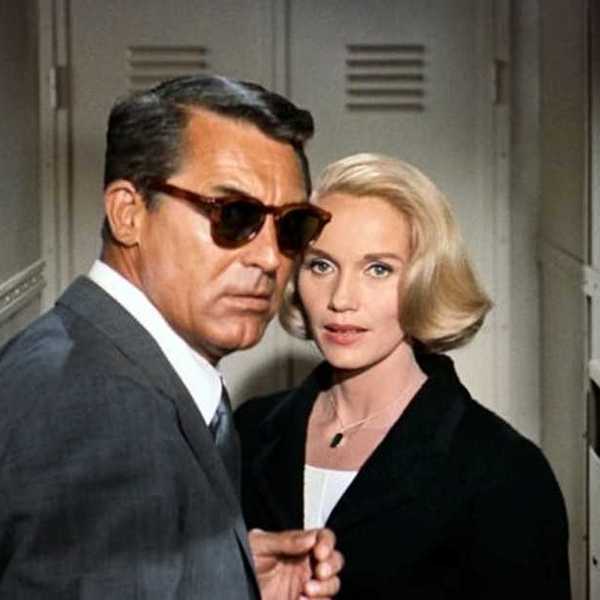
I've written about this scene before, because it's iconic. The six-minute alleyway tussle between Roddy Piper and Keith David over a pair of sunglasses is one of film history's best brawls.
Carpenter told Starlog Magazine that the fight took three weeks to rehearse. "It was an incredibly brutal and funny fight, along the lines of the slugfest between John Wayne and Victor McLaglen in The Quiet Man" (via Wikipedia).
The fight's absurd length illustrates what it's actually like to open someone's eyes to societal issues.
Carpenter said, "I wanted a good fight! I hadn't seen anything like that, and I thought, 'Why not?' I had a wrestler as the star!" (via Yahoo).
Carpenter explained the mechanics in American Cinematographer.
"We shot the scene in an alley over a period of four days. By using the Panaglide and some of the power moves that Roddy knows from wrestling, we tried to break from the stereotypical action formulas. We rehearsed the fight for weeks, and every move was scripted. There is real contact, and they're beating the hell out of each other, but the fight has some ballet-like qualities. I haven't seen anything like it in recent film."
Keith David recalled for SyFy, "It was some of the most fun I've ever had, ever. It was so well choreographed and so well crafted by Jeff Imada. And Roddy, he taught me so much about how to sell it. I hit him a couple of times, but he never hit me."
The Theater (In the Mouth of Madness, 1994)
- YouTube www.youtube.com
Insurance investigator John Trent sits alone in an abandoned movie theater, watching a film adaptation of his own investigation. As he recognizes himself on screen, watching his past self insist, "This is reality," he begins laughing. It's the hollow laughter of a man realizing he never existed at all.
Carpenter said in 2001 that they had under $7 million to spend on the film, noting it was tough because the monsters had to be outrageous Lovecraftian demons too horrible to be described.
Producer Sandy King Carpenter explained the challenge of bringing Lovecraft to screen in an oral history with Inverse, saying, "It's one thing for H. P. Lovecraft to write it on a page and let your imagination go there. It's another thing when you have it on the movie screen."
The KNB EFX Group created the practical effects for the film, a process that took seven weeks to complete. One of the most impressive effects was an 18-foot "Wall of Monsters" that was mounted on rollers and operated by a crew of 25 people.
The film bombed at the box office but has gained cult classic status. Maybe give it another chance.
The Dog (The Thing, 1982)
- YouTube www.youtube.com
Yes, another from The Thing. It gets me just as much as the chest-bust scene, thanks to some great animal acting and incredible creature effects as the alien reveals itself in the group's loyal husky. At this point, we, as viewers, start to understand that things are about to take a turn for the worse for these characters.
Bottin worked on The Thing seven days a week for a year and five weeks straight, producing every creature effect.
"He came in with a wild concept, which is The Thing can look like anything," Carpenter said in The Thing: Terror Takes Shape (via Nightmare on Film Street). "It doesn't look like one monster; it looks like anything. And out of this changing shape, this imitation, comes all the creatures throughout the universe that The Thing has ever imitated, and it uses these various forms. Rob was very daring in this approach."
Bottin said, "What was great about it was that John actually did give me a great opportunity to say, 'Hey kid, go nuts!' … It was a really amazing thing to happen to a 22-year-old."
This approach created a hauntingly beautiful world.
The Morgue (The Ward, 2010)
- YouTube www.youtube.com
After nearly a decade away from filmmaking, Carpenter returned with this psychological thriller set in a 1960s psychiatric hospital. A standout jumpscare comes when a character hears noises in the morgue.
This is the kind of kitschy horror that thrived in the aughts, and a lot of people (myself included) feel nostalgia for it. It's not always the greatest by horror standards, but there's something fun about it.
Carpenter explained the draw of the film in a 2011 Collider interview.
"The story was the appeal. And the fact that it was a story about these girls. The thought of working with a female ensemble cast was fun. I haven't done that. Basically, the thrust of the movie is female, with the exception of Jared Harris playing the psychiatrist. I thought, 'Well, that's kind of neat.'"
Cinematographer Yaron Orbach was key to the film's look.
In a Cinemablend interview, Carpenter said, "I've never worked this hard with a director of photography as I did on The Ward. We worked for an hour every day just exploring our instincts and tastes, how you see certain scenes, what are the clichés in scenes to avoid."
Michael Myers Stalking from the Bushes (Halloween, 1978)
- YouTube www.youtube.com
It's a classic moment. Michael lurks in broad daylight, standing behind hedges while Laurie walks to school, watching from down the street. It's a shot a lot of filmmakers (and TikTokers) like to mimic.
The film plays a lot with POV, as we've already seen. Here, we understand what it would be like for a lurking creeper to be watching us from far away, then suddenly vanish.
Carpenter acknowledged the film's limitations (via Consequence of Sound).
"That's all we had," he said. "We only had the style because we had a very slim plot: An escaped lunatic comes back to this town and starts killing these babysitters. A lot of horror can live or die on visual flourish. Horror requires mood and tempo; it's a little trickier, and usually you're suspending some sort of ridiculous premise that you have to make people believe in."
Carpenter's use of perspective immerses the audience completely.
The Fog Gets Revenge (The Fog, 1980)
- YouTube www.youtube.com
The Fog's finale takes place in the church, where Father Malone offers a golden cross (crafted from the stolen treasure) to Blake, the vengeful spirit leader. This gesture appears to appease the ghosts, causing the deadly fog to recede and seemingly saving the survivors.
Father Malone remains at the church. The fog returns moments later and kills him. It's one of those dark endings horror fans love.
Carpenter hated the first cut of this movie and had to scramble to fix it right before release, reshooting about a third of it, per Screenrant.
The DP, again Cundey, told Closely Observed Frames what attracted him to working with Carpenter.
"Collaboration is a respect for the other person's skills, sensibilities, artistic concepts and all. The ability to shoot a shot or a scene in a way that both parties and as I said, all the parties involved in making a film, understand or feels that's the way it should be. I think that working with John was one of those things. It certainly helped me to develop, and I'd like to think that I helped him also. I had the pleasure of working on some of his most successful films."
Catching the Train Outta Hell (Ghosts of Mars, 2001)
- YouTube www.youtube.com
The possessed miners in this sci-fi horror become self-mutilating punk savages covered in elaborate body modifications and war paint. Leading them is Big Daddy Mars (Richard Cetrone), an imposing figure. The possessed communicate only through deep grunts and carry horrifying weapons.
The film was campy and received poorly, but it's still fun to look at with all its large-scale fire and action.
Carpenter told Black Film about mixing the genres in the film.
"The science fiction part is the setting. ... It gave me a chance to have a frontier, an industrial age frontier. So we had an iron train going through a dust storm. That's the science fiction piece. The horror aspect is the spirit that inhabits the planet. We looked at cultures that are deemed 'primitive' and found characteristics we deemed similar, and that is where we came up with the makeup. It also accounts for the decapitations and the pierced body parts. Then the film has an element of a western or better yet a war movie."
Here's what we can learn from Ghosts of Mars.
The Final Assault (Village of the Damned, 1995)
- YouTube www.youtube.com
The film's most haunting image is the white-haired children with their glowing eyes. ILM created dancing patterns in the children's irises for when they use their psychic powers.
This reaches a peak during the law enforcement massacre when the children force sheriff's men, state police, and the national guard to open fire on each other in a burst of violence.
Carpenter was candid about not loving this project. Speaking to Vulture, he said, "I'm really not passionate about Village of the Damned. I was getting rid of a contractual assignment, although I will say that it has a very good performance from Christopher Reeve, so there's some value in it."
His bitterness is likely tied to the fact that the film was taken from him and recut without his involvement.
What are your favorite Carpenter moments? Drop them in the comments.