David Zucker has been making people laugh since before most of us were born. Co-creator of Airplane! and the Naked Gun franchise, he's one of the few filmmakers who can probably actually explain why comedy works and why it doesn't.
He recently launched MasterCrash, a comedy course built around 15 rules of spoof he developed alongside his longtime collaborators Jerry Zucker and Jim Abrahams, and in a recent interview with Film Courage, Zucker broke down several of them.
Check out that conversation below! Whether you're writing, directing, or editing comedy, the lessons hold.
- YouTube www.youtube.com
Don't Acknowledge the Joke
When a background gag or an absurd line lands, the instinct is to show everyone reacting to it. Maybe you think you need to let the audience know where to laugh.
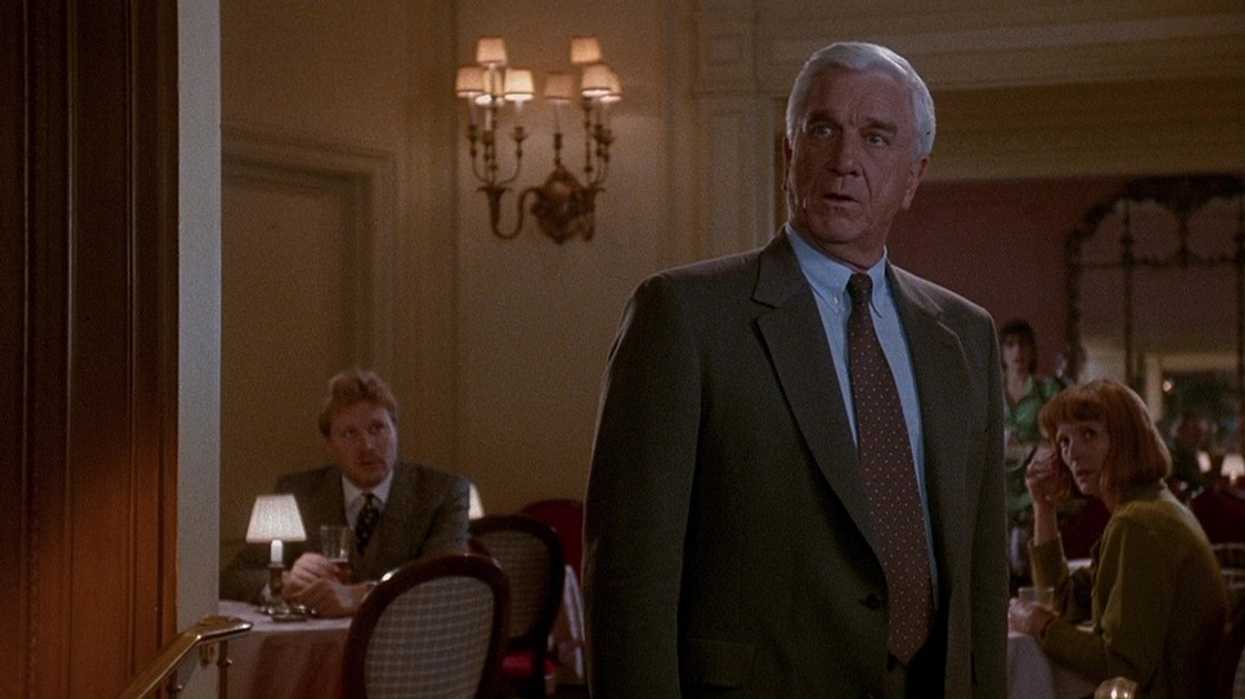
Zucker says that kills it. If Leslie Nielsen and George Kennedy are in the same shot when the punchline hits, stay in that shot. Don't cut to the reaction. Let the audience find the joke themselves.
At one point in Naked Gun, Ed (George Kennedy) says, "He's on life support. Doctors say he's got a 50-50 chance of living, though there's only a 10 percent chance of that."
Nielsen glances over at Kennedy, but the camera stays wide. Same shot, no cut.
He uses Seinfeld as a parallel. Someone says something ridiculous, and the reaction from George or Kramer is right there in the same frame, and you discover it rather than being shown it.
If you've never directed comedy, this is great advice for framing and editing. If you editorially point at your own joke, you've undermined it.
The Audience Has to Share the Reference
Spoof only works if the audience gets it. If the audience doesn't already know what you're referencing, the joke doesn't land. Zucker calls this the "trivia" problem, or a reference so specific, so niche, that only a fraction of the room understands it. Even if you think it's funny, you can't manufacture a shared laugh out of something the audience isn't carrying into the theater with them.
He admits there are a few references in Airplane! that no longer land, including dated cultural touchstones that made sense in 1980 but mean nothing now.
The goal is comedy that lasts, which means building on foundations the audience already has, not obscure ones you've decided they should have.
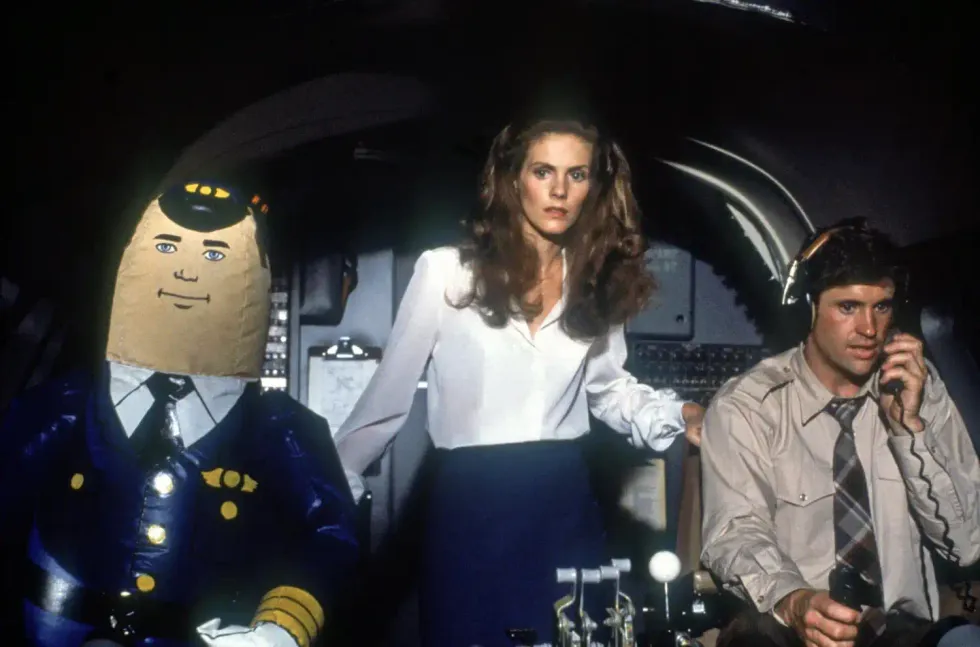 'Airplane!'Credit: Paramount Pictures
Breaking the Fourth Wall Usually Backfires
The audience has to believe in the world you've built, even a ridiculous one. When a character acknowledges the camera (and the unseen audience), it punctures that belief, and the comedy deflates. Zucker's rule is firm on this, but his 15th rule is that there are no rules, and he offers a great example of when the exception worked perfectly.
In Top Secret! after Val Kilmer's character recaps a long, increasingly absurd list of events, his co-star says, "I know. It all sounds like some bad movie."
Zucker knew the audience would immediately start agreeing that yes, it kind of is. So he had both actors turn and look directly into the camera, as if they heard the crowd. The bit worked because the fourth-wall break was earned by what came before it and by knowing exactly how the audience would respond.
Axe Grinding Will Cost You Half the Audience
Political comedy is a swamp. Even if your jokes are good, you're starting with half the audience primed to resist you. Zucker made An American Carol in 2008, a broadly political comedy that he genuinely loves and still finds hilarious. He wrote it with a left-leaning friend specifically to create balance, and he's proud of the result. It was also a flop.
"My dad once said he never learned a lesson that didn't cost him money," Zucker told Film Courage.
The lesson isn't that political comedy can't be funny. When you make a point of it, chances are you've narrowed your audience from the beginning.
- YouTube www.youtube.com
You Have to Knock Down the Posts
In the spoof genre, it's not enough to simply reference something. Anyone can do that. The reference is the setup, and the joke still has to happen. Zucker describes this as "knocking down the posts." The reference creates the frame, but then you have to deliver a payoff inside it.
In Airplane!, the team spoofed a scene from the 1944 WWII film Since You Went Away, where a woman runs along a train platform to say goodbye to a soldier. They recreated it with a plane, and at first, the crew thought audiences would just laugh at the recognition. They didn't until the woman actually started running into and knocking down the posts lining the tarmac.
The reference alone got nothing. The physical escalation got the laugh. If the posts hadn't worked, Zucker said, the scene would have been cut entirely.
Can You Live with a Gag?
This is Zucker's rule for jokes that leave a visible mess, and it's an interesting one. After the gag lands, can the scene continue without the damage following the character around?
Say Leslie Nielsen crashes through a skylight and lands covered in debris. Zucker says the movie can't keep him looking like that for the rest of the scene. The joke is over. He shakes it off, and he's fine. The same applies to visual gags. A funny license plate is amusing once. If the car keeps appearing, you have to live with it on every subsequent shot.
He holds up the late director Blake Edwards as an example. At the Academy Awards, Edwards arrived onstage in a wheelchair and took a comic spill, ending up disheveled. Then he had to present an award, looking disheveled, because the bit had happened to the actual person.
Spending a Lot of Money on Comedy Is Usually a Mistake
Technical spectacle works against spoof. The more polished and expensive something looks, the less funny it becomes, usually, because the audience starts taking it seriously, which is the opposite of what you want.
Zucker points to Naked Gun 4 (the 2025 sequel he wasn't involved in making) as an example. The opening sequence looks like a high-budget action set piece, and to his eye, the money spent is visible in a way that actively undercuts the comedy.
You might disagree with him. After all, movies today are simply going to look different from a comedy made in 1988. But the underlying lesson is that spoof can benefit from a certain scrappiness.
For filmmakers, that's actually good news. Comedy doesn't require resources. It requires timing, commitment, and an understanding of what you're doing.