19 Movies That Couldn’t Be Made Today
These once-mainstream films reveal how much cultural norms have shifted since the 20th century.
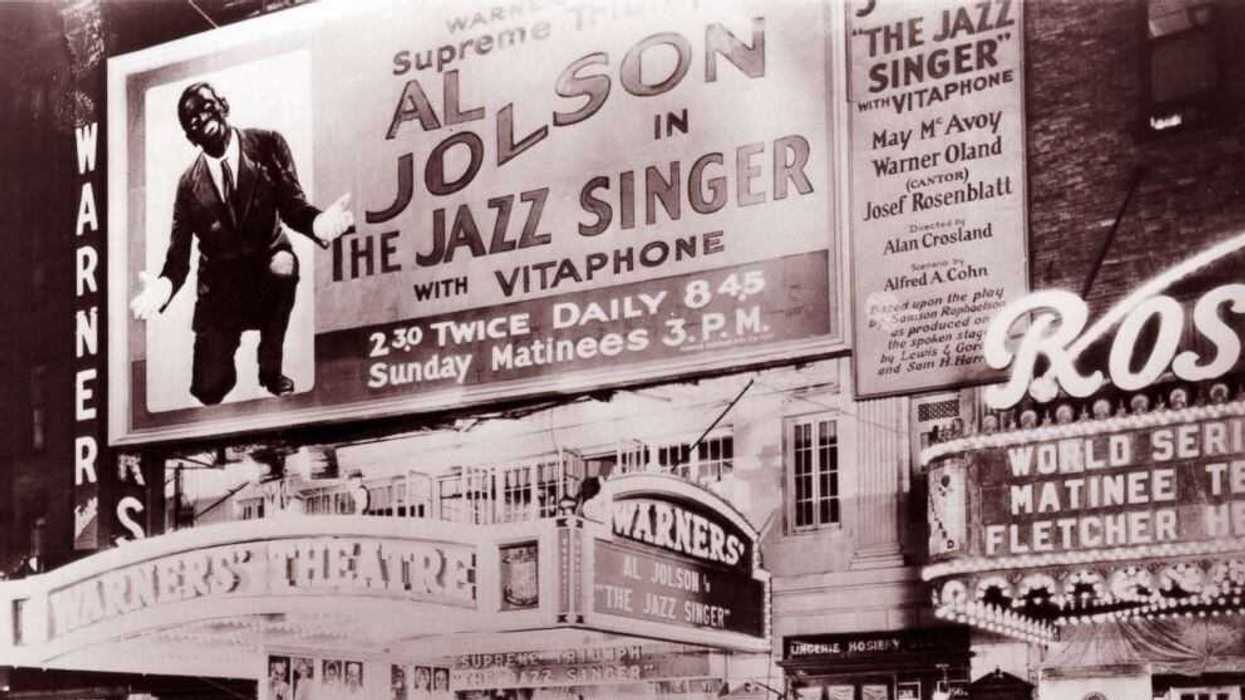
A movie poster of The Jazz Singer (1927)
Art reflects the values of its time. It’s true about cinema as well. And Hollywood has done it pretty meticulously. Sometimes on purpose, sometimes accidentally. Some of these representative moments still stand proud, but some others have aged not so well.
Here is a lineup of some movies that typified the common mentalities and sensibilities of their times that cannot possibly stand the test of time today. That is, of course, unless you yourself are stuck in those sensibilities, in which case, please get help.
What’s interesting about these movies is that they were not some fringe oddities; they were the mainstream cinema. Many of them were critically acclaimed, commercially successful, culturally influential, trendsetters, blah blah blah. And, if you take away these thorny elements, quite a few of them are essentially not bad; some are quite good, actually.
However, those thorny elements still hold up a mirror to the biases and blind spots of their time. Look at these 19 films, not as bad cinema, but as artifacts that highlight an incredible shift in what is considered acceptable storytelling and ethical filmmaking.
How Yesterday’s Norms Became Today’s Red Flags
We will examine these films in chronological order by their year of release. But, for a better understanding of the cultural shifts, we are also categorizing them by the cultural fault lines they expose. This will help you trace the recurring patterns across decades.
Race, White Supremacy, and Cultural Mythmaking
The narratives of these films navigate through the white supremacist lens. They present racial hierarchies as a natural way of life. Some of these movies look at such tendencies as nostalgia, or morally justified, rather than oppressive and violent.
Films: The Birth of a Nation, Intolerance, Gone with the Wind, Song of the South
Exoticism, Colonial Fantasy, and Blackface, Brownface, and Yellowface
These films represent a colonial outlook towards non-Western cultures. These are the films where white actors in colored faces portray foreign identities, often intentionally reducing them to a spectacle, stereotype, exotic fetish, or romanticized danger.
Films: The Sheik, The Jazz Singer, Breakfast at Tiffany’s, Lawrence of Arabia, The Party
Sexual Coercion Framed as Romance, Frolic, or Masculinity
These films disguise manipulation and sexual assault as passion, rebellion, or machismo. Such acts are depicted as not only unpunished but rewarded.
Films: Goldfinger, Last Tango in Paris, One Flew Over the Cuckoo’s Nest
Comedy Built on Misogyny and Consent Blind Spots
These movies present crowd-pleasing humor that leans into humiliation, ridicule, racial caricature, and sexual violation. They prompt you to laugh at behavior that is clearly abusive.
Films: Sixteen Candles, Revenge of the Nerds
Queer, Bisexual, and Trans Panic on Screen
These movies treat queerness and gender nonconformity as deception, shock twists, or punchlines. They end up reinforcing fear and disgust instead of empathy and nuance.
Films: Tootsie, Basic Instinct, Ace Ventura: Pet Detective
Mental Illness as Horror or Moral Failure
In these films, psychological conditions were framed as threats. They equate mental illness with danger, deviance, or moral collapse.
Films: A Clockwork Orange, Fatal Attraction
19 Movies That Can’t (Shouldn’t) Be Made Today
1. The Birth of a Nation (1915)
Written by: Thomas Dixon Jr. | Directed by: D.W. Griffith
The film dramatized the rise of the Ku Klux Klan as heroic. Its racist caricatures and propaganda directly contributed to real-world racial violence.
2. Intolerance (1916)
Written by: D.W. Griffith | Directed by: D.W. Griffith
Even though D.W. Griffith made Intolerance to redeem the highly offensive content of The Birth of a Nation, the movie still relies on racial stereotypes and fetishized depictions of non-Western cultures that clash sharply with modern representation standards.
3. The Sheik (1921)
Written by: Monte M. Katterjohn | Directed by: George Melford
The film’s romance hinges on sexual coercion and Orientalist fantasy. It blatantly portrays Arabs as both dangerous and erotically alluring.
4. The Jazz Singer (1927)
Written by: Samson Raphaelson | Directed by: Alan Crosland
- YouTube www.youtube.com
The film may have made history by being the first to use synchronized sound in cinema, but it is now equally known for its demeaning blackface performance, an act that is now recognized as explicitly racist.
5. Gone with the Wind (1939)
Written by: Sidney Howard | Directed by: Victor Fleming
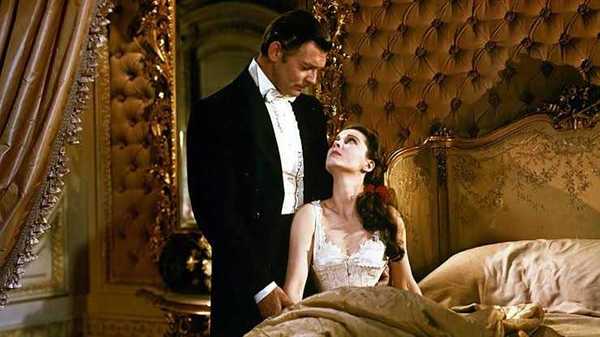
The film flagrantly romanticizes the Confederacy and the Southern sentiments of the 19th century. It also depicts enslaved people as loyal and happy, thereby erasing the brutality of slavery.
6. Song of the South (1946)
Written by: Dalton Reymond | Directed by: Harve Foster, Wilfred Jackson
Its cheerful plantation imagery presents a sanitized version of post-slavery America that trivializes Black suffering.
7. Breakfast at Tiffany’s (1961)
Written by: George Axelrod | Directed by: Blake Edwards
Mickey Rooney’s infamous caricaturish portrayal of a Japanese neighbor, Mr. Yunioshi, is a textbook example of racist comedy.
8. Lawrence of Arabia (1962)
Written by: Robert Bolt, Michael Wilson | Directed by: David Lean
Undoubtedly one of the greatest films ever made, it’s not free from some faults. It relies heavily on brownface casting, sidelining authentic Middle Eastern representation.
9. Goldfinger (1964)
Written by: Richard Maibaum, Paul Dehn | Directed by: Guy Hamilton
The movie, in many ways, is a trendsetter for the Bond movies. One of those trends is portraying James Bond's playful, but clearly forced, sexual encounter as seduction, not assault. Also, the female protagonist’s name, Pussy Galore, is another example of misogyny.
10. The Party (1968)
Written by: Blake Edwards | Directed by: Blake Edwards
Peter Sellers’ brownface performance uses exaggerated accent humor and ethnic stereotypes as its primary comedic engine.
11. A Clockwork Orange (1971)
Written by: Stanley Kubrick | Directed by: Stanley Kubrick
Its stylized depiction of sexual violence raises ethical concerns that studios now approach with much greater caution.
12. Last Tango in Paris (1972)
Written by: Bernardo Bertolucci | Directed by: Bernardo Bertolucci
A key assault scene was filmed without full consent, making its legacy ethically indefensible today.
13. One Flew Over the Cuckoo’s Nest (1975)
Written by: Lawrence Hauben, Bo Goldman | Directed by: Miloš Forman
The protagonist’s statutory rape is largely ignored and simply used as a technicality that puts him in a mental institution. It complicates his status as a countercultural hero.
14. Tootsie (1982)
Written by: Larry Gelbart, Murray Schisgal | Directed by: Sydney Pollack
Gender impersonation is treated as a comedic disguise rather than an identity. Such portrayals are not uncommon even today, but they are most likely to invite criticism.
15. Sixteen Candles (1984)
Written by: John Hughes | Directed by: John Hughes
The film portrays sexual assault and racist stereotyping as a source of laughs. The narrative doesn’t provide any accountability for the same.
16. Revenge of the Nerds (1984)
Written by: Tim Metcalfe, Miguel Tejada-Flores | Directed by: Jeff Kanew
In addition to reducing female characters to mere “prizes,” the film also presents a disguised sexual encounter as triumph. This kind of framing is now widely condemned.
17. Fatal Attraction (1987)
Written by: James Dearden | Directed by: Adrian Lyne
The female protagonist seems to suffer from Borderline Personality Disorder (BPD) and Clérambault’s Syndrome (Erotomania). She shows signs, such as emotional dysregulation, fear of abandonment, unstable relationships, impulsivity, and obsessions. The film demonizes these traits and turns a deeply troubled woman into a monstrous cautionary tale.
18. Basic Instinct (1992)
Written by: Joe Eszterhas | Directed by: Paul Verhoeven
In the film, the female protagonist’s bisexuality plays a major role in her being termed as violent and manipulative. It reinforces harmful stereotypes.
19. Ace Ventura: Pet Detective (1994)
Written by: Jack Bernstein, Tom Shadyac | Directed by: Tom Shadyac
The highly transphobic climax, in addition to outing and humiliating a trans person for comedic effect, also equates gender identity with disgust and deception.
Conclusion
The intent of this article is not to play down the cinematic craft of these movies; it’s also not to term them as relics that we should erase or bury. We simply need to understand that these films are the products of their times and records of what mainstream culture once accepted without hesitation.
If you watch these movies today, and if a certain offensive scene or a performance unsettles you, consider yourself evolved. That discomfort matters.
It also proves that cinema didn’t suddenly become better. Audiences became sharper, more observant, more aware, and more empathetic. This is a process and evolution that has been going on for over a century. It may be slow, but it’s continuous. This awareness is the real progress worth protecting.
- 10 Iconic Movie Roles That Were Almost Played by Different Actors ›
- This Goodbye Line Remains One of Cinema’s Greatest Mic Drops ›
- Frankly, Hollywood Doesn't Give a Damn About 'Black Lives Matter ... ›
- A Modern Take on a Kubrick Classic with New 'A Clockwork Orange ... ›
- What Are the Best Coming of Age Movies of All Time? | No Film School ›
- Defining the Psychosexual Thriller Genre | No Film School ›
- 14 Iconic Movies Set in Chicago ›