If you've ever written a screenplay, you probably know that finishing the dang thing is only half the battle. Now you have to read it back and figure out if it's good or not. And you have to hope that you have the perception and self-awareness to see when a joke just doesn't land, or the pacing feels off, or dialogue is bad.
Off you go on the rewrite journey. The hard part is knowing what to look for, because a draft can go in a hundred directions, and most writers don't know which one to choose.
Matt Harry has wrestled with that question from several angles. He cut reality TV, with credits that include The Bachelor. He spent three years as a developmental editor at a publisher, according to him. And he's a novelist and screenwriting teacher whose book Sorcery for Beginners was optioned for TV.
He talked through his rewriting process in a recent Film Courage interview. His approach is about asking the right questions at each stage. Here's how to find the core of any scene, why tone should guide every cut, when to bring in outside readers, and how to tell when it's finished.
- YouTube www.youtube.com
Ask Three Questions of Every Scene
Harry explains that reality TV taught him to edit prose, because a mountain of raw footage could be shaped into almost anything. So technically his advice could be applied in several editing situations, not just in writing.
"You could literally tell any story. And so one of the things I found early on was that you really need to understand, what's the problem of the scene? Who are the people that are trying to solve or stop that problem? And thematically, what is this really about?"
A problem in a scene is usually a goal vs. obstacle situation. A character wants something, but an obstacle is stopping them. That's a problem of conflict, and it can arise from another character, self-doubt, something physical in the scene (like a wall or locked door), or a million other things.
The people in the scene are your characters. Obviously, they don't have to be people, but could also be animals or robots or anything else you can imagine.
The question of theme is often the most elusive. As you're moving your characters around and giving them stuff to do, sometimes you can lose the thematic tension because you're just trying to get them from point A to B and fill pages in the meantime. But every scene should be tied to your thematic question.
I always link back to advice Craig Mazin gave in 2019 because it has been so formative to my own writing journey. Theme, he says, should be something you can argue, and every scene is a character butting up against that argument until they're forced to change. Unless stasis is your point, and they choose not to change at all.
These questions are simple, but that should make them easy to remember and apply in your edit.
 Credit: Photo by Nicolas J Leclercq on Unsplash
Let Tone Guide What You Cut
Right after explaining his three questions, Harry shares the story that taught him about tone. He was cutting Rock the Reception, a 2008 reality series in which choreographers helped couples stage showstopping first dances for their wedding guests.
"And so this thing happened in the shooting where the bride fell, and she twisted her ankle. And it was this big dramatic moment. And as an editor, I saw that [and] I was like, 'Oh, this is going to be a great act out.' And I build this whole act out. And I had scary music on the ankle. And then we come back and realize, 'Okay, she didn't break it. It's fine. It's just a sprain.' So I thought that was great. I was super proud of myself. And then the showrunner came in and watched it, and they said, 'No, no, no, no, no. This is not that show.' And I was like, 'What do you mean?' It's like, 'It's awesome, but yeah, that's not what we're doing. We're telling fun, entertaining stories.'"
This moment, when he missed the show's mission so badly, taught him how tone shapes a scene. When do you cut? What music backs the scene? In writing, what words does a character use? What imagery gets emphasized in a scene?
"Because you could do anything, right?" he says. "You've got all the words in the English language. I could choose any of it. So if you don't understand what the tone is up front, you're not going to know where to begin or what to cut out or take in."
If you're reading your work or someone else's, think first about what genre you're in and what your tone should be. That will dictate everything else.
Make Your Script Something Collaborators Can See
The interviewer asks what big-picture items a screenwriter needs to keep in mind.
"The most important thing for a screenwriter is to think about, how can you get everyone else to see the vision of the movie that you have? Because I think a lot of people can come in with an idea and see a lot of different kinds of movies. And I think a screenplay, I've really come to realize, is a document to get people excited. It's almost like a pitch document of, 'This is what this idea could potentially look and feel like.'"
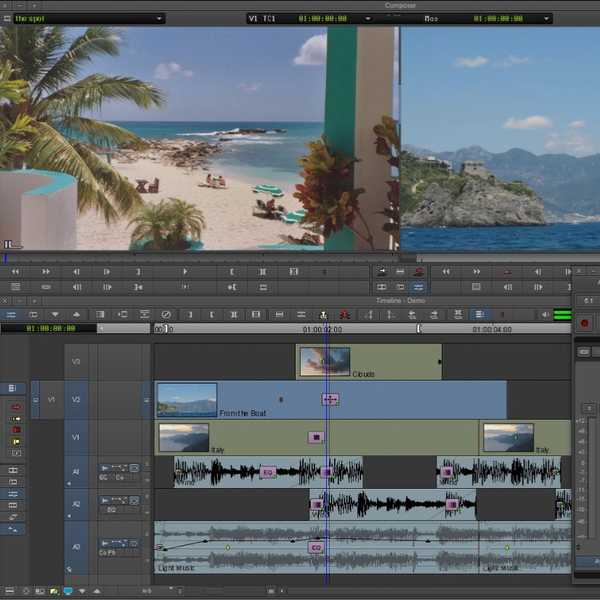
In other words, you hope to see your project realized one day, so another thing your rewrite might consider is how your screenplay will be performed, what visuals it will require, and how it can all come together in the NLE with another kind of editor at the helm. Does your script get all those people excited?
"Here are the elements that we could use," Harry says. "Here's a part for somebody to play that could be very exciting. Here's a scene or a set piece that could be really cool to build or execute. And to share that excitement you have for this idea, put that vision in your head into other people's heads."
Rewriting isn't easy, especially when you have to balance so much. So take your time, and get your script into its strongest position. (It's never really done, right?)