Your script theme needs to carry both the weight of the story and a connection to the audience. That's a significant burden to bear. So how can you tell if your theme is coming across, or if you even have one?
I went to Catholic School growing up, and we were ALWAYS writing theme papers. They had to have thesis statements followed by three paragraphs supporting the thesis and a closing paragraph. Flash forward to now, and that's basically what I do for a living here. I come up with a thesis, support it, and get torn apart in the comments. But I love it.
I was perusing screenwriting Reddit yesterday (I'm Jasonater2themax, say "hi" any time) and came across a post I enjoyed by ExoticSword. It talked about Craig Mazin's screenwriting theory and the idea that you should always be writing from the theme.
So what does theme mean? Well, how the hell do I know what the theme is? And when do I find said theme? And how do I write to it?
The theme of this week is writing your script's theme. We'll go over the screenplay theme definition, learn how to find your story's idea, and go over a few examples as well as thematic topics.
So strap in, get ready to write, and if you misbehave, I'll wrap your knuckles with a ruler. Sorry, Catholic School is coming back. I don't care if you misbehave as long as you learn something.
How To Find The Theme Of A Story - Jeff Kitchenwww.youtube.com
Theme Definition in Film and TV
In film studies, a theme is a central message within a narrative of a film or television show. In general, themes fit into two categories: a work's thematic concept is what the audience "thinks the work is about," and its thematic statement is "What the work says about the subject of the story." As you can imagine, these vary based on the film, characters, director, and writer.
We sometimes call theme the "central message." So what's the central message in your story?
How Theme Works in Narrative Structure
This is No Film School, so I think we should teach you a little about adding themes to your screenplays. Screenwriters like myself often struggle with where theme actually lives inside a 110-page script.
For me, I usually find it during rewriting, and that's when I really want to draw it out and make sure the audience soaks it in as we move forward in the story.
The Theme Stated
In classic three-act structure, your theme shouldn't wait until Act III for the theme to show up. You want ot bake it into Act One, usually around page five or ten.
This can be the sort of statement of the whole movie.
The protagonist rarely understands it at this point; to them, it sounds like nonsense or an annoying lecture. But for the audience, it clues us into the narrative arc.
- Example: In The Matrix, Morpheus tells Neo early on that there is a difference between knowing the path and walking the path. Neo doesn't understand what this truly means until he surrenders to his destiny in Act III.
The Midpoint Reversal
The Midpoint isn't just a plot shift, it is a thematic reckoning. This is where your protagonist moves from reacting to their circumstances to actively making choices based on the story's core argument.
They test out the theme's worldview for the first time, usually with devastating results.
2. Character Arc vs. Theme
Theme is best expressed through a core dialectic: The Lie vs. The Truth.
Every compelling protagonist enters Act I believing a Lie about themselves or the world. It's sort of a psychological defense mechanism born from past trauma or flawed values. Call it the character's ghost. The story’s theme represents the Truth they must accept to achieve true internal resolution.
| Story Element | Narrative Function | Screenplay Example |
| The Lie | What the protagonist incorrectly believes in Act I | "I can only rely on myself; attachment leads to weakness." |
| The Antagonist | Embodies the physical or philosophical extreme of the Lie | A ruthless corporate executive who sacrificed all relationships for power. |
| The Climax Choice | The moment where Lie and Truth collide under maximum pressure | Protagonist chooses to trust their team over achieving their personal goal. |
| The Theme | The overarching thematic statement proven by the outcome | "True strength comes from vulnerability and trust." |
3. The "Theme Test" for Your Draft
If you aren't sure whether your theme is working, ask yourself these three questions...
- What is the Central Dilemma? Can you frame your movie's main conflict as an "X vs. Y" value statement? (e.g., Safety vs. Freedom, Ambition vs. Family, Individualism vs. Community).
- Does the Climax Require an Internal Shift? Can your hero win the final conflict simply by shooting faster or running faster, or do they have to let go of their core delusion to triumph? If physical force alone solves the plot, your theme hasn't been integrated into the climax.
- What Do the Subplots Say? Subplots are secondary lenses analyzing the main theme from different angles. If your main plot asks "Can love survive lies?", your B-story and C-story should show other characters answering that exact same question with varying degrees of success and failure.
What is Theme in Film and TV Screenwriting?
The theme of your screenplay refers to the issue at the core of the story itself. This isn't mentioned in the script, but it's the emotional or spiritual driving force behind your movie's message. If you don't have a theme, then your mom will feel like it lacks purpose.
Think of the theme like the thesis statement of a paper. Again, we come back to the central message. John August describes the theme as "what is true and what is real."
So what's true at the center of your story? Maybe you're writing about realizing your parents are flawed humans, or that love conquers all, or that trust and respect are earned.
But maybe you don't know your theme yet. Stephen King thinks it comes after you write the story and emerges in other drafts. Stephen King had this to say in "On Writing:"
"Good fiction always begins with story and progresses to theme, it almost never begins with theme and progresses to story. The only possible exception to this rule that I can think of are allegories like George Orwell's "Animal Farm". Once you have a basic story on paper, you need to think about what it means and enrich your following drafts with your conclusions. To do less is to rob your work (and eventually your readers) of the vision that makes each tale you write uniquely your own."
Whatever the case may be, once you decide on your theme, you should be writing to that theme. But how do you decide? Determining theme is not an easy task.
What's a Theme in Film Storytelling?
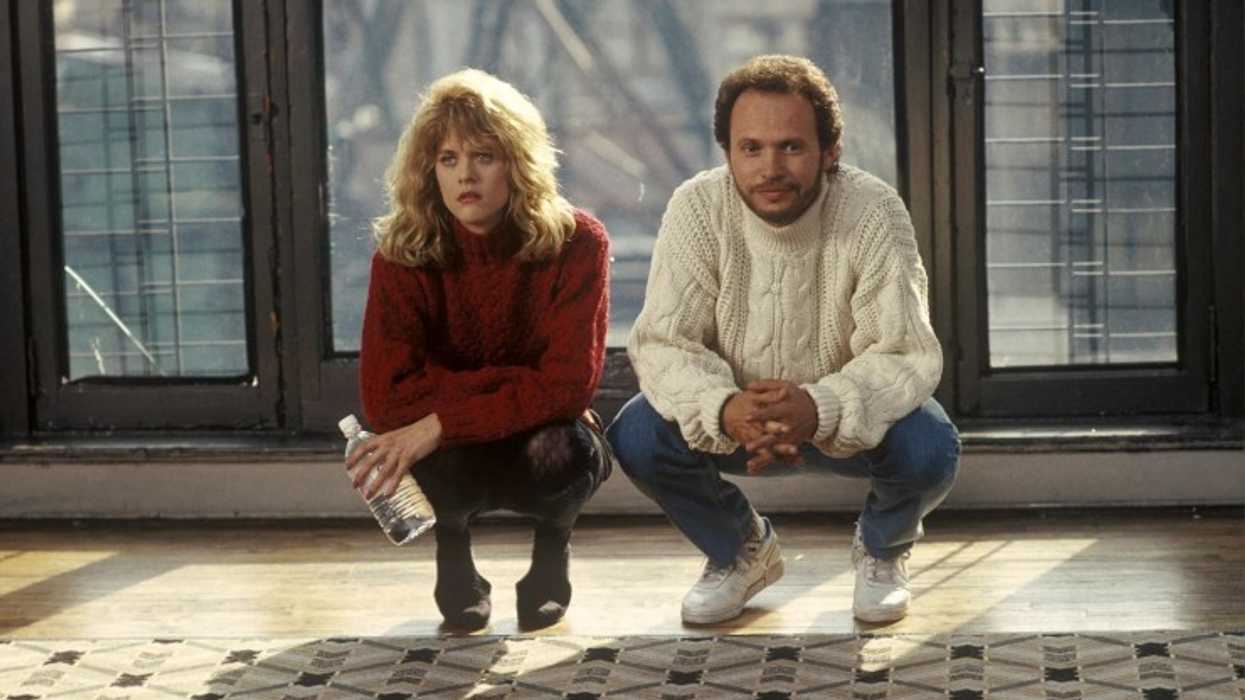
When scanning the internet, a lot of websites talk about theme in When Harry Met Sally. Which is awesome, because I just read the script and rewatched the movie. The idea in that movie is easy..."Can men and women be friends?"
That central message is behind every story decision in the movie. The movie seeks to argue this point back and forth. At times, we see the deep friendship of Harry and Sally, and we think, "Sure, maybe they can be friends." But then we realize that the banter is so cute, and all we want is for them to be together, and we understand that the sexual tension and romance are way more important than being stupid friends.
Each character and their actions are written from this point of view. And the theme gives people something to talk about as they walk away.
Well, I know you're not Nora Ephron, so you might be having a bit of trouble finding the theme of your screenplay.
How do Filmmakers Find Themes in Film and TV?
You might know your central message exactly when you start writing, but chances are you will not figure it out until the end. One thing I want you to rethink is why you wrote the story in the first place. For that, I'll do a callback to the Le Menu, an exercise from the beginning of “Crafting Short Screenplays That Connect” by Claudia Hunter Johnson. We've done this from the character's perspective. And it helps here to get your mind working about why you write in the first place.
Write five to ten answers to:
- What I love
- What I hate
- What I fear
- What I believe
- What I value
- What I want
- What I know about
- People who made a difference in my life
- Discoveries that made a difference in my life
- Decisions that made a difference in my life
 this can help you find your theme in your writing.
After you do that, you'll be a lot closer to discovering the theme of your work. The theme is closely tied to the internal struggle you want your audience to understand while watching the movie. So you're not really finding and defining as much as building the theme into the story.
Let's look at Theme Examples in Famous Films
What is an example of a theme? Themes just don't show up; you can imply them with an implied theme, or you can just call them out generally. Sometimes it's easier to just look at the themes present in some of our favorite films. Think about a movie like Fargo. The entire story is built around money, and whether or not you need money to be happy. Jerry wants it and is willing to sacrifice his wife to get it. Marge knows it's love that really makes you happy, not money.
The movie is written from both points of view. Marge's encounters are all about love, and Jerry's are all about money. When they finally meet in the end, Jerry learns his lesson, and Marge cuddles up next to her husband. Each is able to answer the theme.
Let's look at a few more examples to work out the theme in our own scripts.
Jurassic Park Themes
I love the theme music of Jurassic Park and the story's theme too. If technology makes something possible, should we pursue it without moral dilemma?
Jurassic Park does a great job providing us with characters who explore this theme. Dr. Grant and Ellie are archeologists, literally living and working in the past and not interested in the technology of the future. Hammond and his team are only interested in taking the past and making it part of the future because they're able to do that.
Malcolm becomes the voice of reason, delivering our theme. "Just because we can, doesn't mean we should."
Over the course of the movie's two hours, we see characters debate this complex issue. Technology saves Dr. Grant's life a few times, but the sheer act of bringing the dinosaurs back to life refutes that we should wantonly wield technological advances.
Hammond and many members of his park fall victim to their hubris.
The movie leaves us with a complex answer to the question. Technology should be used to help humanity but not to play god.
Pulp Fiction Themes
Pulp Fiction is a movie that's thematically about fate. Are we in control or are there larger forces at work? You can read the Pulp Fiction screenplay here for extra analysis.
If we are fated to do certain things, then what is our purpose?
Jules's breakdown is at the center of this thematic struggle. Is he supposed to be an evil man, or should he be doing good? In Pulp Fiction, the people who choose to do good generally survive. The people who don't, like Vincent, are the ones who chose to continue to do wrong even after fate gave them a sign to save themselves.
This theme of fate lends itself exceptionally well to a movie about people running into each other all over Los Angeles. It allows us to suspend disbelief when people show up in crosswalks or accidentally run into sadomasochistic rednecks.
Guardians of the Galaxy Vol. II Themes
What about something a little sweeter?
Guardians of The Galaxy Vol. II has a great theme. "Can your friends become your family?"
We see Quill, Rocket, Groot, and Yondu debate this fact over and over. The central question of the story is "Who is your daddy?" Quill learns that your biological heritage doesn't matter. What matters are the people who are willing to die for you. Those people, no matter if they are human, alien, god, or raccoon, can become your family.
The choices, stakes, and set pieces in the movie are all written from the family dynamic and make this sequel special.
Summing up the Definition of Theme in Film and TV
As you can see, the primary theme of most stories relies on the goals of the filmmaker. If the whole cast and crew know about the theme, it can make writing and directing all that much easier. Especially for the actors, who now will know how to play the characters' arcs.
What's next? Coincidences in Movies and Television are a Disaster...Unless...
Coincidences in movies and television can take you out of the story or leave you questioning the internal logic of events. So how can you use these random story beats to your advantage?
Click to learn more!