For many people’s scripts, the rewriting process can feel like Hell on Earth. Writer John Vorhaus recently sat down with Film Courage to talk about why he actually likes the rewriting process more than the initial draft.
Let’s talk about the tricks he does to feel this way, and a couple I’ve got up my sleeve as well.
Speedrun Your First Draft
This was actually something that took me a long time to get used to doing. I had heard this piece of advice a lot when I was writing my very first scripts, and despite all of the heroes of mine I was hearing say it, I couldn’t bring myself to do it. I was always an edit-as-I-go writer. It made me feel better about my work in the moment, but by the time I was actually done with a draft, my “final edits” from months ago were outdated already, and I had to start over anyway. This is super duper draining, and you should avoid doing it as much as possible.
No matter what, the first draft that you finish won’t be your last, so try your absolute hardest to just vomit all of your thoughts onto the page just to get something done with a through line. If there are any editors out there, think of it like an assembly cut for a film. Everything is on the table, and all you have to do now is cut it down and make it pretty.
Be Self-Aware About Your Process
 ‘Babylon’Credit: Paramount Pictures
This one is a bit of a learn-as-you-go tidbit. Every writer is different. Every writer has their work quirks. You may not know yours yet, and you’ll definitely try things that you think are surefire tips that wind up not serving you at all. Consequently, you may try things that sound crazy that wind up becoming daily habits.
I know that for me, I can write a word vomit draft of a story I’m working on at any time throughout the day. It’s easier when I don’t have another daily task looming over my head, but I can generally make it work. With that said, I can almost only rewrite at night. Once the day is over, and no one needs me for anything anymore, I can really sink my teeth into the nitty-gritty details of whatever it is I’m working on.
I also (this is one of the strange ones) have noticed over time that I have my best ideas when I’m sleep deprived. This is absolutely not an endorsement of forcing yourself to stay awake to find some creative epiphany. Don’t do something unhealthy; it’s not worth it. But if I get a bad night’s sleep…for whatever reason, the next day I’m convinced I’m writing my masterpiece.
Which Parts of Yourself Are Useful to the Reader?
There isn’t a single writer out there who doesn’t like to make everything they write at least a little autobiographical. For me, it’s how I stay sane and avoid a really high therapy bill. But one thing you have to remember is that the reader or future viewer doesn’t care about you. They care about the people you’re creating. So know which parts of yourself suit those characters, and in turn, suit your story.
You can pull whatever you want from your real life as many times as you like, and warp it into whatever fictional iteration you like. Just make sure that you’re not just putting it in there because you want to, and that it serves either a story, character, or thematic purpose to the narrative. Audiences are a lot better at sniffing out a forced storyline than many writers think. Do your absolute best to avoid falling into that trap.
Don’t Nickel and Dime Your Own Work
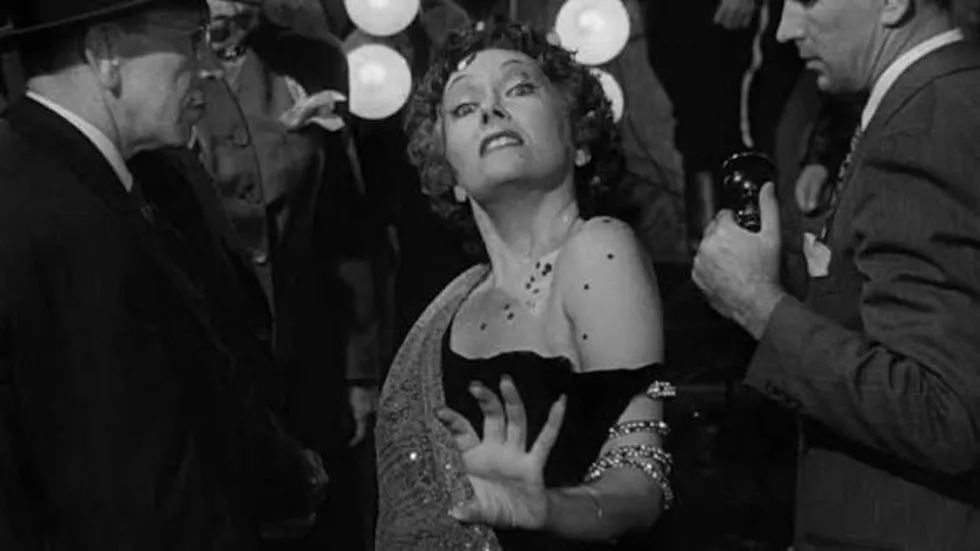 ‘Sunset Boulevard’Credit: Paramount Pictures
No matter how confident you feel about a draft once you’ve completed it, and how proud you are of yourself…it always wears off quickly. Don’t get discouraged; it happens to everyone. It’s also a key part of the editing process that turns work-in-progress scripts into good scripts, and then good scripts into great scripts.
The one big thing you need to remember during this process is to know when to stop and move on. If you’re anything like me, or John Vorhaus, there will be times when you start obsessing over the minutiae of specific words, and whether or not a certain character would be using the conjunction of two words, or just the two words. Don’t lose sleep over stuff like that. To semi-quote Vorhaus, if you start losing your mind about whether a character should be saying “didn’t” or “did not”, that’s when you know it’s time to move on to something else.
- What Does Francis Ford Coppola Think About Rewriting? ›
- Struggling on Your Screenplay Rewrite? Try the 'Coffee Filter' Method ›
- 10 Ways to Tackle Rewriting a Screenplay ›
- Most Screenwriters Rewrite the Wrong Way. Try This 3-Judge Test Instead ›
- Why Crafting a Second Outline Is the Secret to the Rewrite Process ›
- Script Rewrite Strategies ›