A Masterclass in Self-Deception: How ‘Memento’ Weaponized Memory With This Iconic Line
Christopher Nolan turned memory into a movie villain.
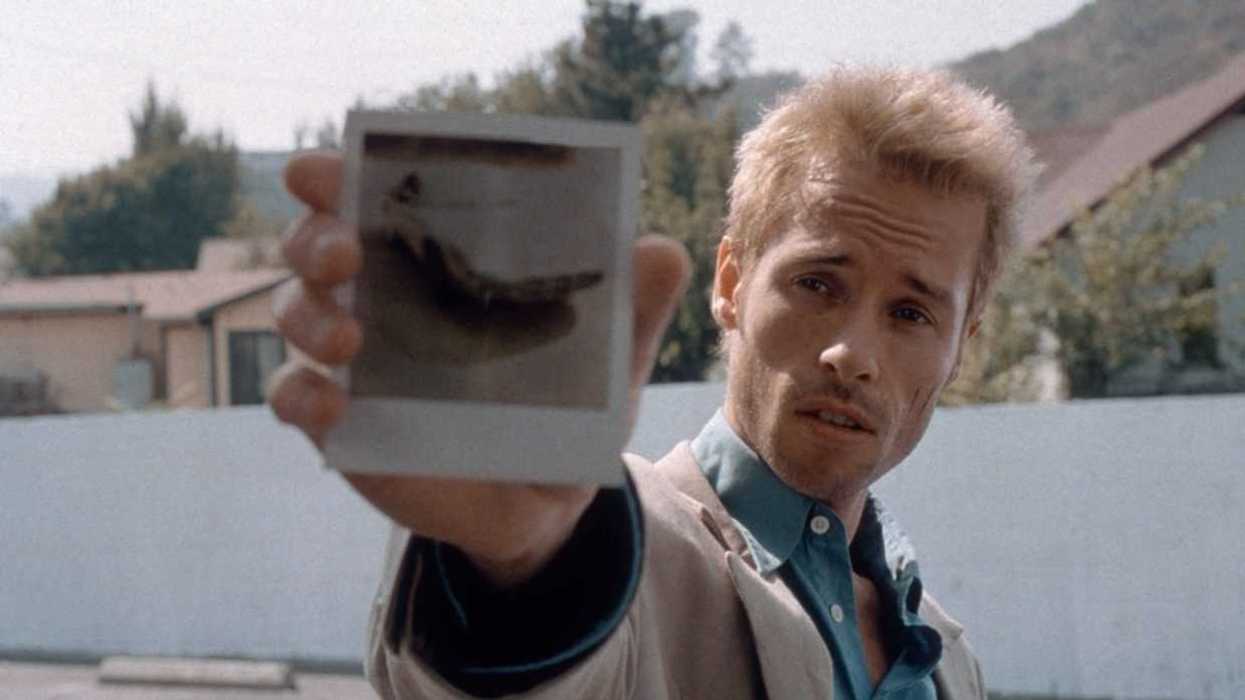
Memento (2000)
Christopher Nolan’s Memento (2000) is one of the boldest narrative features of our time. Its inventive structure disregards traditional approaches to non-linear stories by telling an entire story both backward and forward.
Nolan cleverly uses memory not as a theme or a plot device but as an apparatus to exercise control over how the audience thinks and feels. Throughout the film, which can certainly be a puzzling yet exciting viewing experience, the narrative makes us perceive Leonard Shelby’s confusion through our own lack of clarity. The movie’s structure is deliberately fragmented. It weaponizes the idea of memory and leverages it to create a thrilling cinematic experience in a manner that few others have dared to explore.
How does Christopher Nolan use memory as a weapon in Memento? What can this teach us about withholding information as writers?
Let’s jump right in and explore.
The Line & The Art Of Withholding Information
Leonard Shelby says the line “I can’t remember to forget you” in a voice-over during the film. Its tragically poetic quality resonates strongly with the audience primarily because of how empathetic it sounds. It appears during one of his reflective monologues when Leonard explains how his long-term memory lingers, but he is unable to make new memories.
One of the most fascinating aspects of Memento is how it withholds information and releases it at the right time. The film allows and then forces the audience to inhabit the mind of Leonard Shelby. Using polaroids, tattoos, and certain surprising, well-timed revelations, Nolan keeps the audience guessing by letting them embrace the confusion.
The film establishes the rules of the world and asks us to hunt for information, almost as desperately as Leonard himself. In some scenes, we are offered information that we may not believe, and we are concerned that Leonard might not feel the same way. This creates an added layer of narrative separation, which makes the film more gripping.
As the film progresses with its two timelines, at times, we are presented with the emotional impact of an action before we witness the action itself. Witnessing this in a movie where the protagonist’s memory isn’t hampered is one thing, but in the context of Leonard’s tragic condition, it carries a whole different meaning.
Nolan’s frequent acts of withholding information also wrestle with the idea of doubt. Whom do we believe? And what has helped them earn our trust? The world of Memento is layered with characters who seem to have ulterior motives or unclear intentions, but are empowered by the fact that Leonard has no real way to vet their words. If Leonard cannot trust them, or fully even know himself, where does that leave the audience?
Christopher Nolan and his brother Jonathan Nolan, who wrote the film, were quite certainly aware of how this creative confusion could make their story harder to follow. They did not seem to get repelled by this notion, but instead, they embraced it.
Using Narrative Structure To Portray A Troubled Mind
Memento employs a dual timeline structure to tell the story of Leonard Shelby (Guy Pearce), who suffers from anterograde amnesia and cannot form new memories after a terrifying attack. He uses polaroids, notes, and tattoos to hunt for the man who he believes murdered his wife.
One of the film’s timelines moves forward while the other moves backward. The black and white scenes run chronologically, while the color scenes move backward. Both timelines combine in the end, bringing reality and Leonard’s confusion together to present a clearer idea of the truth.
The timeline structure, in its own creative way, portrays the fragmented nature of Leonard’s mind. As multiple thoughts and shards of memories collide in his head, he is unsure of what the truth is. Driven by the desire to find his wife’s killer, this confusion makes matters worse for him. The film’s structure ensures that the journey isn’t easy even for the audience.
Nolan’s narrative may be challenging at first glance or even while watching the movie, but its fundamentals are simplistic. There is a very carefully planned method to the “confusion” we experience, and if we simply follow the “rules of the game,” we can catch on. The line, “I can’t remember to forget you,” also tells us everything we need to know about Leonard’s sense of loss and how his life is driven by the purpose of finding his wife’s killer.
Leonard’s desperate hunt is confronted with more questions than answers, and the audience is likely to feel the same. Shutter Island (2010), for example, also allows the audience to step into its protagonist’s mind as well, but it does so without reimagining the foundations of its screenplay. Memento frequently risks not being understood at all, but the film’s power is defined by its unflinching logic.
At no point does the film confuse for the sake of confusion. It establishes a clear structure and sticks to it while always attempting to, very boldly and inventively, mirror the difficulties faced by a man with a troubled mind.
How The Line & The Film Make Chaos Gripping
The first time I watched Memento was about 15 years ago. One of the first questions I asked myself was, “How has Nolan made chaos so gripping?” Chaotic action and chaotic narrative structures are two very different things. Chaotic action is more visual than story-related. Chaotic narrative structures can be inventive, but could also confuse the audience beyond repair. In my opinion, as challenging as the movie is, this doesn’t happen in Memento, and “I can’t remember to forget you” powerfully reminds us of Leonard Shelby’s tragic difficulties. It perfectly captures his pain and confusion. Now, here’s how the film embraces chaos and makes it gripping:
Establish Ground Rules
Memento does not confuse because it wants to; it establishes clear rules about its structural progression and invites viewers into its world. The disorder works because it follows a strong, foundational logic. Both timelines have meaning, and they do not deviate from their principles.
Experience Binds With Character
Throughout the film, the bold narrative is justified by the character’s state of mind. Even though the specifics of the structure do not claim to be similar to what is experienced by a person with anterograde amnesia, they create a novel experience that is fragmented enough to feel challenging yet cinematic.
Payoffs Must Be Worthy
Perhaps the most important reason why Memento works as well as it does is the fact that its payoffs feel worth the challenge. Let me explain. If you create a very inventive structure for your story that may require a lot from the audience to follow consistently, every payoff must feel earned and should justify the experience. If Memento did not do this, I don’t think its structure would be admired the way it has been.
Final Thoughts
“I can’t remember to forget you” defines Leonard Shelby’s unyielding purpose: to find his wife’s killer. It uses a few simple words to remind us about a man’s tragedy, one that forms the basis for all his actions. Christopher Nolan’s Memento turns memory into a weapon and challenges the audience into feeling what it’s lead character does, through a careful process and well-established ground rules.
What is your favorite Christopher Nolan movie and why? Tell us in the comments below.