5 Incredible Movies That Broke The Three-Act Structure
Rules are meant to be broken, right?
'Pulp Fiction' (1994)
In the world of film, the three-act structure has long reigned as a blueprint for screenwriting. It tells us that every “good story” has a setup, a confrontation, and a resolution. Just like great artists in any other field of art, many filmmakers brilliantly and comfortably break this notion to say, “Hey, remember, there are no rules.”
Breaking a traditional structure may sound like a bold exercise, but in the case of many great films, it is just a matter of avoiding the blueprint altogether. These films didn’t just break the rules; they told us that a good story doesn’t care for any of them.
Even though the three-act structure can be seen, to a great extent, in many films that are also considered incredible and even historic, the movies we are about to discuss remind us that every great story makes new rules instead of adhering to old ones.
Now, let’s jump right in and take a look at five incredible films that broke the three-act structure.
What Is The Three-Act Structure?
Before we explore the films that broke the three-act structure, let’s remind ourselves of what the three-act structure really is.
Syd Field, in his book ‘Screenplay: The Foundations of Screenwriting’, emphasized the importance of the three-act structure in storytelling. According to the book, every good screenplay must have three distinguishing ‘Acts.’ Act 1 is the setup, Act 2 is the confrontation, and Act 3 is the resolution.
More importantly (and this is a rule that is broken far more often than the three-act structure itself), he wrote about ‘Plot Points’, which, according to him, were also essential to screenwriting. Plot Point 1 (end of Act 1) propelled the story into a new direction, and Plot Point 2 (end of Act 2) moved the story towards its resolution. This structure, including the plot points, can be observed in many great films without a doubt. However, it isn’t an essential ingredient for making a good film.
Let’s explore that with films that made the three-act structure appear futile.
5 Incredible Movies That Broke The Three-Act Structure
While the list of great films that don’t follow the three-act structure is a long one, I’ve chosen films that don’t just break it but also create an entirely new structure of their own by dismantling the traditional one.
Here’s a list of five amazing films that reminded us that there are no rules in filmmaking.
1. Pulp Fiction (1994)
Directed by Quentin Tarantino
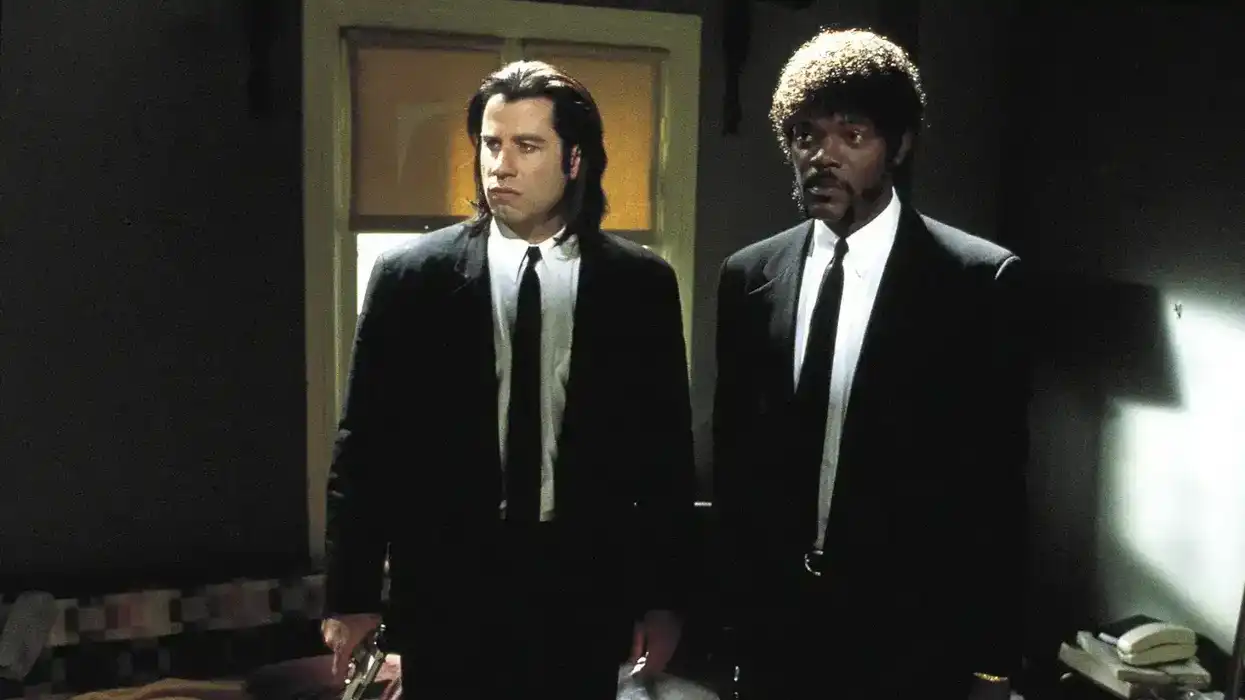
Quentin Tarantino’s film (or shall we say films?) almost entirely rejects the three-act structure, but none of them do it as audaciously as this one. The very fundamentals of Pulp Fiction are antithetical to the concept of the structure because it weaves together interconnected crime stories in a non-linear, chapter-based format.
Pulp Fiction’s use of the chapter format is one of the boldest (and coolest) deployments of novelistic structure you will ever see on film. Characters flow in and out of the film, and storylines get interconnected across timelines. This was a radical movie, especially in the 90s American mainstream (considering actors such as Bruce Willis and John Travolta), that even resurfaced a dead character through its non-linear structure and leveraged his finesse to close the film.
2. Mulholland Drive (2001)
Directed by David Lynch
Few filmmakers made a mark on cinema by breaking traditional notions, as David Lynch did. In many ways, his entire career was lined with feature and short films that explored bold, powerful, and ambiguous ideas. Mulholland Drive didn’t just break the three-act structure. It acted like the approach never existed.
What starts as a movie about an ambitious female actor quickly descends into a chaotic, dream-like storyline in which timelines blur, and even characters’ names swap out in a baffling yet cinematic way. In this film, the plot questions itself, the characters’ identities are up for debate, and the whole story is shrouded in quintessential David Lynch mystery, constantly rejecting every traditional screenwriting idea, structural or otherwise.
3. Memento (2000)
Directed by Christopher Nolan
When a story has two timelines, one of which moves forward and the other backward, I think we can accept that the three-act structure was long forgotten, ignored, and dismantled by its fearless ambition. In Memento, the colored storyline moves in reverse while the black-and-white storyline moves forward. This incredibly bold structure attempts to mirror protagonist Leonard Shelby’s (Guy Pearce) anterograde amnesia.
Audiences must piece together the mystery as Christopher Nolan drops clues and hints across both timelines, constantly making us question characters and their intentions. Without a doubt, the film wholeheartedly rejects the three-act structure and creates a whole new one that few would dare to explore themselves.
4. Eternal Sunshine Of The Spotless Mind (2004)
Directed by Michel Gondry
Michel Gondry’s tender sci-fi love story brilliantly fractures time through Joel Barish’s (Jim Carrey) memory-erasure procedure. By doing so, it blends past, present, and dream-like sequences in what feels like a non-linear puzzle.
While this film still, to some extent, can be considered to have a structure within its fragmented nature, the approach to finding it would require an incisively academic methodology, and even then, the result would feel forced. That’s precisely what makes this movie incredible. Somewhere within the haziness of its non-linear nature is a carefully planned structure. However, it is well hidden and follows its own rules of emotional resonance as opposed to a traditional procedure, entirely rejecting the three-act structure altogether.
5. 2001: A Space Odyssey (1968)
Directed by Stanley Kubrick
Stanley Kubrick is, without a doubt, one of the greatest filmmakers to have lived. A big reason for that is his lack of adherence to any “rules” related to storytelling. Kubrick broke new ground with every project he pursued. Perhaps, never quite as much as he did with 2001: A Space Odyssey.
Every “section” from the film is connected thematically, not always by plot. This itself breaks the three-act structure. The vastness of the film’s ambition isn’t just based on its visual scale. It exists at the very foundation of its storytelling. The whole idea of plot points is rejected immediately by the transition from the “Dawn of Man” sequence to the spacecraft and moon mission. While the monolith, in an eerie manner, stitches the story together, its effects are ambiguous and open to interpretation.
It is precisely this ambiguity that makes 2001: A Space Odyssey one of the greatest sci-fi movies of all time. It does not tell us what happens; it lets us feel it, experience it, and immerse ourselves in its mystery.
Final Thoughts
One of the greatest tricks a filmmaker can pull is subverting the audience. While an audience does not enter a movie theater expecting a three-act structure, they are well aware of traditional storytelling tropes. These five films brilliantly rejected and reinvented the very foundations of a screenplay and reminded us that in filmmaking, rules are always meant to be broken.
Which is another film that breaks the three-act structure very well? Tell us in the comments.