11 Movies That Unfold Backwards and Still Make Sense
These inventive movies break narrative rules, unraveling their stories in reverse to powerful effect.
Memento (2000)
Every once in a while, a movie flips the rules of storytelling and makes us ask the ultimate question:
“How did we get here?”
Instead of leading us from beginning to end, these films start at the finish line and walk us back to the starting point. It’s an unsettling but exhilarating shift—suddenly, the destination isn’t the surprise, the journey is.
A reverse narrative tosses in flashbacks just for flavor, but even more intriguingly, it rewinds the story, moving scene by scene into the past. We already know what happens, but the mystery lies in why it happened. This flips traditional suspense on its head. Instead of waiting to see how things end, we are piecing together how things began.
The result? Suspense with a different texture. Characters gain depth in retrospect, actions grow heavier once we know their outcomes, and audiences are forced into detective mode. That’s the magic of backward storytelling—it creates tension, empathy, and shock all at once.
This article takes you through 11 groundbreaking films that chose to run their stories in reverse. Each one proves that moving backwards can push cinema forward, showing how structure alone can change everything about the way we experience a story.
The Groundbreakers: 11 Films that Opted for Reverse Narrative
1. Betrayal (1983)
Written by: Harold Pinter | Directed by: David Jones
Based on Harold Pinter’s stage play, Betrayal follows the unravelling of a love affair between Jerry (Jeremy Irons) and Emma (Patricia Hodge), who happens to be married to Jerry’s best friend, Robert (Ben Kingsley). The film begins after the affair has ended and rewinds through years of deception, intimacy, nd regret, eventually landing at the innocent spark where it all began.
What makes Betrayal a landmark is the way its reverse structure strips the romance of any illusions. We watch intimacy decay into secrecy and resentment, then move backward to moments that should feel hopeful, but instead ache with inevitable loss. Each scene lands heavier because we already know where the characters end up. Pinter’s clipped dialogue nd silences thrive in this setup, revealing emotional wreckage through implication more than confession.
For storytellers, Betrayal is a blueprint on how structure can sharpen a theme. Instead of asking, “Will they get caught?” the film forces us to ask, “Why did this ever happen in the first place?” It shows how reordering time can expose ruth more brutally than a straightforward timeline ever could.
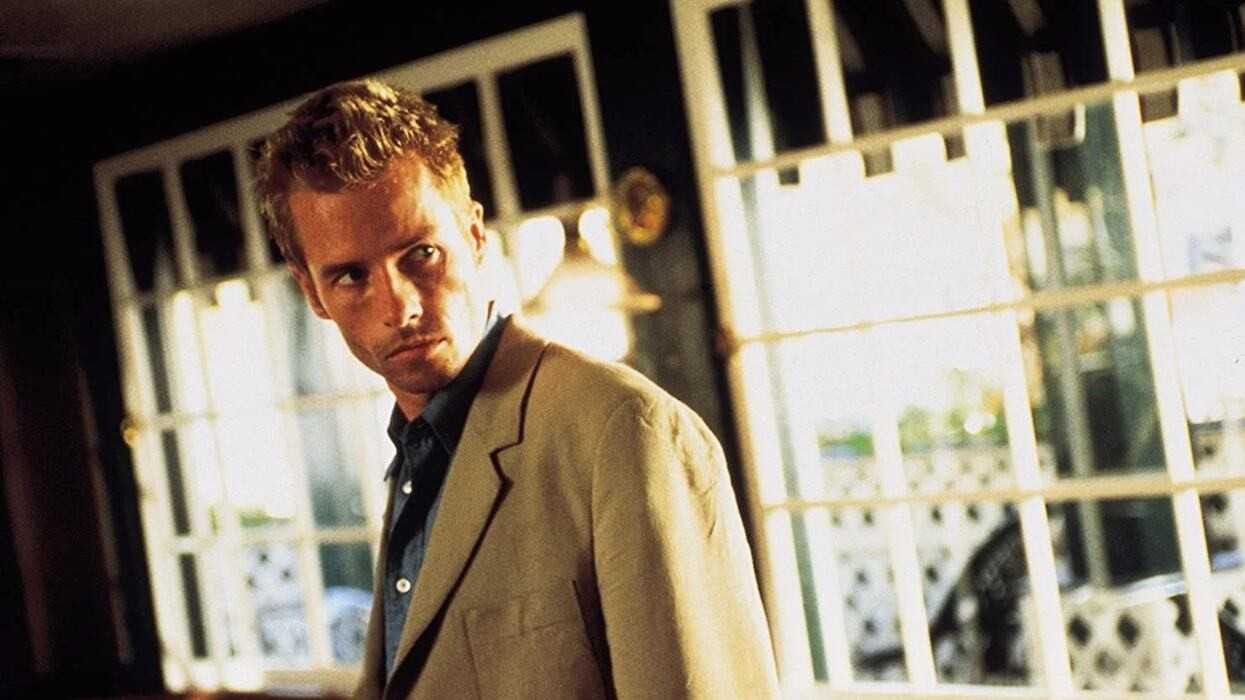
2. Memento (2000)
Written by: Jonathan Nolan | Directed by: Christopher Nolan
Memento follows Leonard Shelby (Guy Pearce), a man with anterograde amnesia who cannot form new memories. He’s on a relentless mission to find his wife’s killer, relying on Polaroids, tattoos, and scribbled notes. The story is told in reverse, with each scene leading into the one before it, plunging us into Leonard’s fractured reality.
This is the film that put Christopher Nolan on the map, and for good reason. The reverse narrative is the very heart of the experience rather than a gimmick. By structuring the film backwards, Nolan traps the audience in Leonard’s perspective. We feel his disorientation, his desperate reliance on scraps of information, and his inability to trust what he knows. The story’s structure becomes the story itself.
What filmmakers can take from Memento is how form can reflect content. The movie proves that structure can be about embodying character psychology rather than limiting its impact for style. By aligning narrative with perception, Nolan created not just a thriller but a fully immersive puzzle where the mechanics of storytelling are inseparable from meaning.
3. Irréversible (2002)
Written by: Gasper Noé | Directed by: Gasper Noé
Gasper Noé’s Irréversible is infamous for its brutality. The film begins with horrifying violence—an act of revenge carried out in a nightclub—and then steps backward in time through a nightmarish sexual assault, a fractured relationship, and finally, a tender, peaceful afternoon between lovers, Alex (Monica Belucci) and Marcus (Vincent Cassel).
The reverse narrative here isn’t about solving a crime. It’s about weaponizing chronology to devastate the audience emotionally. By leading with horror and ending with innocence, the film forces us to carry unbearable knowledge into scenes that would otherwise be sweet or mundane. Instead of catharsis, the structure produces dread, reminding us of how fragile love and peace can be.
For creatives, Irréversible demonstrates how storytelling order can control emotional experience. Shuffling scenes is a tool that can radically shift tone, pacing, nd empathy. In this case, the reverse order makes the tragedy almost suffocatingly poignant.
4. The Prestige (2006)
Written by: Jonathan Nolan, Christopher Nolan | Directed by: Christopher Nolan
At its core, The Prestige follows rival magicians Robert Angier (Hugh Jackman) and Alfred Borden (Christian Bale) in Victorian London, locked in a battle of obsession, sacrifice, and deception. The film itself plays like a magic trick—structured in turns, secrets, and revelations that arrive in reverse order of their cause.
Christopher Nolan mirrors the structure of a magic trick—The Pledge, The Turn, The Prestige—by scattering revelations backward through the narrative. Each reveal reframes what came before it, inviting the audience to rewatch scenes with fresh understanding. This structural mirroring between theme and form gives the story a hypnotic complexity.
The Prestige is a lesson in narrative design: the order in which you reveal information can be as powerful as the information itself. By treating structure like sleight-of-hand, you can create a film that rewards multiple viewings and keeps audiences hooked even when they know the ending.
5. 5x2 (2004)
Written by: François Ozon, Emmanuèle Bernheim | Directed by: François Ozon
François Ozon’s 5x2 tells the story of Gilles (Stéphane Freiss) and Marion (Valeria Bruni Tedeschi), a couple whose relationship disintegrates over time. Told in five distinct episodes—divorce, dinner party, child’s birth, wedding, and first meeting—the film runs in reverse order, ending where most love stories begin.
What sets 5x2 apart is how the reverse structure transforms the familiar narrative of a relationship. Instead of charting the slow collapse from romance to resentment, we begin with heartbreak and move backward toward hopeful beginnings that are bittersweet because we know where they lead. Each episode reframes the couple’s choices, revealing how moments of tenderness carry seeds of eventual destruction.
This film shows that a non-linear structure can turn ordinary subject matter into something piercingly insightful. For anyone writing about relationships, it demonstrates how reframing the order of events can make a love story feel raw, unsentimental, and startlingly honest.
6. Eternal Sunshine of the Spotless Mind (2004)
Written by: Charlie Kaufman | Directed by: Michel Gondry
Joel (Jim Carrey) and Clementine (Kate Winslet) are lovers who undergo a medical procedure to erase each other from memory after a painful breakup. As Joel re-lives his memories of Clementine in reverse, from bitter arguments back to the fragile beauty of their first encounters, he begins to resist the erasure.
The film’s fragmented structure makes us feel the fragility and power of memory. Watching their relationship collapse in reverse order reframes heartbreak, making even the smallest shared moments feel monumental. The deeper we go into Joel’s mind, the clearer it becomes that erasing pain also erases the joy bound up in it.
Writers can draw inspiration from Eternal Sunshine and understand that structure can embody emotion. The reverse movement through memory is stylistic, but it also reflects how we process love and regret. In narrative, the way you move through time can mirror the way humans navigate feelings.
7. 500 Days of Summer (2009)
Written by: Scott Neustadter, Michael H. Weber | Directed by: Marc Webb
500 Days of Summer tells the story of Tom (Joseph Gordon-Levitt) and Summer (Zooey Deschanel), but not in chronological order. Instead, it jumps between the highs of new love and the lows of heartbreak, shuffling time to highlight how memory distorts perception.
The non-linear approach creates its own kind of reverse narrative: by juxtaposing day 488 with day 12, the film forces us to feel the whiplash of idealism clashing with reality. This isn’t about suspense but about tone—showing how love can feel euphoric one moment and devastating the next, depending on where you stand in time.
For storytellers, this film serves as a reminder that narrative doesn’t have to be linear to be effective. By breaking chronology, you can create emotional contrasts that speak truer to the chaos of real relationships than a tidy linear arc ever could.
8. Arrival (2016)
Written by: Eric Heisserer | Directed by: Denis Villeneuve
In Arrival, linguist Louise Banks (Amy Adams) is recruited to communicate with alien visitors. As she learns their language, she begins experiencing time non-linearly, eventually realizing the film’s “flashbacks” are glimpses of her future, including her daughter’s life and death.
This structure reshapes the story entirely. What first seems like a mystery unfolds into a meditation on fate, grief, and choice. By the time we understand that the ending is the beginning, the film has shifted from sci-fi puzzle to a deeply human story about embracing life despite inevitable loss.
For creators, Arrival proves how narrative order can align with theme. Its circular structure embodies the film’s central idea: that time is not linear, and our choices matter precisely because of their impermanence. Storytelling here becomes philosophy in motion.
9. Source Code (2011)
Written by: Ben Ripley | Directed by: Duncan Jones
Captain Colter Stevens (Jake Gyllenhaal) is trapped in a time-loop program that allows him to re-live the last eight minutes of a commuter train bombing to identify the culprit. Each reset starts after the disaster, forcing him to reverse-engineer events that have already happened.
What makes Source Code inventive is how its structural gimmick deepens the suspense. Every loop reshapes the puzzle, revealing new details in reverse order. The tension doesn’t come from “if” the explosion happens—we know it does—but from “how” to prevent it. This inversion of suspense keeps the story gripping.
The lesson here is in repetition as revelation. By starting from the aftermath and working backward, Source Code demonstrates how tweaking structure can refresh familiar genres like sci-fi thrillers.
10. Shimmer Lake (2017)
Written by: Oren Uziel | Directed by: Oren Uziel
This dark comedy-thriller unfolds over a week, but in reverse. It begins with a sheriff (Benjamin Walker) investigating a botched heist and then rewinds day by day, gradually revealing who planned it, what went wrong, and who betrayed whom.
The reverse-week format keeps the audience guessing, recontextualizing characters and motives each time the clock jumps back. What could have been a standard small-town crime drama becomes a clever puzzle, with comedy and tragedy overlapping in unexpected ways.
Shimmer Lake is proof that reverse narrative doesn’t belong only to arthouse cinema. Even modest thrillers can use inventive chronology to surprise audiences and keep genre storytelling fresh.
11. Peppermint Candy (1999)
Written by: Lee Chang-dong | Directed by: Lee Chang-dong
The film begins with Yong-ho (Sol Kyung-gu) standing on train tracks, moments before he takes his own life. From there, Peppermint Candy travels backward over 20 years, revisiting key episodes that reveal how political turmoil, personal loss, and moral compromise shaped his despair.
Lee Chang-dong’s choice to tell this story in reverse makes each episode unbearably tragic. By starting with the character’s end, the audience can’t escape the inevitability of his downfall, and every earlier scene feels haunted by the fate we already know. It’s a devastating portrait of how personal lives intertwine with national history.
This film is a reminder that structure can carry political weight. By moving backward, Lee forces viewers to confront not just one man’s story but the scars of an entire society. It’s a masterful example of how time manipulation can make cinema both intimate and historical.
The Lasting Impact of Telling Stories Backwards
These eleven films prove that messing with chronology is more than just a stylistic stunt. When done right, backwards storytelling reshapes suspense, deepens character, and unlocks emotional layers that linear storytelling can’t always reach. Whether it’s the cold unraveling of a marriage, the chaos of revenge, or the heartbreak of memory, the order of a story matters as much as the story itself.
The real question these movies leave us with is deceptively simple: how does knowing the ending first change how we understand the beginning? That question sits at the heart of every backwards narrative, reminding us that cinema—aside from being about what we’re told—is also about how we’re told it.
So, next time you sit down with one of these films, pay attention to the way time itself is used as a storytelling tool. And who knows—maybe your favorite story hasn’t been ruined by spoilers, but only waiting to be told in reverse.